
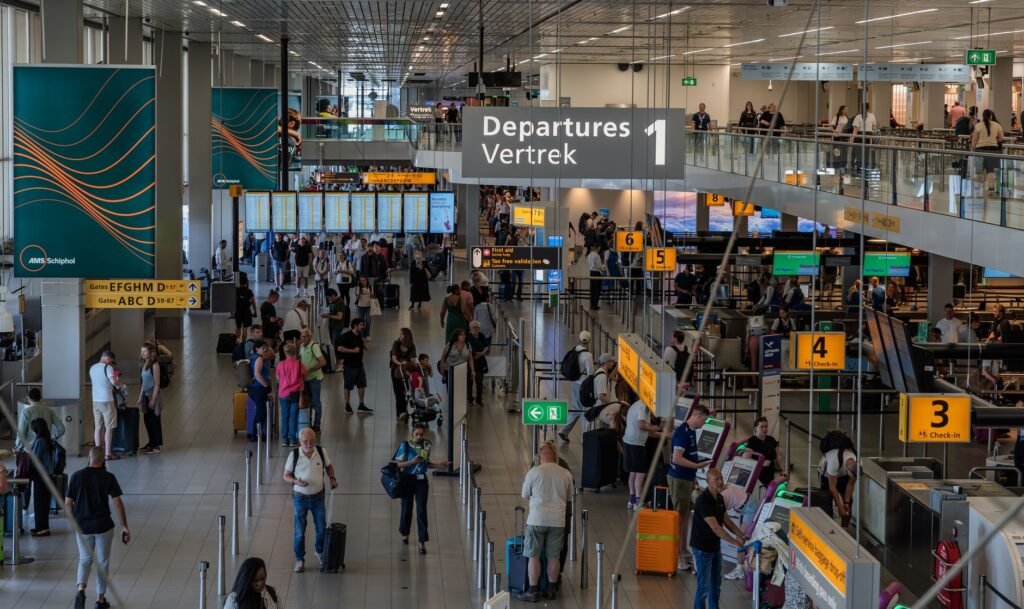
Peak waiting times at passport control in Schiphol Airport have reached up to two hours following the rollout of the European Union’s new Entry/Exit System.
Data from travel analytics firm Qsensor shows that maximum wait times for non-EU travelers at the airport rose significantly during recent July travel, climbing from 80 minutes previously to 120 minutes.
Biometric scans cause delays
The queue increases stem from the EU’s digital border management system, known as the EES.
Designed to replace manual passport stamping, the system requires non-EU passport holders to register facial scans and fingerprints upon entering the border zone.
European travelers with EU passports remain unaffected by the extra checks, using designated lanes that bypass the biometric collection requirement.
Most travelers still pass quickly
Despite the severe spikes during peak travel hours, most passengers passing through Schiphol are not experiencing two-hour delays.
The travel data reveals that around 68 percent of passengers clear passport checks in under 15 minutes, with the overall average waiting time sitting around 12 minutes.
However, maximum daily delays average about 77 minutes during busier periods.
Midweek travel, particularly on Tuesdays, offers the shortest line times, whereas Fridays see consistently higher queue times.
Rules tightening in September
Line lengths may become more fixed in the coming months.
Currently, the Dutch border police, the Marechaussee, maintain the flexibility to pause the EES registration process whenever passport queues grow unmanageably long.
That discretionary pause option is set to expire in September.
Without the ability to bypass registration during traffic spikes, travel analysts warn that non-EU visitors should budget significant extra time when passing through border checks, particularly for flights departing during peak airport hours between 8 a.m. and 9 p.m.
![Top [count] Travel Blogs to Follow - OnToplist.com](https://www.ontoplist.com/images/ontoplist31.png?id=6a8dcf108f478)