
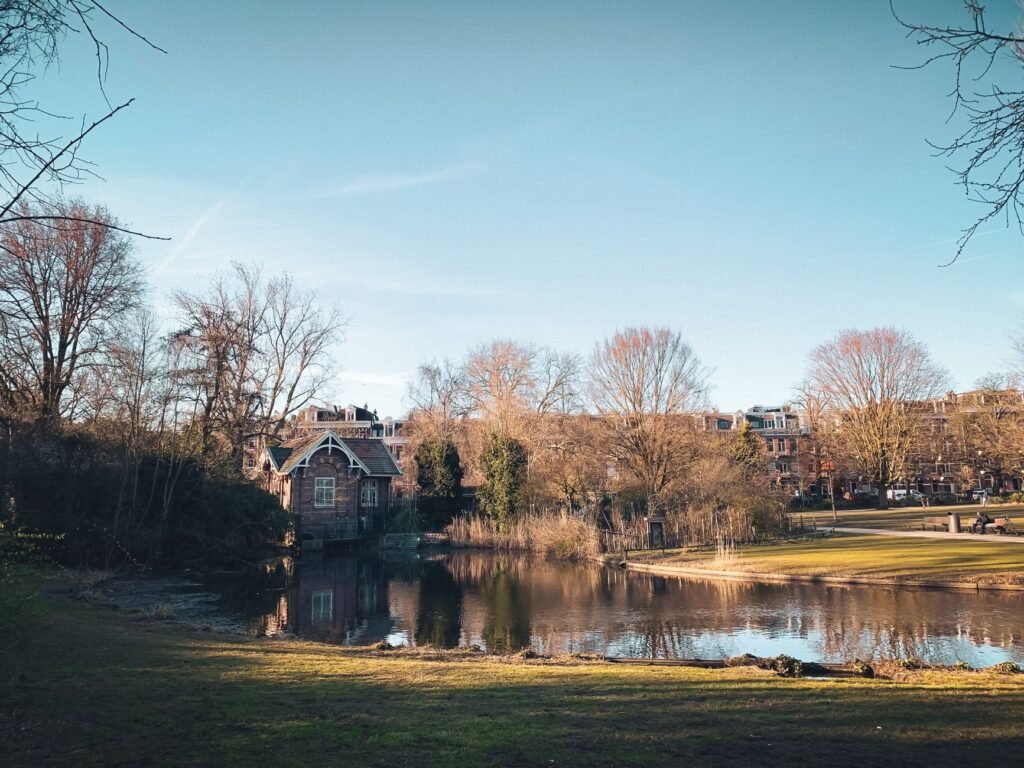
Amsterdam is experiencing dry weather that has left city parks with drooping leaves, yellow grass, and dried-up ponds.
City ecologist Geert Timmermans noted that standing water has completely disappeared in spots like Park Frankendael in Oost, which directly affects local wildlife.
While amphibians that reproduce in spring are largely unaffected, fish such as nine-spined sticklebacks cannot survive in dried-out pools.
Impact on mosquitoes and other wildlife
The lack of standing water has also led to a noticeable drop in the mosquito population across the city.
While fewer bites may seem positive for residents, Timmermans warned that it disrupts the food supply for animals like swifts and bats.
Other insects, including bees, hornets, and butterflies, are still visible in the parks, though dry conditions make their habitats fragile.
Managing the dry conditions
Timmermans advised against mowing grass during extreme dry spells, as cutting flowers and grass deprives insects of nectar and breeding grounds.
A single dry summer is not yet a disaster, but repeated dry years could eventually kill trees like beeches and birches.
Amsterdam currently benefits from relatively high groundwater levels, but persistent droughts in future years could permanently shift the city’s plant life.