If you want an easy way into Amsterdam’s religious story, start with the idea that the city’s sacred places are also a map of its past.
As you walk between canals, markets, and museum squares, you keep seeing how faith shaped daily life, from medieval parish churches to hidden Catholic chapels and Jewish landmarks that carry deep memory.
What stands out most when you visit Amsterdam churches is the contrast.
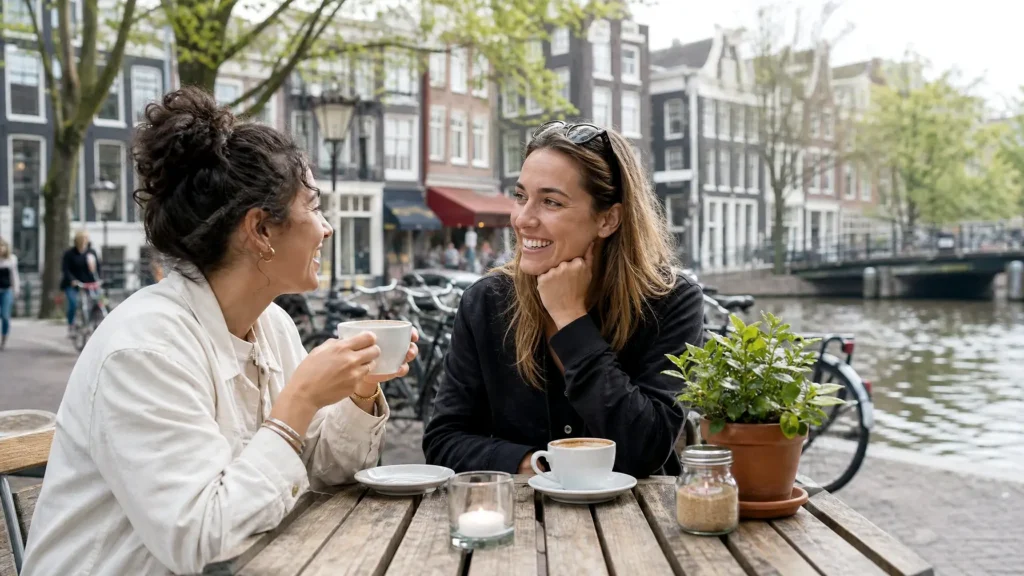
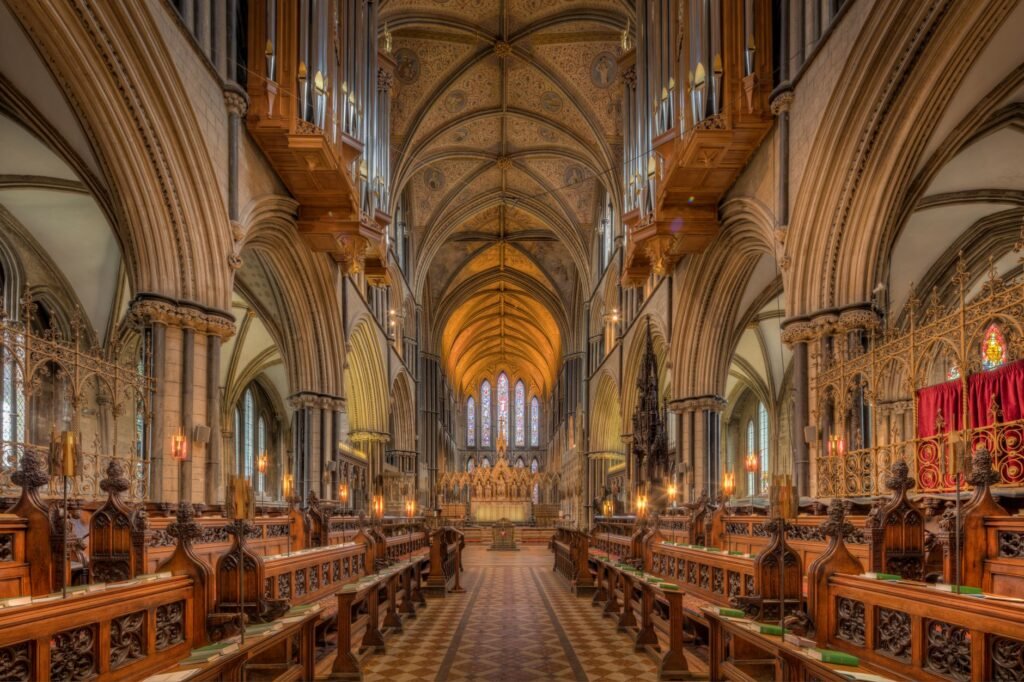
You can step out of a busy shopping street or a canal-side café and into a quiet space filled with old wood, candlelight, and centuries of Dutch history.
The city’s religious sites aren’t all active in the same way.
Some churches in Amsterdam still hold services, while others work more as cultural venues, exhibition spaces, or memorial sites.
You’ll get the most from this guide if you treat these places as both spiritual and historical stops.
That approach helps you see why Amsterdam churches matter far beyond architecture.
The Essential Places Of Worship To Visit First
If you only have a short stay, start with the landmarks that show the widest range of Amsterdam’s religious history.
These are the places I always point out first because they’re central, memorable, and easy to pair with a walking route.
The Oude Kerk is the oldest of the major Amsterdam churches.
Sitting in the old center, it gives you a strong sense of medieval Amsterdam, even before you step inside.
I always notice how the calm interior contrasts with the busy streets around it.
From there, walk to Nieuwe Kerk on Dam Square.
It began as a parish church and later became the site tied to Dutch royal ceremonies, which gives it a special place in national life.
It often works more as an exhibition and event space today, so it’s one of the easiest churches in Amsterdam to fit into a broader sightseeing plan.
The Westerkerk at Prinsengracht 279 has the tallest church tower in the city at 85 metres, topped by the imperial crown of Maximilian I.
Rembrandt is buried here in an unmarked grave, and the church is still a working Protestant congregation rather than a museum.
Its tower is a landmark near the Anne Frank House area, and the church still feels active rather than museum-like.
The Zuiderkerk and Noorderkerk are also worth your time.
If you enjoy seeing how Protestant worship shaped city neighborhoods and market life, these two are good stops.
Don’t skip the Basilica of St. Nicholas, often called Saint Nicholas Church, near Central Station.
It’s the main Catholic basilica in the center and feels very different from the plainer Protestant interiors.
Mozes en Aäronkerk is another notable stop, especially if you want to see how Catholic life re-emerged in public after long periods of restriction.
Hidden Catholic Amsterdam And The Begijnhof
To feel a more intimate side of Amsterdam’s religious past, head to the Begijnhof.
The shift is immediate.
You leave behind the noise near Spui and enter a calm enclosure that feels almost private, with old houses, trees, and a stillness that makes you lower your voice without thinking.
The Begijnhof courtyard is one of the best places to grasp hidden Catholic Amsterdam.
During the Protestant era, public Catholic worship was restricted, and communities adapted quietly.
The Begijnhof Chapel reflects that survival, and the setting makes the story feel personal rather than abstract.
A second essential stop is Our Lord in the Attic, a canal house church concealed in upper floors.
When you climb through the narrow domestic spaces and then arrive in the ornate worship room, the effect is striking.
You can really sense what it meant to keep faith alive behind an ordinary façade.
If you want a working Catholic church in the center, De Papegaai is a smart stop.
It’s tucked just off a busy shopping street, and that hidden-yet-open quality feels very Amsterdam.
For visitors, these places tell one of the clearest stories in the city: religious restriction, resilience, and gradual return to public worship.
Jewish Heritage And Sacred Memory In The City Center
Amsterdam’s Jewish heritage is one of the most moving parts of the city, and it deserves slow time rather than a quick stop.
The Jewish Cultural Quarter brings together places that show both flourishing religious life and the damage left by the Holocaust.
The most important sacred site to begin with is the Portuguese Synagogue, also known as the Esnoga.
Built for the Sephardic community in the 1670s, it remains one of the city’s great religious interiors.
Remarkably, it survived the Nazi occupation intact.
If you visit in softer daylight, the scale and simplicity feel especially powerful.
Nearby, the broader Jewish Cultural Quarter overview helps place the synagogue in context with museums, memorials, and former community buildings.
This area isn’t only about architecture.
It’s about presence, loss, and continuity.
The Anne Frank story is also part of this sacred memory, even though the Anne Frank House isn’t a worship site.
When you think about Anne Frank and then walk through the old Jewish quarter, the city’s religious history becomes human and immediate.
You’re not just seeing monuments - you’re standing in places shaped by real families, prayers, fear, and endurance.
How Worship Sites Connect To Amsterdam’s Museums And Culture
Amsterdam’s religious sites make more sense when you connect them to the city’s museums.
After a morning in old churches, a visit to the Rijksmuseum helps you spot the same Dutch history in paintings, civic symbols, and scenes of daily life.
Even when the art isn’t about formal worship, you can still feel questions of belief, struggle, and meaning running through it.
That’s one reason Amsterdam’s sacred places never feel cut off from the rest of the city’s culture.
You can see a useful contrast between historic worship spaces and contemporary art in Amsterdam.
Some former churches now host exhibitions or concerts, which says a lot about how the city reuses sacred architecture without erasing its past.
That blend of old faith, modern creativity, and public life is very typical of Amsterdam.
If you enjoy this side of the city, a thoughtful Amsterdam newsletter can help you keep track of seasonal events, special exhibitions, and neighborhood insights.
In practice, the best cultural days in Amsterdam often mix one major museum with one religious site and a long walk in between.
Frequently Asked Questions
If you’re planning visits around services, opening times, or recent news, a few details can make your trip much easier.
The answers below focus on what most visitors need to know before heading out.
Where can I find an English-speaking church service in Amsterdam?
The English Reformed Church, inside the Begijnhof courtyard at Begijnhof 48, has held services in English since the seventeenth century and is the oldest English-language congregation in the city.
Christ Church Amsterdam, the Anglican church at Groenburgwal 42, is the other long-established English-language option and sits on one of the prettiest small canals in the centre.
Which Catholic churches offer Mass in English?
The Basilica of St Nicholas, opposite Centraal on Prins Hendrikkade, is the main central Catholic church and the first place to look.
De Papegaai at Kalverstraat 58 is a Catholic church hidden in the middle of the shopping street with daily Mass, and it is open to walk into between services.
What time are Sunday services?
Sunday morning is the rule across almost every congregation here, with the main service in the second half of the morning.
Times shift for feast days, summer schedules and concerts, so confirm the specific Sunday on the congregation’s own site - erc.amsterdam for the English Reformed Church and christchurch.nl for the Anglican one.
What are the most famous churches to visit in Amsterdam?
The most famous churches to visit are Oude Kerk, Nieuwe Kerk, Westerkerk, and the Basilica of St. Nicholas.
If you want a deeper historical route, add Noorderkerk, Zuiderkerk, Mozes en Aäronkerk, and Our Lord in the Attic.
Where do the other faith communities meet?
The Portuguese Synagogue on Mr. Visserplein is still an active congregation as well as a museum, and it is lit by candles because it was never wired for electricity.
Moskee Taibah at Kraaiennest 125 in Zuidoost is one of the largest mosques in the city and holds open days.
International evangelical congregations here often meet in rented venues rather than in their own buildings, so the address genuinely does move - check the congregation’s own channels rather than a map listing.
Do Amsterdam churches charge an entrance fee?
It varies.
Some, like the Oude Kerk and Our Lord in the Attic, function as museums and charge admission, while working parish churches such as the Basilica of St. Nicholas are generally free to enter outside of services.
Check each site’s official website for current prices and opening hours before you go.