
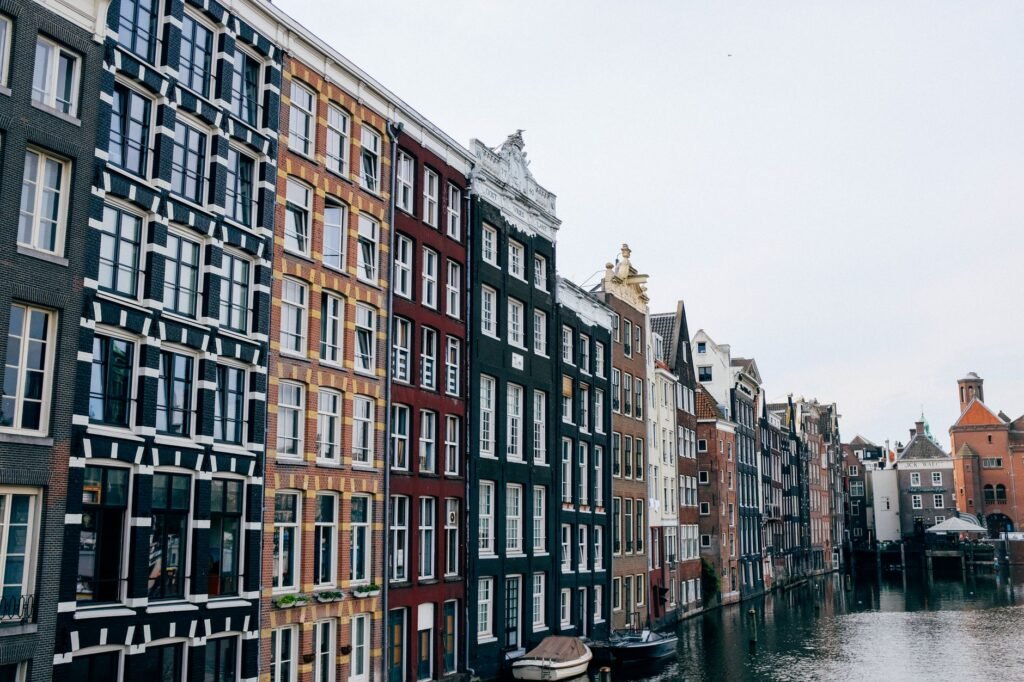
Dutch mortgage lending runs on national formulas rather than on a bank’s judgement of you, which makes the process unusually predictable.
You can work out roughly what you can borrow before you speak to anybody, and no amount of charm will move it.
What follows is the borrowing rules, the four transfer tax rates, the mortgage types that still qualify for tax relief, and the documents every lender asks for.
If you are at an earlier stage, start with housing in the Netherlands.
How Much You Can Borrow
Nibud, the national institute for household finance, sets the maximum each year from income, interest rates and standard living costs.
Lenders apply those formulas rather than competing on them, so shopping around changes your rate and not your ceiling.
As a rough guide it lands around five times gross annual salary, and two incomes both count.
Existing debt registered with the BKR reduces it directly, which is why a forgotten credit line matters more here than the interest on it would suggest.
Borrowing is capped at 100 per cent of the appraised value, a limit in force since 2018.
Everything on top comes out of savings: notary fees, transfer tax, valuation and advice, collectively the kosten koper you see abbreviated to k.k. in listings.
Transfer tax now has four rates rather than three.
First-time buyers under 35 buying within the price cap pay nothing, owner-occupiers pay 2 per cent, and investors and second-home buyers pay 8 per cent after the rate was cut from 10.4 per cent at the start of 2026.
A fourth rate of 4 per cent applies to certain share transactions in property companies.
On a €400,000 flat the investor rate is now €32,000 rather than €41,600, which is large enough to change whether a purchase works.
Every lender requires a taxatierapport, an independent valuation, before the mortgage can complete.
It confirms the value the loan is measured against, and a valuation below the agreed price is a common reason a deal has to be renegotiated.
The Nationale Hypotheek Garantie is a national guarantee that covers the shortfall if you have to sell at a loss after a divorce, redundancy or disability.
The NHG limit for 2026 is €470,000, and buying below it typically cuts your interest rate by 0.3 to 0.6 percentage points because the lender’s risk is underwritten.
Mortgage interest on your own home remains deductible, provided you live in it and repay the loan within thirty years on an annuity or linear basis.
The 30 per cent ruling raises net income and therefore borrowing capacity, and the Dutch tax system guide covers how the deduction is actually claimed.
Which Mortgage Type
Only two structures qualify for the interest deduction on new loans: the annuity and the linear mortgage.
An annuïteitenhypotheek keeps the monthly payment level for the whole fixed period, front-loaded with interest and repaying little capital early on.
That makes the tax deduction largest in the early years and the equity slowest to build, and it is what most first-time buyers take because the budgeting is simple.
A lineaire hypotheek repays a fixed slice of capital every month plus interest on the balance, so payments start high and fall throughout.
You pay less total interest and build equity faster, at the cost of the hardest years being the first ones.
The choice is really about when you can afford the money rather than which is cheaper.
Linear wins on total cost; annuity wins if the early payments would stop you buying at all.
An aflossingsvrije hypotheek, interest-only, repays no capital and carries no interest deduction on new lending.
Banks restrict it to a portion of the total for borrowers with substantial equity, and it is not a route into a first purchase - the alternatives are in loan options in the Netherlands.
What Lenders Ask For
The document list is standard across lenders, so assembling it once saves repeating the exercise.
None of it can start without a BSN number, issued when you register with your municipality.
Employees need a werkgeversverklaring, the employer’s statement of salary, contract type and status, usually no more than three months old.
Recent payslips and the annual jaaropgave go with it, and a permanent contract materially improves what you are offered.
Self-employed applicants face a harder test, generally three years of tax returns and accounts plus evidence that the income is stable.
Some lenders will work from a shorter track record with an accountant’s forecast, and freelancing in the Netherlands covers the wider financial picture.
Every applicant is checked against the BKR, the national credit register, which records loans, credit cards, phone contracts and arrears.
Check your own file before applying, because a stale entry from a settled debt takes weeks to correct and will otherwise surface at the worst moment.
Most Dutch buyers use an independent hypotheekadviseur rather than going direct to a bank, since an independent adviser compares products across lenders and a bank adviser can only sell its own.
The fee runs roughly €2,000 to €4,000 and is often deductible, and an adviser used to foreign income documents and residence permits earns it back on an expat file.
You will also need photo ID, proof of address and bank statements showing the savings that cover the kosten koper.
Buying jointly means both parties supply the full set, and the salary and payslip guide explains which figures the lender reads.
From Offer To Keys
Once an offer is accepted you typically have four to six weeks of financing condition in the purchase agreement.
Missing that deadline can cost you the deposit, which is why the paperwork should exist before you bid rather than after.
ING, ABN AMRO and Rabobank all lend, alongside a long list of smaller and insurer-backed lenders that often price better.
Fixed-rate periods run from one to thirty years, and the rate you are offered depends on that period and on your loan-to-value ratio.
From full application to a binding offer is normally two to four weeks when nothing is missing.
Delays come from incomplete documents and slow valuations rather than from lender decisions.
Completion happens at the notary, where you sign both the mortgage deed and the transfer deed and the money moves.
Transfer tax, notary fees and remaining costs are settled that day, so the funds need to be in a Dutch account already - see banking in the Netherlands.
Accepted offer to keys is usually two to three months.
Frequently Asked Questions
Can expats get a Dutch mortgage?
Yes, with a valid residence permit and a BSN, regardless of nationality.
Non-EU applicants sometimes meet tighter conditions, and a few lenders want six months of residence before they will lend.
How much can I borrow?
Around five times gross annual salary as a rule of thumb, with the exact figure set by the Nibud formulas rather than by the lender.
Debts on the BKR register reduce it, and a partner’s income increases it.
What are the transfer tax rates?
Nothing for first-time buyers under 35 within the price cap, 2 per cent for owner-occupiers, and 8 per cent for investors and second homes since the start of 2026.
A 4 per cent rate applies to certain share transactions in property companies.
Which mortgage types qualify for the interest deduction?
Only annuity and linear mortgages on new lending, both repaid within thirty years on a home you live in.
Interest-only lending is restricted and carries no deduction.
What determines the interest rate I am offered?
The length of the fixed period and your loan-to-value ratio, with lower borrowing against the value producing a lower rate.
Buying under the €470,000 NHG limit adds a further discount of roughly 0.3 to 0.6 percentage points.
How does the mortgage interest deduction actually pay out?
Either as a refund through your annual return or, more usefully, as a monthly reduction in withheld tax via a preliminary assessment from the Belastingdienst.
The preliminary route improves cash flow from the first month rather than a year later, and it runs for up to thirty years from the start of the loan.

![Top [count] Travel Blogs to Follow - OnToplist.com](https://www.ontoplist.com/images/ontoplist31.png?id=6a8dcf108f478)