
Amsterdam-based MedTech startup Phosphoenix has completed a €1.3 million funding round to advance a neuroprosthetic system designed for people living with profound blindness.
The investment will support the development of its neurostimulation technology and help prepare for its first clinical study in humans, planned in partnership with Amsterdam UMC.
Existing backers TTT Medtech Fund, FIRST Fund and Innovatiefonds Noord-Holland participated in the round, joined by new investor ROM InWest.
Bypassing damaged eyes
Phosphoenix was established in 2019 as a spin-off from the Netherlands Institute for Neuroscience, an institute of the Royal Netherlands Academy of Arts and Sciences. It was founded by Pieter Roelfsema, Xing Chen and Bert Monna.
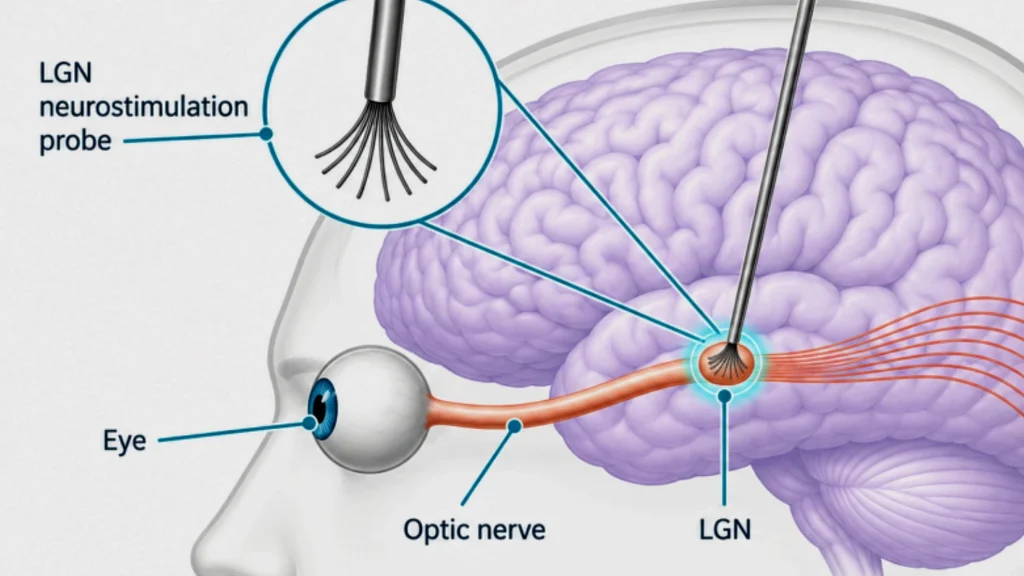
The system bypasses damaged optic nerves or retinas by stimulating the lateral geniculate nucleus, a relay centre in the visual pathway of the brain.
Users wear camera-equipped glasses connected to a pocket processor, which translates video into instructions for brain stimulation in real time.
At the core of the implant is a neural interface called the Fountain Probe, which holds more than 1,000 microelectrodes to produce dots of light known as phosphenes.
Preparing for human trials
Preclinical tests showed both neural and behavioural responses to the electrical stimulation, according to the startup.
The company previously secured pre-seed funding in September 2022.
Phosphoenix is now working towards a larger Series A financing round to finance its full clinical development programme.

![Top [count] Travel Blogs to Follow - OnToplist.com](https://www.ontoplist.com/images/ontoplist31.png?id=6a8dcf108f478)