
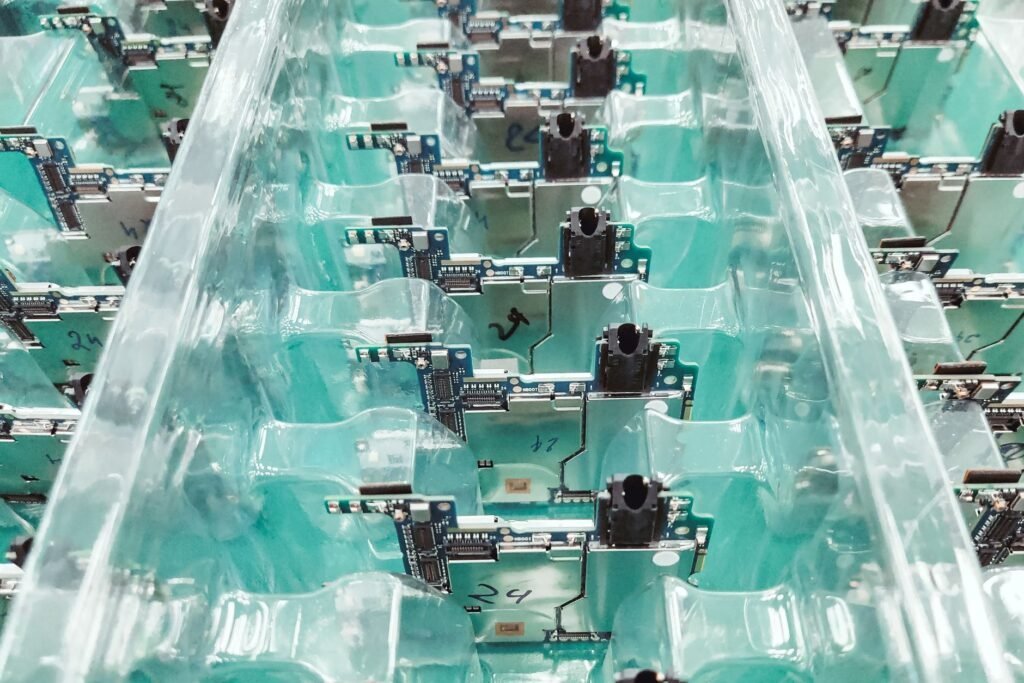
Chip machine maker ASML now expects 43 to 45 billion euros in revenue this year, several billion more than it had forecast only recently.
Around 23,000 people work directly for the company near Veldhoven, with roughly as many indirect jobs tied to it in the region.
That already equals about 10 percent of local employment, and further growth could add another 20,000 direct positions in the years ahead.
The surge is driven by heavy demand for the advanced lithography machines that only ASML can supply, especially for artificial-intelligence chips.
Nokia parallel
The concentration of so much economic weight has prompted comparisons with Nokia, the Finnish phone maker that rose fast in the 1990s.
When Nokia missed the smartphone shift, its collapse dragged down dependent suppliers and hurt Finland’s wider economy.
University of Amsterdam strategy professor Henk Volberda thinks ASML is less exposed.
He notes the firm works with hundreds of suppliers that are not allowed to rely on ASML as their sole customer.
Network reduces risk
Those suppliers can also reuse the expertise they build for other clients.
ASML itself spends 1.2 billion euros every quarter on research and development, up from about 750 million euros a year in 2016.
Arnaud de Jong of knowledge institute TNO adds that ASML sits inside a broader high-tech web that includes Besi, NXP and Eindhoven University of Technology.
Nokia operated more like an island; this network spreads the impact if trouble hits.
Call for more depth
Both experts still want the Netherlands to grow additional companies of similar scale.
That would lift overall earning power and cut the risk if U.S.-China trade tensions or an unexpected rival hit ASML hard.
Photonic chips and quantum technology are two areas where Dutch research already has a lead.
The lasting challenge is crossing the “valley of death” that separates lab results from reliable commercial products.
![Top [count] Travel Blogs to Follow - OnToplist.com](https://www.ontoplist.com/images/ontoplist31.png?id=6a8dcf108f478)