
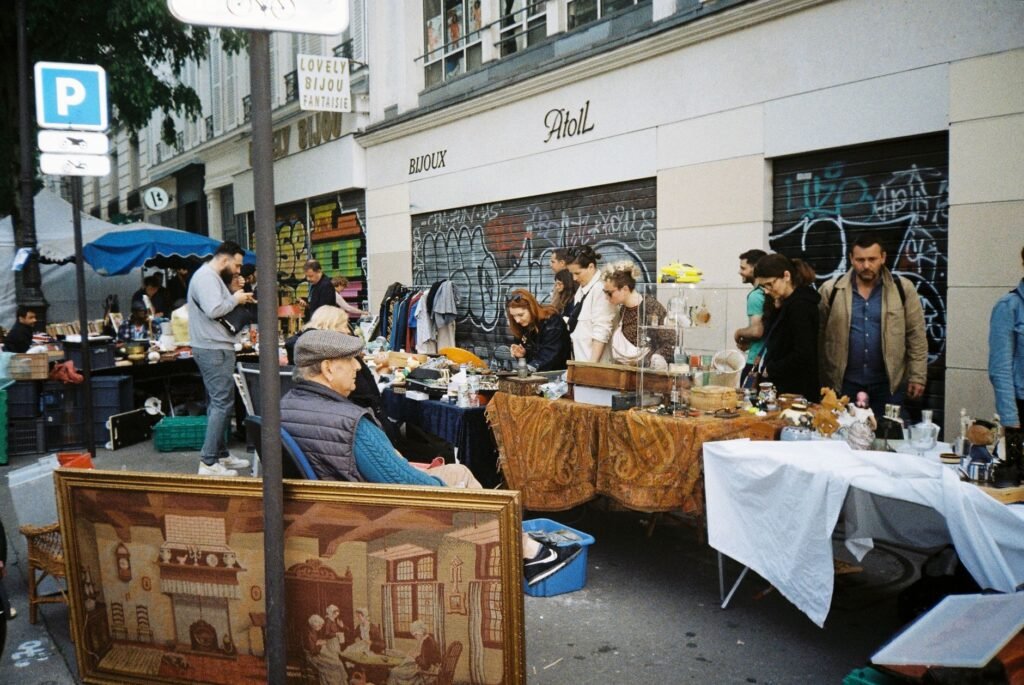
Marktplaats for furniture, bikes and electronics; Vinted for clothes; Facebook Marketplace for whatever needs to go this week.
Payment is by Tikkie or cash on collection, never by a link someone sends you.
Dutch buyers negotiate as a matter of course and turn up when they say they will.
Price with that in mind and the whole thing takes a fortnight.
Which Platform For What
Marktplaats
The dominant classifieds site, free to list, with paid options to push an advert up the results.
It sells everything: furniture, appliances, bicycles, tools, cars.
Write the title in Dutch even if the description is in English, because that is what people search in.
A translation tool is enough - “eettafel eiken 180 cm” reaches an audience that “oak dining table” does not.
Use plenty of photographs; the platform allows far more than you will need.
Set “ophalen” for anything bulky and “verzenden” only for what fits a parcel.
Vinted
Clothing, shoes, accessories and small household items, and buyers across Europe can order from a Dutch listing.
Vinted generates the shipping label and holds the payment until the buyer confirms, which removes both the postage arithmetic and the payment risk.
Branded items move quickly and unbranded ones sit.
If it is not a name anyone recognises, it belongs in a kringloop donation rather than a listing.
Facebook Marketplace
Fastest replies, largest English-speaking audience, and the local expat buy-and-sell groups in Amsterdam, Rotterdam and The Hague are where furniture moves before a lease ends.
There is no buyer or seller protection at all, so treat every transaction as cash on collection.
eBay
Worth it only for collectables and genuinely niche items where the buyer might be anywhere.
For ordinary second-hand goods in the Netherlands, the three above will outperform it.
Writing A Listing That Gets Answered
Photograph in daylight, from several angles, against a plain background.
Photograph the damage too - a buyer who finds a scratch you hid walks away, and one who saw it in the advert does not mention it.
Keep the description short and factual: brand, dimensions, age, condition, and why you are selling.
Dimensions matter more here than anywhere, because the buyer is calculating whether it will go up a Dutch staircase.
Check what comparable items actually sold for on the same platform before pricing.
Then add 10 to 15 per cent over your real floor, because you will be asked to come down and refusing outright loses the sale.
Answer messages within the hour if you can.
Buyers message five sellers at once, and the first clear reply usually takes it.
Getting Paid, And Handing Over
iDEAL is the Dutch online payment standard, a direct bank transfer that clears in seconds.
Tikkie is a payment request built on top of it, and sending one from your own banking app is the normal way to be paid for a small sale.
You need a Dutch bank account for either.
Cash is entirely normal for face-to-face handovers and has the advantage of being unambiguous.
Meet at a station, a café or a supermarket entrance for small items, and check the money has landed in your account before the item leaves your hands.
Doorstep handover is ordinary here for furniture, since the buyer has to get it into a van or onto a cargo bike anyway.
PostNL handles most parcels, with drop-off points in supermarkets and bookshops.
Vinted supplies the label; on Marktplaats you and the buyer agree who pays the postage before anything ships.
Scams And Time-Wasters
The standard Dutch second-hand scam is a payment link.
The “buyer” sends you something that looks like a Tikkie or a bank verification page and asks you to pay one cent to confirm your account - the page is fake and the credentials go straight to them.
You never pay anything to receive money.
Do not click links sent in a chat, and check your own banking app rather than any confirmation screenshot you are shown.
Fraudehelpdesk is the national reporting point and publishes the current patterns in Dutch and English.
Report it there even when nothing was lost, because that is how the patterns get tracked.
Lowball offers at half the asking price are routine rather than insulting.
Counter once with a number you are happy with, and stop replying if they push again.
Confirm the price in writing before the meeting, so the haggling does not restart on your doorstep.
Send a message a few hours before pickup to confirm; no-shows drop sharply when you do.
List on two platforms at once to shorten the wait, and mark it sold on both the moment it goes.
If a deal feels wrong, walk away - your consumer rights protect you as a buyer far better than as a private seller.
If you are on the buying side instead, here is where to shop for second-hand furniture in Amsterdam.


![Top [count] Travel Blogs to Follow - OnToplist.com](https://www.ontoplist.com/images/ontoplist31.png?id=6a8dcf108f478)