
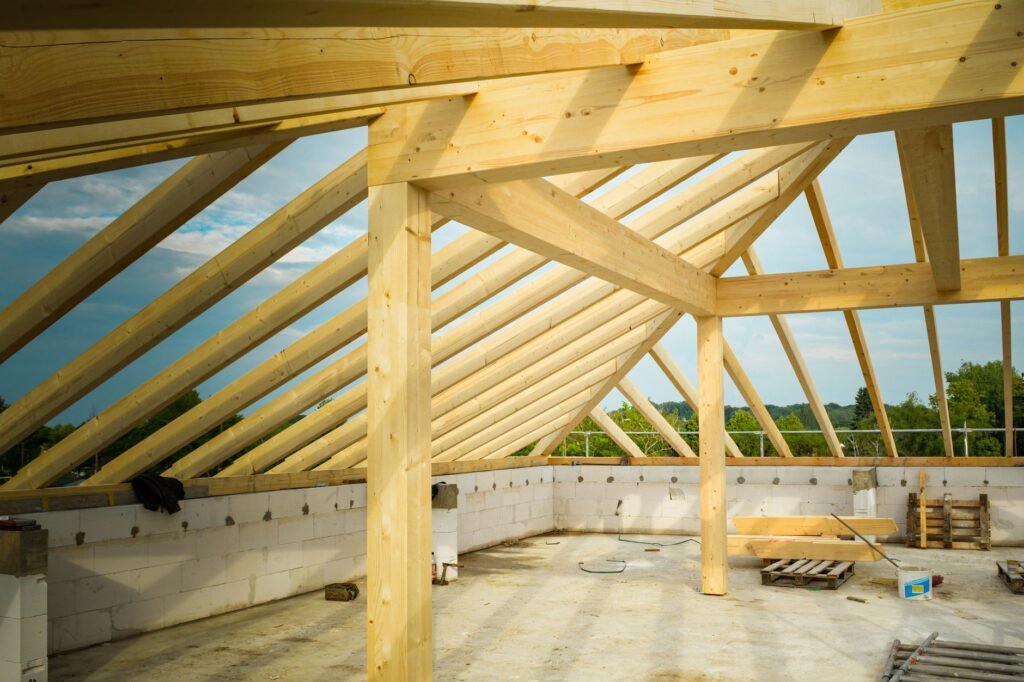
Amsterdam roofs come in two kinds: steep clay-tiled pitches on the older houses, and flat bitumen or membrane decks on almost everything built or extended since.
A roofer who is good at one is not automatically good at the other, which is the first thing to establish on the phone.
Roofers to start with
Every firm at the top of this trade answers around the clock and rates a flat five, and several of them share the same canal-belt correspondence address, so neither the stars nor the postcode will separate them for you.
What does is the work each one actually names – bitumen and flat roofs, tiles and ridge caps, zinc gutters, insulation – and whether it keeps hours you can plan a job around or only a number to ring at midnight.
Dakservice Van Gelder
Van Gelder names more of the actual job than anyone else in this trade: bitumen and tiled roofs, lead and zinc work, ridge tiles, chimney renovation, roof windows and bird deterrence, with gutters and plumbing under the same name.
It works from Entrepotdok on the eastern islands, answers at any hour, and its 399 reviews are 99 per cent five-star.
Dak Garantie Amsterdam
Dak Garantie answers at any hour from a Nieuwezijds Voorburgwal address it shares with a second roofing brand, and its 893 reviews at 98 per cent five-star are the largest count in the trade here.
The pitch is advice on the whole roof rather than a patch over the leak.
Toproof-Dakdekkers
A free inspection first is Toproof’s stated way in, which is the sensible order for a roof you merely suspect rather than one already dripping.
It works from Wenckebachweg in Overamstel, one of the few industrial addresses near the top of this trade, on 433 reviews at a perfect five.
Dak onderhoud GMK
Flat and bitumen roofs are the stated ground at Dak onderhoud GMK, with repairs, renovation and maintenance all named rather than left to a slogan.
From Archangelkade in the west it runs seven to six on weekdays and from ten on Saturdays, keeps a separate twenty-four-hour line for leaks, and holds 48 reviews at 4.8.
Het Groene loket
Roofing, insulation, gardening and landscaping sit under one name at Het Groene loket on Tweede Boerhaavestraat in Oost, which makes it the one to ring when insulation is part of the job and not just the covering.
It keeps office hours, nine to half past five with a ten o’clock start on Mondays and nothing at the weekend, on 95 reviews at 4.9.
Cyrus Dakdekkers
Gutters and chimneys, rather than whole-roof replacement, are what Cyrus puts forward, and gutter cleaning and maintenance is the work it leads on.
The base is Hofwijckstraat in Bos en Lommer, hours run eight to six on weekdays with Saturday afternoons from noon, and 24 reviews sit at 4.9 – a short record, so read it as a local one.
If you live in a flat, start here
In most Amsterdam apartment buildings the roof is common property, which makes a leak the owners’ association’s responsibility and its bill rather than yours.
Report it to the VvE board or the managing agent before commissioning anything, or you risk paying for a repair the association would have covered.
Pitched, flat, and the difference it makes
Pitched roofs fail at the details: a slipped tile, cracked mortar along the ridge, tired lead flashing where a chimney or dormer meets the slope.
Flat roofs fail at the seams and at the outlet, and the usual sign is water still standing on the deck a day after the rain stopped.
Autumn is the sensible month to have either looked at, because a blocked gutter or a choked outlet is what turns a wet winter into an interior repair.
Permits, monuments and the pavement
Much of the centre sits inside a protected townscape and a great deal of it is listed, so anything that changes a roof’s appearance needs an omgevingsvergunning while like-for-like maintenance generally does not.
Scaffolding, a skip or a lift standing on a public street needs its own objectvergunning from the council, and on a canal street that is not a formality.
Settle who is applying for what before the work is booked, because a stop-work order lands on whoever owns the building.
Getting quotes
Ask for more than one offerte on anything beyond a single tile, and check each covers the same scope, or the cheapest is only cheapest because something has been left out.
A roofer who prices from the pavement has not inspected anything.
Ask what the guarantee covers, how long it runs, and whether it is the firm’s own or an insurance-backed one.
When water is already coming in
A ceiling stain is a same-day call, and every firm above answers at any hour.
Photograph the damage before anything is moved or dried out, because the insurer will ask for it.
The full list of Amsterdam roofers carries addresses, opening hours and phone numbers.
Related guides
- How to Choose a Moving Company in Amsterdam
- How to Choose a Solar Installer in Amsterdam
- How to Choose a Contractor in Amsterdam
Related reading
- How to Choose a Contractor in Amsterdam
- How to Choose a Florist in Amsterdam
- How to Choose a Vet in Amsterdam
See also: How to Choose a Pet Groomer in Amsterdam.
See also: How to Choose a Dry Cleaner in Amsterdam.
See also: How to Choose a Solar Installer in Amsterdam.
See also: How to Choose a Beauty Salon in Amsterdam.
See also: How to Choose a Locksmith in Amsterdam.
See also: How to Choose a Dentist in Amsterdam.


![Top [count] Travel Blogs to Follow - OnToplist.com](https://www.ontoplist.com/images/ontoplist31.png?id=6a8dcf108f478)