
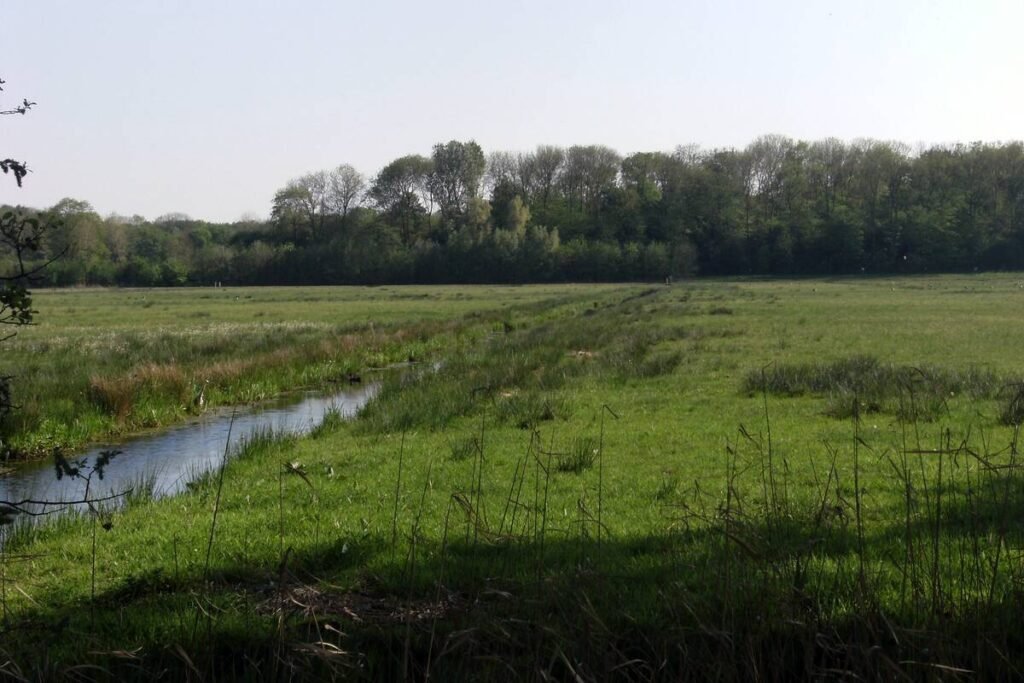
Amsterdam reads as a dense city of brick, water and bicycles, and from the middle of it you would never guess what sits just beyond the ring road.
Within an hour you can be in old-growth woodland, on a peat meadow under an enormous sky, in a reed marsh full of birds, or barefoot on the North Sea.
The city itself is greener than its reputation too.
There are lakes you can swim in, wild corridors most residents have never walked, and a forest three times the size of Central Park inside the municipal boundary.
This guide covers the best natural areas within Amsterdam first, then the easiest escapes immediately outside it, roughly in order of how far you have to go.
For city green space rather than countryside, see our Amsterdam parks guide and our pick of must-see parks and gardens.
1. Amsterdamse Bos
The Amsterdamse Bos is not a park in the ordinary sense.
It is a planted forest of around 1,000 hectares, laid out in the 1930s as a work-creation project, and it has matured into genuine woodland.
Inside it you will find dense tree cover, open meadows, streams and a network of waterways.
There are more than 100 kilometers of footpaths and cycle paths, so it absorbs crowds easily and rarely feels busy away from the entrances.
The Bosbaan, a two-kilometer rowing course, runs along the northern edge and is worth walking for the sheer straightness of it.
At the eastern end, the Nieuwe Meer opens out into sailing water.
Families tend to head for the goat farm, where children can feed the animals and the cafe sells its own cheese and ice cream.
There is a designated swimming area, plus rowing boats and canoes for hire in summer.
If the weather turns, the city’s indoor pools are the fallback.
Best for: an easy half-day outdoors without leaving the city.
2. Lakes and wilder spaces inside Amsterdam
Beyond the Bos, the city holds several genuinely wild-feeling places that most visitors never see.
Gaasperplas in the southeast is a large lake ringed by beaches, wooded paths and picnic areas.
It has proper family facilities and clean swimming water, and the metro drops you at the gate.
Diemerpark sits between IJburg and the Diem, on ground that was once a landfill and is now open grassland.
It has wide water views, good cycling paths and a small beach, and it is one of the best places in the city to watch a sunset.
De Bretten is the rough one.
A green corridor running west from Sloterdijk between the railway and the harbor, it is all reeds, ditches and scrub, and it carries more birdlife than anywhere else inside the city limits.
For something simpler, Sloterplas in Amsterdam-West is the easiest lake to reach for a walk, a run or a swim.
3. Waterland and Het Twiske
Take the free ferry across the IJ from Centraal Station, cycle north for fifteen minutes, and the city stops as if someone had drawn a line.
Waterland is the classic Dutch landscape: flat peat meadow cut by ditches, raised dykes, grazing cattle and a sky that takes up most of the view.
It is farmland rather than reserve, which is exactly why it feels unmanaged.
The villages are the reward.
Durgerdam is a single street of wooden houses along a dyke, Ransdorp has a stumpy unfinished church tower, Holysloot is barely more than a hamlet, and Broek in Waterland is famous for its painted timber facades.
You will want a bike for this - see how to rent one if you do not have your own.
The Waterland cycling route makes the obvious loop.
Birdwatchers come for the meadow birds in spring, and canoeists for the ditch network.
If you want facilities rather than emptiness, Het Twiske just north of the city is the larger recreational option.
It has lakes, woodland, beaches and marked cycling routes, and it is built for a day out with children.
4. The Amstel, Ouderkerk and the Ronde Hoep
Heading south along the Amstel is the gentlest way to leave Amsterdam.
You start among houseboats and rowing clubs and finish in open polder, without ever really noticing the transition.
The river narrows as you go, lined with old country houses and moored boats.
After about half an hour you reach Ouderkerk aan de Amstel, a small village with waterside terraces that is the standard turnaround point.
Nearby, the Ouderkerkerplas offers swimming and a circular walk, and De Hoge Dijk has woodland and a golf course on former polder land.
For the real countryside, continue into the Ronde Hoep, a circular polder of grazing meadow almost untouched by building.
It is one of the largest open landscapes this close to any European capital.
The Amstel cycling route covers the run south, and the municipality publishes local walking and cycling routes around Ouder-Amstel.
Best for: an easy countryside bicycle trip with a cafe at the far end.
5. Weesp, Naardermeer and the eastern wetlands
East of Amsterdam the land turns wet.
Weesp, twenty minutes by train, makes the natural gateway.
The town sits on the Vecht, a slow river lined with country estates, and Fort Uitermeer on its edge is part of the Defence Line of Amsterdam.
Riverside paths and meadow routes start more or less at the station.
The main destination out here is Naardermeer, the oldest protected nature reserve in the Netherlands, bought in 1906 to stop it being turned into a rubbish tip.
It is a landscape of reed beds, open water and wet woodland, and the birdlife is the best near the city - spoonbills, cormorants, marsh harriers and, if you are lucky, an otter.
Walking routes start from Stadzigt at the northern end, and Natuurmonumenten runs seasonal boat trips into parts of the reserve you cannot otherwise reach.
A little further north, the Ankeveense Plassen offer quieter waterside walking and some of the best canoeing in the region.
Best for: wetlands and birdwatching.
6. Dunes, forests and the coast
West of the city the land rises into dunes, and this is where you go for a full day out.
National Park Zuid-Kennemerland runs between Haarlem and the sea, and it is the most varied landscape within easy reach of Amsterdam.
Dune ridges, pine and birch woodland, and stretches of bare drifting sand all sit within a few kilometers of each other.
The park is grazed by Highland cattle, konik horses and European bison, kept as a herd in a fenced section you can walk through on a guided route.
Roe deer and foxes are common, and the birdlife shifts completely between seasons.
In summer the freshwater lake at ‘t Wed is the place to swim, and it gets busy on hot weekends.
Trains to Overveen, Bloemendaal and Santpoort put you at the edge of the park in under half an hour.
The Amsterdamse Waterleidingduinen, a little further south, are a different proposition.
These dunes still filter part of Amsterdam’s drinking water, and bicycles are banned inside - it is a walkers’ reserve.
The result is a vast, quiet dune landscape threaded with artificial water channels and pockets of woodland.
It holds a large fallow deer population, and seeing them at close range is close to guaranteed early or late in the day.
Entrances are at Zandvoort, Vogelenzang and De Zilk, and you need a ticket: €1.50 per person per day, or €10 for a year.
It also makes an easy addition to any of our day trips from Amsterdam.
From either park you can walk on to the beach and finish at Zandvoort or Bloemendaal aan Zee, both of which have direct trains home.
7. Which area should you choose?
One or two hours: Sloterplas, Diemerpark, Gaasperplas or De Bretten.
Half a day: Amsterdamse Bos, Waterland, the Amstel to Ouderkerk, or Weesp and Fort Uitermeer.
A full day: Zuid-Kennemerland, the Amsterdamse Waterleidingduinen, Naardermeer or Het Twiske.
With children: Amsterdamse Bos for the goat farm, Gaasperplas and Het Twiske for the beaches, and ‘t Wed in Zuid-Kennemerland for swimming.
8. Practical information
Most of these places are easiest to reach by bicycle, and several are genuinely awkward without one.
Waterland, the Amstel and the Bos are all designed around cycling rather than driving.
Riders unfamiliar with Dutch roads should read the cycling rules first.
For everything further out, the train is quicker - Weesp, Naarden-Bussum, Overveen and Zandvoort are all direct, and you can plan journeys on the NS site.
Before swimming in any lake, check the official water quality warnings at zwemwater.nl.
Blue-green algae closes Amsterdam lakes several times most summers.
In the dunes and wetland reserves, stay on marked paths - much of the ground either side is closed for nesting or grazing.
Dog rules vary by reserve and are strictly enforced.
Weather here changes fast, so check the seasonal weather guide before a long day out.
Carry water, since there is very little for sale inside the larger reserves.
Check yourself for ticks after walking through long grass or woodland; the RIVM explains what to look for.
Where to start
The useful thing about Amsterdam is that its landscape does not begin somewhere else.
It starts inside the city and widens in every direction.
North for polders and wooden villages, east for wetlands and rivers, south for the Amstel and its meadows, and west for dunes and the sea.
Pick a direction and an afternoon.
All four are within an hour of Centraal Station.

![Top [count] Travel Blogs to Follow - OnToplist.com](https://www.ontoplist.com/images/ontoplist31.png?id=6a8dcf108f478)