
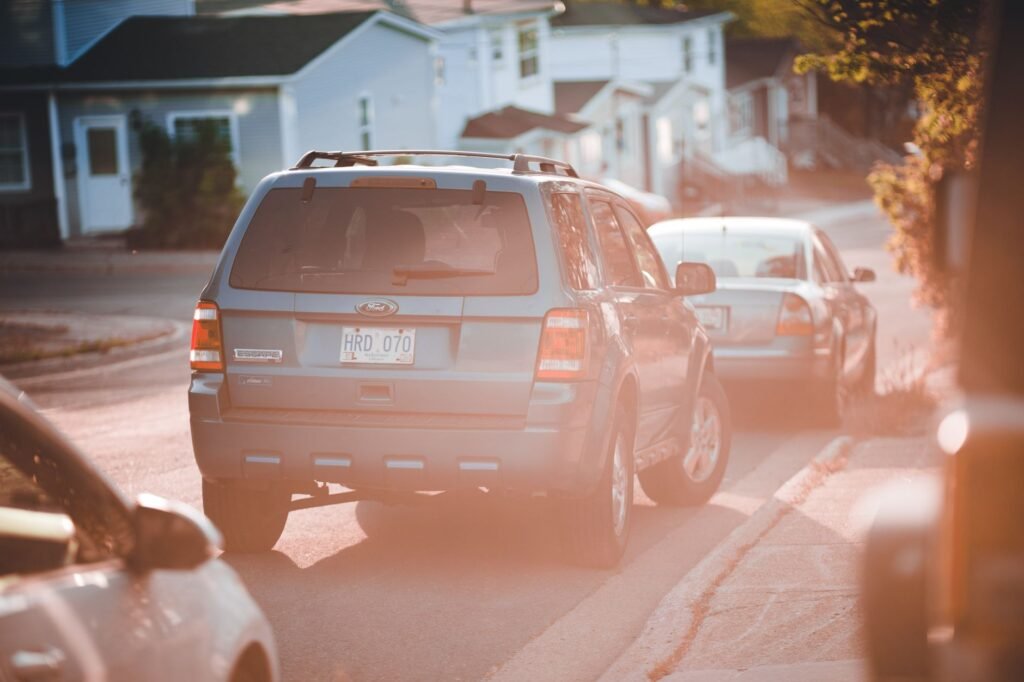
A car in the Netherlands costs roughly €1,500 a year before you buy any fuel.
Third-party insurance, quarterly road tax and the APK inspection are all compulsory, and central Amsterdam parking runs to €7.50 an hour on top.
Decide whether you need one before working out how to get one.
Outside the big cities a car earns its keep; inside the ring, a transit account and a bike cover almost everything for a fraction of that.
What You Need Before You Can Own One
You need a BSN tied to a registered Dutch address, and a licence the Netherlands recognises.
The BSN comes with registering at the gemeente, and without it the RDW cannot put a vehicle in your name.
An EU or EEA licence is valid here until its own expiry date, to a maximum of fifteen years from issue for category B.
After that you exchange it at the gemeente with no exams.
A licence from outside the EU or EEA lasts 185 days from the day you register, and then stops counting.
Some countries have exchange agreements and some do not; the RDW publishes the current list at rdw.nl, and the driving licence guide covers the exam route if yours is not on it.
Holders of the 30% ruling can exchange a licence from any country, regardless of agreements.
That exemption is worth more than most people realise, and it expires with the 185-day window like everything else.
Buying And Registering
Where People Actually Look
New cars come through the big dealer groups - Louwman, Pon, Van Mossel, Hedin, Emil Frey and Broekhuis all have showrooms nationwide, and autodealers.nl finds authorised dealers by brand and region.
Used cars are almost all online: Marktplaats for private sellers, AutoScout24 and Gaspedaal for aggregated dealer stock.
Bynco and Auto.nl sell dealer-certified used cars at fixed prices with a return period, which is the low-effort option if you cannot inspect a car yourself.
Whatever the source, run the plate through the RDW’s free vehicle check before paying - it shows the APK history, the recorded mileage and whether the car has outstanding claims against it.
The Transfer
The seller hands you the kentekenbewijs and the tenaamstellingscode, and that nine-digit code is what actually moves the registration into your name.
A dealer does the transfer for you; in a private sale you both go to a PostNL point or an RDW station and do it there and then.
The seller must leave with a vrijwaringsbewijs proving the car is no longer theirs.
Until the transfer completes, the registered owner is liable for the road tax and every fine the car collects, so do not agree to “sort the paperwork next week”.
The Three Running Costs
Insurance
WA-verzekering, third-party liability, is the legal minimum and covers only damage you cause to others.
WA+ adds theft, fire and storm; all-risk adds damage to your own car.
Expect €300 to €600 a year for basic cover, moving with the car’s value and your claims record.
Centraal Beheer, FBTO and InShared all quote online in minutes.
Dutch cover attaches to the car rather than the driver, so anyone you allow to drive it is insured.
Bring a no-claims certificate from your previous insurer in English if you have one, because several Dutch insurers will honour the years.
Road Tax
Motorrijtuigenbelasting is billed quarterly by the Belastingdienst and calculated from the car’s weight, its fuel type and the province you live in.
Diesel carries a surcharge, which is why a cheap second-hand diesel is rarely cheap to run.
Electric cars lost their full exemption and hold a reduced rate for 2026 onwards, and plug-in hybrids pay in full from 2026.
Because MRB is weight-based, a heavy hybrid can now cost more than the equivalent petrol car - check your exact plate on the Belastingdienst’s calculator before buying, not after.
APK Inspection
The APK is the Dutch roadworthiness test, equivalent to the British MOT.
New petrol and electric cars get their first at four years, diesels at three.
After that petrol cars are tested every two years until they are eight years old and annually thereafter, and diesels annually throughout.
The test costs €30 to €60 at an approved garage, and the result is filed to your registration automatically.
The RDW sends a reminder about six weeks before expiry.
Driving without a valid APK is an offence in its own right and invalidates your insurance, and older high-emission cars also face Amsterdam’s zero-emission zones.
Importing And Selling
A car brought in from another EU country needs no import duty, but it does need RDW registration and BPM, the Dutch vehicle purchase tax.
BPM is calculated on CO2 emissions and depreciates with the car’s age, and it is separate from VAT.
You can be exempted from BPM under the relocation rules if you owned and used the car for at least six months before moving.
Apply for that exemption before registering the car, because it cannot be claimed retrospectively.
Cars from outside the EU attract customs duty and VAT on top of BPM, and all imports need an RDW roadworthiness inspection that can take weeks to schedule.
Selling is quickest through ikwilvanmijnautoaf.nl or wijkopenautos.nl, which give competing quotes and complete in days, and slowest but usually dearest through Marktplaats.
Whichever you use, do the official transfer on the day and keep the vrijwaringsbewijs - the same rule applies to selling anything else here.
If you paid BPM on import and later export the car, you can reclaim part of it based on the car’s remaining value.
Start that claim before the car leaves the country.
Related reading
- Amsterdam Divorce Guide For Expats: What To Know First
- Amsterdam Dutch Lessons Guide For Expats
- Amsterdam Healthcare Guide For Expats: What To Do First


![Top [count] Travel Blogs to Follow - OnToplist.com](https://www.ontoplist.com/images/ontoplist31.png?id=6a8dcf108f478)