Four chains do most of the grocery shopping in Amsterdam, and they are not interchangeable on price, hours or where they put their branches.
Albert Heijn and Jumbo are the full-range supermarkets, Lidl and Dirk van den Broek the discounters, and the gap between them is wide enough that most households use two.
Who opens when
The earliest doors in the city belong to Jumbo on the Buitenveldertselaan, which runs seven in the morning to half past ten at night, seven days a week, and is the only branch here still trading after ten on a Sunday.
Albert Heijn on the Nieuwezijds Voorburgwal and AH Gelderlandplein also open at seven on weekdays, an hour later at the weekend.
Sunday is a normal trading day almost everywhere, with one notable exception: Jumbo on the Pieter Calandlaan in Nieuw-West opens at nine and shuts at eight, two hours earlier than its own weekday close.
In the centre, Dirk on the Warmoesstraat keeps the shortest day of the lot, half past nine to nine, so it is the wrong bet for an early or a very late shop.
AH on the Elandsgracht splits the difference at half past seven to ten, every day including Sunday.
The two things that catch people at the till
Almost every plastic bottle and drinks can carries a deposit (statiegeld) that is added at the checkout and refunded when you bring the empty back to the machine at the front of the shop.
It is 25 cents on a plastic bottle of a litre or more, and 15 cents on smaller bottles and on cans, which is enough to be worth a bag rather than a bin.
Carrier bags are never free and never packed for you, so bring your own or expect to pay for one at every shop in the country.
The discount you only get through the app
A large share of the shelf promotions at Albert Heijn and Jumbo are conditional on scanning the chain’s own app or loyalty card at the checkout.
Signing up costs nothing and takes an email address, and without it you pay the full price on items marked as offers.
Lidl and Dirk price low across the shelf instead, which is why the two systems are hard to compare on a receipt.
Where the big-format shops are
Albert Heijn XL on the Osdorpplein is the large-format store in the west, open eight to ten daily.
Jumbo’s Foodmarkt on the Gedempt Hamerkanaal in Noord is the equivalent on the other side of the IJ, and it carries a florist alongside the groceries.
Landmarkt, out on the Schellingwouderdijk past Noord, works as market, supermarket and general store at once and is worth the ride for a big fresh shop, nine to eight and from eleven on Sunday.
The shops that fill the gaps
The chains stop well short of a full international range, and several independents in the same category go further than any of them.
Shilla on the Gelderlandplein carries Japanese and Korean groceries and has the following to match, on nearly 2,000 reviews - note the late Monday start at half past eleven and the short Sunday, noon to five.
Tigris en Eufraat on the Javastraat is a fully halal Middle Eastern shop that also makes falafel and wraps to order, open ten to nine every day.
Little India on the Johan Huizingalaan does Indian groceries seven days a week, ten until quarter past eight.
Mix Markt on the Nickeriestraat in Nieuw-West is open eight to eight daily and rates higher, at 4.6 over 696 reviews, than any of the big-chain branches here.
Bakaliko on the Sint Nicolaasstraat is Greek, part deli and part coffee shop, with an online range of more than 800 products - it is closed on Mondays and shuts at six.
For a wider run at the same idea, the city’s Asian supermarkets and gourmet groceries and delis are listed separately.
Delivery
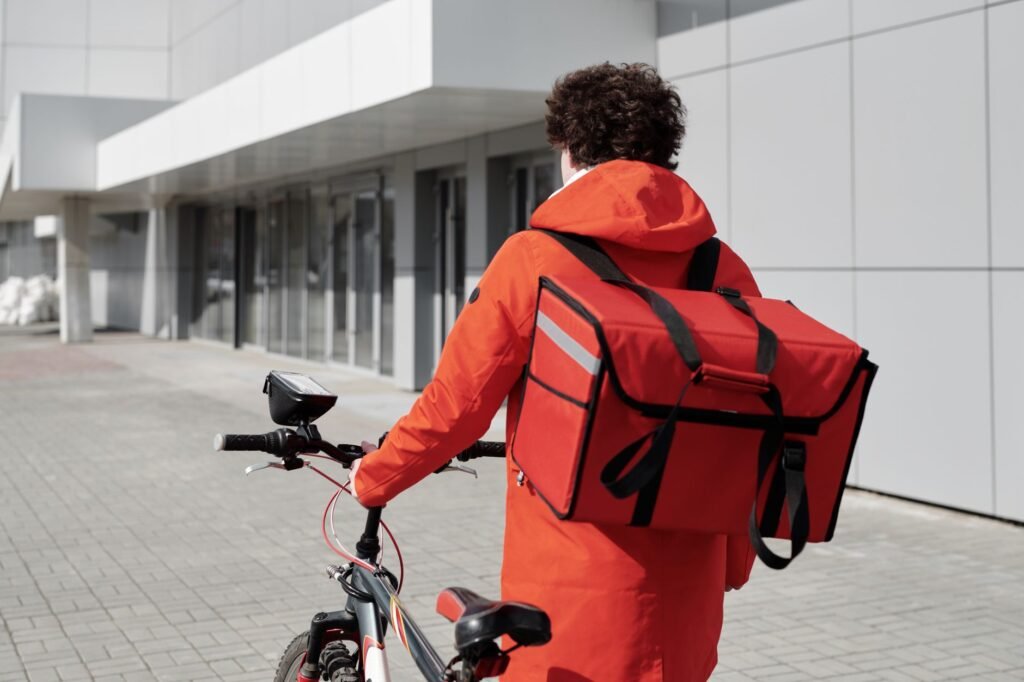
Both Albert Heijn and Jumbo deliver from their own apps, which is the dependable route for a heavy weekly shop when you have no car and a bike that will not carry it.
The full list of Amsterdam supermarkets carries the address, phone number and opening hours for every branch.
Related guides
- Where to Eat Mexican and Latin American Food in Amsterdam
- Where to Eat Turkish Food in Amsterdam
- Shopping for Asian Groceries in Amsterdam
Related reading
Rather not carry it home?
Our guide to food delivery in Amsterdam compares supermarket delivery, meal boxes and the takeaway apps.