
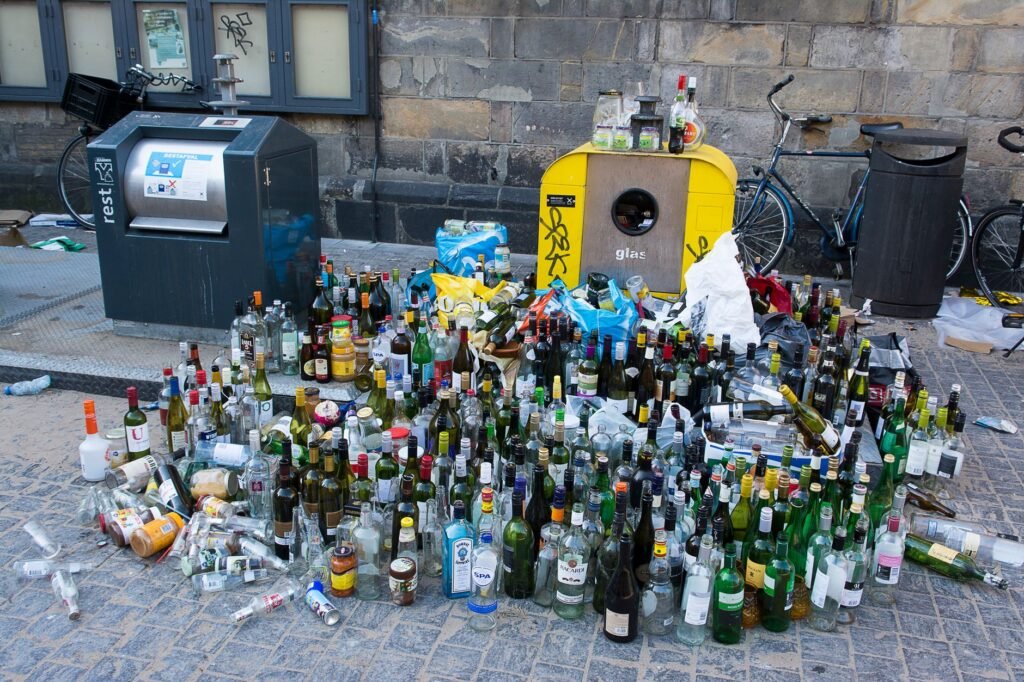
Four streams, one card, one app.
Separate paper, PMD packaging, GFT food and garden waste and restafval; open the street containers with your afvalpas; check collection days on MijnAfvalwijzer.
The details are set by your gemeente, not nationally, so the rules change when you move city.
Put the wrong thing in the wrong container and some municipalities will fine you for it.
The Four Household Streams
Papier en karton: clean paper and flattened cardboard.
A greasy pizza box goes in restafval, because the grease ruins the batch.
PMD: plastic packaging, metal tins and drink cartons, in a bag or a bin depending on your area.
Rinse anything that held food, and leave lids on bottles.
GFT: food scraps, garden waste and coffee grounds.
Several city centres, including much of Amsterdam, have limited or no separate GFT collection - check your own postcode rather than assuming there is a green bin.
Restafval: everything that fits none of the above.
When you genuinely do not know, restafval is the safe answer, because contamination costs more than a missed recyclable.
In cities you drop bags into shared underground containers on the street; in towns and villages you get your own wheelie bins emptied on a fixed day.
Set up separate bags in the kitchen on day one, because sorting afterwards is a job nobody does twice.
Statiegeld
Plastic bottles and drink cans carry a refundable deposit, added at the till and returned when you feed the empties into the machine at the supermarket.
It is €0.15 on cans and small bottles and €0.25 on bottles over a litre, so a fortnight’s empties is real money.
The machine prints a voucher you redeem at the checkout or donate to the charity on the screen.
Bottles must be uncrushed with the barcode readable, which is the reason a machine rejects them.
Where The Awkward Things Go
Glasbak: jars and bottles only, at containers on street corners and outside supermarkets.
Some municipalities separate white, green and brown glass and others take it all together; window glass, drinking glasses, light bulbs and Pyrex belong in none of them.
Textielbak: clothes, shoes and household linen, clean, dry and in a closed bag.
Torn and stained items still belong here rather than in restafval, because the fabric is recycled industrially.
Klein chemisch afval: batteries, paint, solvents, cleaning chemicals and expired medicines.
Supermarkets and chemists take batteries and medicines; the rest goes to a collection point or the milieustraat.
Electricals: anything with a plug or a battery goes back to a shop that sells the same category, or to the milieustraat.
Retailers are obliged to take back an old appliance when they deliver the new one.
Milieustraat: the municipal recycling yard, for rubble, timber, furniture, garden waste and anything too large for a container.
Bring proof of address, because entry is limited to residents of that gemeente - anyone mid-renovation will be there often.
Local Rules, The App And The Bill
Enter your postcode and house number at MijnAfvalwijzer for your own collection calendar, with push reminders the evening before.
Some municipalities run their own app instead, so check the gemeente’s homepage if your postcode is not covered.
Underground containers in most cities open only with an afvalpas linked to your address.
It is posted to you after you register at the gemeente; if it does not arrive, ask, because there is no other way in.
Do not lend the card out.
Openings are logged against your address, and in the municipalities that bill per opening you are paying for whatever someone else puts in.
Every household pays afvalstoffenheffing, an annual waste charge collected with your municipal taxes.
Rates vary widely by gemeente and household size, and the large cities sit at the higher end - your own figure is on the gemeente’s website, and it forms part of the cost of living nobody budgets for.
Some municipalities charge a flat rate and others per bag or per container opening, which is why the same household pays very different amounts in two towns.
Before You Throw It Away
Kringloopwinkels, the second-hand shops, exist in almost every town and take furniture, kitchenware, books, working electronics and clothing.
RataPlan and similar chains collect larger donations from your door at no charge.
Furnishing a first Dutch flat from a kringloop is normal here rather than a last resort, and it is the cheapest way through the first month in a new place.
To sell rather than donate, Marktplaats, Vinted and Facebook Marketplace all work - the selling guide covers which suits what.
Grofvuil, bulky waste, is collected from the kerb by appointment, booked online through your gemeente and free a set number of times a year in most places.
Put it out only on the date you were given.
Leaving furniture on the street without a booking is illegal dumping, and the fines run to several hundred euros.
Enforcement officers open dumped bags and trace the address on the paperwork inside, which works more often than people expect.
![Top [count] Travel Blogs to Follow - OnToplist.com](https://www.ontoplist.com/images/ontoplist31.png?id=6a8dcf108f478)