Dutch drinking runs on pilsner in small glasses, a spirit almost nobody outside the country orders, and an after-work ritual with its own name.
This guide covers what is actually on tap, what the seasonal beers are and when they appear, how jenever is drunk, and where the craft breweries are, which is often not where people assume.
If you are settling into expat life in the Netherlands, the glass sizes alone are worth knowing before you order.
What People Actually Drink
Pilsner is the default in every bar and restaurant in the country, and has been for well over a century.
Heineken, Amstel and Grolsch are the national names, but regional loyalty is strong: Bavaria and Hertog Jan in the south, Gulpener, Lindeboom and Budels in Limburg, Dommelsch in Noord-Brabant.
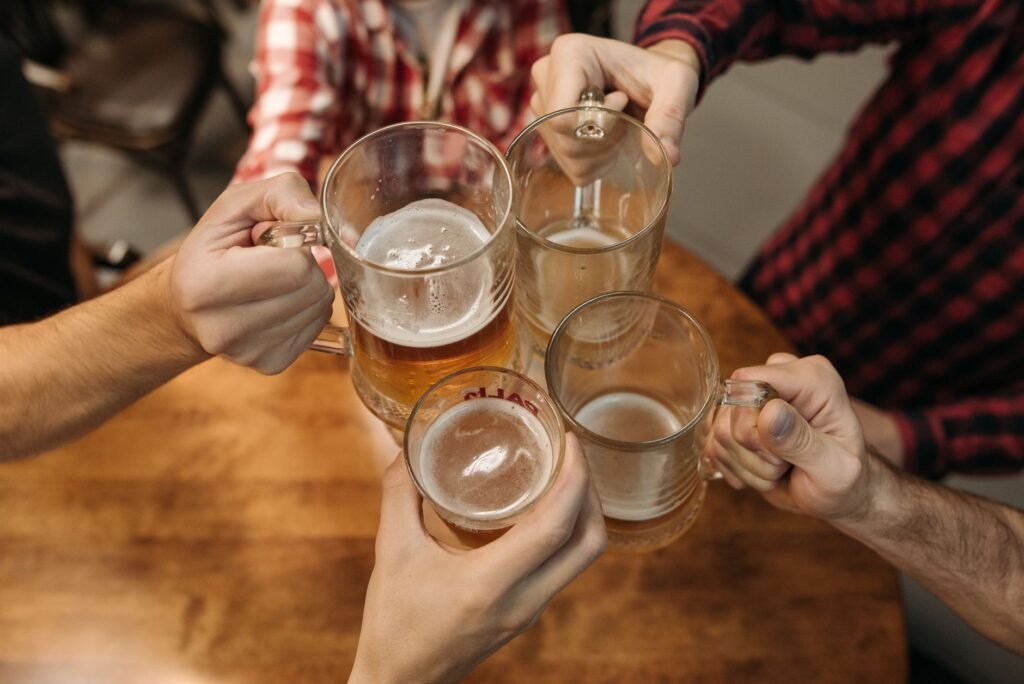
The pour is smaller than visitors expect, because a vaasje holds around 250 millilitres rather than a pint.
The logic is that a small glass finished quickly stays cold, which is why ordering another is normal rather than a comment on the last one.
Ask for a biertje and you will get whatever pilsner is on tap in the house glass.
Wine has gained ground with younger drinkers, but beer still carries the terraces, the borrel and King’s Day.
To eat alongside it, the restaurants worth finding in Amsterdam are covered separately.
Classic And Seasonal Styles
Bokbier is the seasonal event of the Dutch beer year, and herfstbok arrives every autumn with breweries competing over whose is best.
It is darker, maltier and stronger than pilsner, and bars across the country run bock tastings for a few weeks when it lands.
Lentebok appears in spring as the lighter, hoppier counterpart, and both disappear again quickly.
Witbier is brewed with unmalted wheat, coriander and orange peel, comes out cloudy, and is on tap all year rather than seasonally.
Dubbel is the abbey style, made by both Trappist and secular breweries here, and it is the one to order if pilsner has started to bore you.
Gruit, bittered with herbs instead of hops, has come back in a small way among brewers working from pre-hop recipes.
Jenever, Korenwijn And The Kopstoot
Jenever is the historic spirit of the Low Countries and has been made here since the Middle Ages, long before anything recognisable as gin existed.
Jonge jenever is the lighter, cleaner style, and oude jenever carries more malt wine, so it is maltier and rounder.
Korenwijn is the strongest expression of the three, required to contain at least 51 per cent malt wine.
The ritual to know is the kopstootje: a tulip glass of jenever filled to the brim alongside a small beer.
The glass is too full to lift, so you lean over the bar and take the first sip without hands, then chase it with the beer.
This is a brown café tradition rather than a cocktail bar one, which is where to go looking for it.
Advocaat, the thick egg liqueur, and oranjebitter, drunk on King’s Day, complete the list of things you will be offered and should try once.
For somewhere to practise ordering with a view, see the rooftop bars in Amsterdam.
The Craft Breweries And Where They Actually Are
For most of the twentieth century a handful of companies brewed nearly all Dutch beer, and the range on offer reflected that.
The picture changed through the 2000s and opened up sharply after 2010, and there are now several hundred breweries in the country.
La Trappe is the only Dutch Trappist brewery, at Koningshoeven in Noord-Brabant.
Brouwerij de Molen in Bodegraven built its reputation on stouts and barleywines, and Jopen brews in a converted church in Haarlem.
Two names often placed in Amsterdam are not: Uiltje Brewing Company is in Haarlem and De Moersleutel is in Alkmaar, so look for their beer in Amsterdam bars rather than for their breweries.
Kaapse Brouwers is in Rotterdam, Van Moll in Eindhoven, and Nevel Artisan Ales works with wild fermentation and local ingredients outside the Randstad.
Drinking In Amsterdam Itself
Brouwerij ‘t IJ is the city’s best-known independent brewery, and it runs three tasting rooms rather than one.
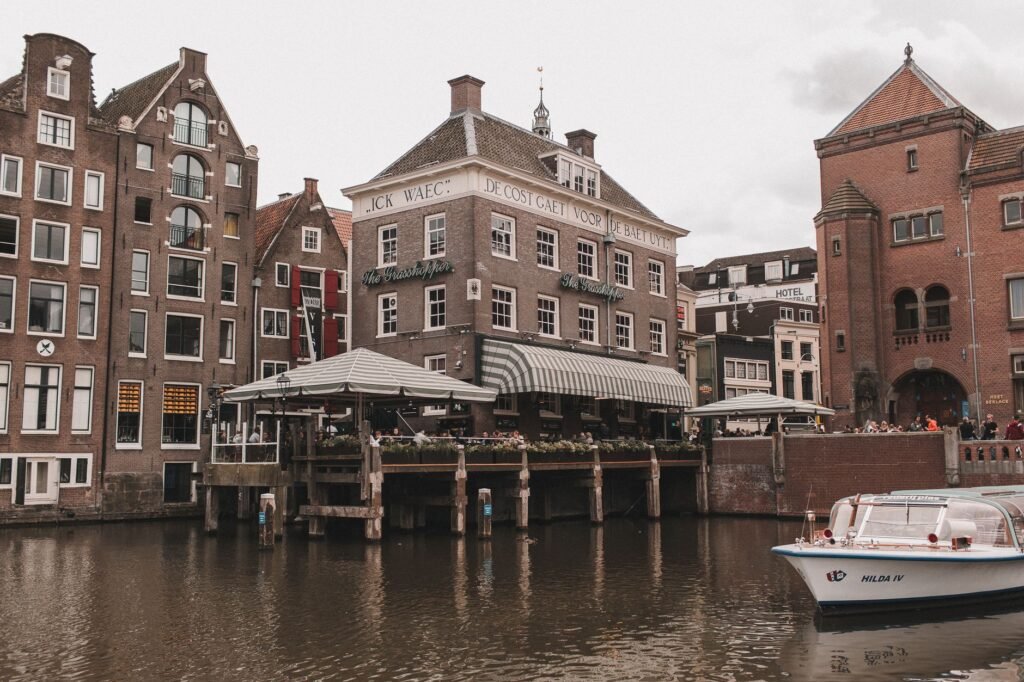
Proeflokaal de Molen sits beside the De Gooyer windmill in Oost, Café Struis is in the centre, and ‘t Blauwe Theehuis is the round pavilion in the middle of Vondelpark.
Its range runs from IJwit, the wheat beer that remains the house favourite, to seasonal releases that change through the year.
Brown cafés are the other half of drinking here: wood-panelled, unhurried, and the natural setting for a kopstootje rather than a cocktail.
One practical point for visitors is statiegeld, the deposit charged on most bottles and cans, refunded when you return the empties to a supermarket machine.
It is a few cents to a few tens of cents per container and it fits the wider recycling system.
Cards are accepted almost everywhere, which matters if you are still working out how payment works here.
Frequently Asked Questions
What are the social customs around drinking in the Netherlands?
The borrel is the central one: an informal drink after work with colleagues or friends, with snacks such as bitterballen and cheese cubes.
Rounds are common and splitting the bill afterwards is entirely normal rather than awkward.
What do people say before drinking?
Proost, with eye contact and a raised glass, before the first sip.
Op je gezondheid, meaning to your health, turns up in more formal company.
Why are the beer glasses so small?
A vaasje holds about 250 millilitres and a fluitje less, on the reasoning that a small beer finished quickly is a cold beer throughout.
Ordering the next one is expected, so the size is not a portion judgement.
Which beers are most widely drunk?
Heineken nationally, with Amstel, Grolsch and Bavaria close behind.
What is on tap changes by province, so Hertog Jan, Gulpener, Lindeboom and Budels dominate in the south.
What should a first-time visitor order?
A well-poured pilsner first, to see what the everyday standard is.
Then a La Trappe dubbel for the abbey style, a herfstbok if you are here in autumn, and an IJwit if you are in Amsterdam.
Where can I try Dutch craft beer in Amsterdam?
Brouwerij ‘t IJ’s three tasting rooms are the obvious start, particularly the one beside the De Gooyer windmill.
Specialist beer bars in the centre will carry Jopen, Uiltje and De Molen even though none of those brews in the city.