
The first ninety days in the Netherlands are a sequence, not a to-do list, and doing them out of order is what costs people weeks.
Residence permit, then gemeente registration and BSN, then DigiD, then bank account and health insurance - each one is the key to the next.
Housing is the exception, because it runs on its own clock and needs to start months earlier than any of it.
If your move is still ahead of you, the moving to the Netherlands checklist covers the pre-departure half.
Getting Set Up in Your First 90 Days
You need a valid residence permit before you can legally live or work here.
Most professionals arrive on the highly skilled migrant permit, which requires a Dutch employer registered as an IND recognised sponsor.
The other routes are student permits, partner and family reunification, and self-employment options for anyone freelancing in the Netherlands.
Settle the permit before you travel; starting it after arrival adds months you will spend unable to work.
Once you land, book the gemeente appointment that registers your address and issues your BSN.
Bring your passport, your apostilled birth certificate and proof of your Dutch address, and expect a wait for the slot itself in the bigger cities.
DigiD follows the BSN, and its activation code arrives by post at the address you just registered.
That single dependency is why a temporary address is worth registering rather than waiting for the permanent one.
Depending on your permit you may also fall under the inburgering obligation, which means Dutch language study and the civic integration exam.
Highly skilled migrants are generally exempt, but the letter from DUO is what confirms it either way.
Finding Housing and Choosing the Right City
Housing is the hardest part of the move and the one least helped by preparation elsewhere.
Supply is short in every major city and competition for rentals is intense, so start looking months before you arrive.
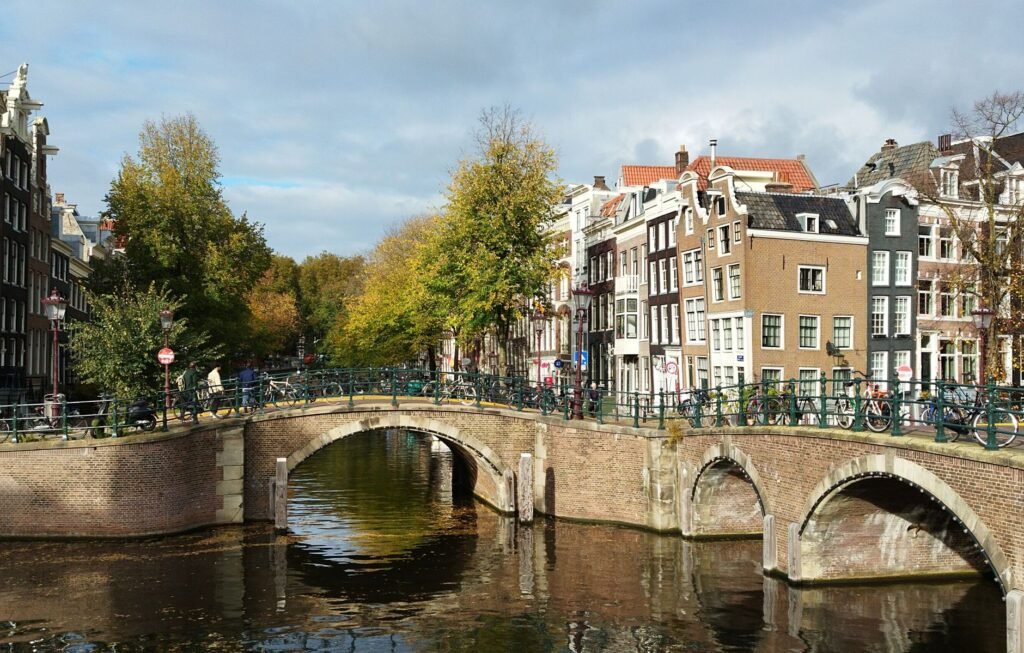
Amsterdam draws most international arrivals for the job market and the English-language workplace culture, and the guide to Amsterdam covers neighbourhoods in detail.
Expect roughly €1,500 to €2,600 a month for a one-bedroom in the city.
Rotterdam costs less and has depth in logistics and engineering, Utrecht suits families and anyone wanting a compact centre, The Hague is the government and NGO city, and Eindhoven is the technology cluster.
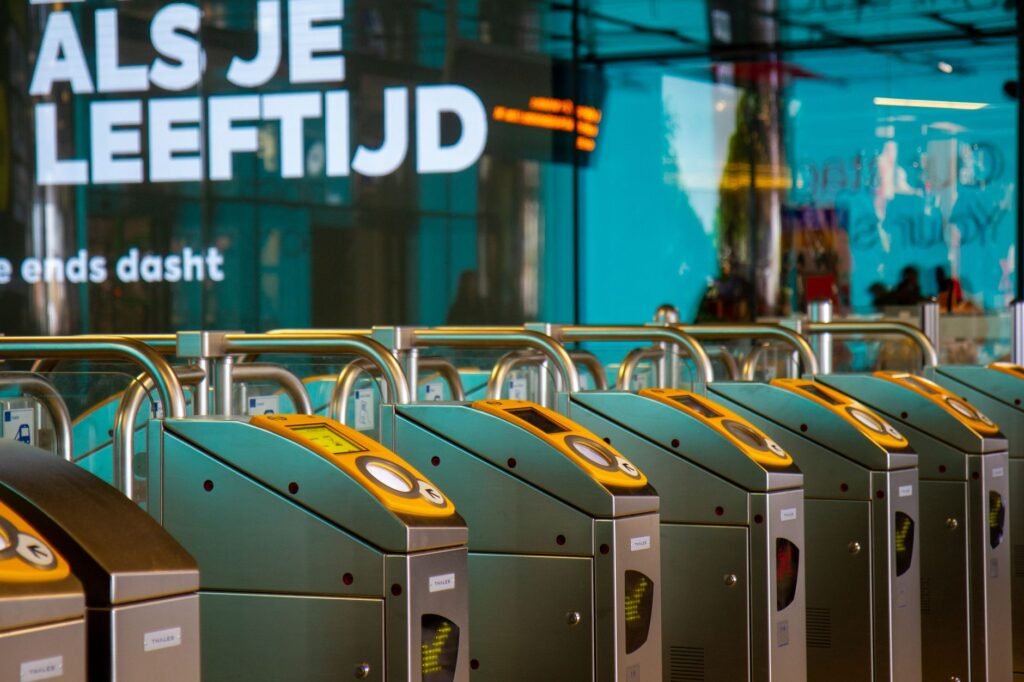
The country is small enough that living in one city and working in another is entirely normal, and a personal OV card makes that commute cheaper.
For rentals, Pararius carries the largest English-language listings, Kamernet covers rooms and shared housing, and Funda is primarily for buying.
Rental agencies in Amsterdam can shorten the search, particularly with landlords who will not deal with internationals directly.
Never transfer a deposit before you have seen the property and confirmed who legally owns it.
The housing in the Netherlands guide covers contracts and tenant rights.
Budgeting, Banking, and Taxes
A single person generally spends somewhere between €2,500 and €4,300 a month, and rent is the variable that moves that range.
Groceries run roughly €350 to €550, utilities €180 to €260, and transport €60 to €150.
The cost of living in Amsterdam guide breaks the city figures down further.
Daily payment here runs on debit cards and Tikkie rather than credit cards, so a Dutch bank account is not optional.
ING, ABN AMRO and Rabobank all serve customers in English, and all three want your BSN, valid ID and proof of address to open an account.
The banking in the Netherlands guide compares them, and credit card options are worth a look afterwards for travel and online purchases.
Dutch income tax splits into three boxes: box 1 for employment income and your own home, box 2 for substantial business holdings, box 3 for savings and investments.
Rates are progressive and, with national insurance contributions included, run from roughly 36 per cent to 49.5 per cent.
The Belastingdienst handles filing and your DigiD is the login.
The 30 per cent ruling lets a qualifying employer pay part of a highly skilled migrant’s salary as a tax-free allowance, but both the percentage and the salary threshold have been changed repeatedly by successive tax plans.
Check the rate and the threshold for the current year with the Belastingdienst before you build them into an offer negotiation or a budget - the Dutch tax system guide covers how it is applied.
The salary and payslip guide shows how it lands on an actual payslip.
Healthcare, Work Culture, and Everyday Life
Dutch healthcare runs on mandatory private insurance, and you have four months from registration to arrange your basisverzekering.
Insurers must publish the following year’s premiums by mid-November, which is when the switching window opens and comparison is actually worth doing.
Every policy carries an annual deductible, the eigen risico, of at least €385, though GP visits are exempt from it.
If your income is low enough, zorgtoeslag offsets part of the premium.
The Dutch health insurance guide covers choosing a plan and adding dental cover or physiotherapy, and the healthcare system overview explains referrals and GP registration.
Dutch working culture rewards punctuality and directness rather than hours logged, and leaving at five is unremarkable.
Part-time contracts are common at every level, including senior roles, which is genuinely different from most Anglophone markets.
Tech, finance, logistics and healthcare have the deepest English-language hiring - the jobs in the Netherlands page lists where to look.
Cycling is transport here, not recreation, and in most of Amsterdam it is the fastest way to cross the city.
Bike theft is common enough that bike insurance pays for itself.
You can work in English indefinitely, but Dutch is what moves you from colleague to neighbour, and even A2 changes how much of the city is legible to you.
One of the Dutch language courses in Amsterdam in your first year is the cheapest version of that.
Frequently Asked Questions
What are the biggest disadvantages foreigners should expect when living in the Netherlands?
The housing shortage is the one that actually changes decisions, and the grey stretch from October to April wears on people more than they expect.
Dutch directness reads as blunt until it doesn’t, and friendships form slowly because many people keep the circle they grew up with.
How hard is it to find an English-speaking job in the Netherlands as a foreigner?
Tech, finance, logistics and multinationals hire in English, concentrated in Amsterdam, Rotterdam and Eindhoven.
Smaller firms and anything customer-facing generally need Dutch.
A highly skilled migrant permit improves your odds because it removes the labour market test from the employer’s side.
Can you move to the Netherlands without a job offer, and what are the legal requirements?
US citizens can enter visa-free for 90 days, but that permits neither work nor residence registration.
Staying longer requires a sponsored work permit, a student permit, a partner permit or a self-employment permit - the residence permit guide sets out each route.
What are the real monthly costs of living in the Netherlands for a newcomer?
Budget roughly €2,500 to €4,300 a month for one person, with rent the dominant line.
An Amsterdam one-bedroom runs €1,500 to €2,600, and groceries, insurance, utilities and transport add another €700 to €1,200 depending on how you live.
How difficult is it to find housing in the Netherlands, and what should newcomers watch out for?
Demand outruns supply in Amsterdam, Utrecht and The Hague, and bidding above asking is routine for both renting and buying.
The recurring scam is a deposit requested before a viewing, so never send money for a property you have not stood inside.
Search Pararius and Funda, and add local rental agencies rather than relying on portals alone.
Are there legitimate programs that pay people to relocate to the Netherlands, and how do they work?
There is no national scheme that pays foreigners to move here.
The nearest thing is the 30 per cent ruling, a tax facility for qualifying highly skilled migrants recruited from abroad, and its terms are set by whichever tax plan is current.
Beyond that, relocation packages are negotiated employer by employer and cover anything from a moving allowance to temporary housing and visa sponsorship.