Moving to Amsterdam is a sequence, not a list, and doing it out of order is what costs people months.
Your visa route decides everything downstream, the gemeente registration unlocks the BSN, and the BSN unlocks banking, insurance and salary.
What follows is that sequence, plus the housing search and the schools and healthcare questions that come with a family.
Before And Immediately After Arrival
Start with the visa, because it sets the timetable for everything else.
Americans setting up on their own account use the DAFT route under the Dutch American Friendship Treaty, which requires 4,500 euros held in a Dutch business bank account.
If a company hired you, they file the highly skilled migrant application with the IND themselves.
EU and EEA citizens need no permit at all but still have to register with the municipality.
Registration with the Gemeente Amsterdam is the first thing to do on the ground, and it produces your BSN.
Book the appointment before you fly, because the wait for a slot is the longest single delay in the process.
You need an address you are permitted to register at, which rules out most hotels and short-stay lets.
Book a temporary apartment that explicitly allows registration for your first month, and confirm that in writing before you pay.
Once the BSN exists, three things move at once.
Dutch health insurance is compulsory within four months and backdated to the date you became liable, so the premiums accrue whether you have arranged it or not.
Open a Dutch account with ABN AMRO, ING or Rabobank, since rent and salary both expect a Dutch IBAN.
Request DigiD the same week, because the activation code travels by post and everything online waits on it.
If you are on a skilled migrant permit, ask your employer about the 30 per cent ruling.
For 2026 it exempts 30 per cent of gross salary from tax, drops to a flat 27 per cent from 1 January 2027 for the rest of the five-year term, and needs a taxable salary of at least 48,013 euros, or 36,497 euros for a master’s graduate under 30.
Transport needs nothing bought in advance.
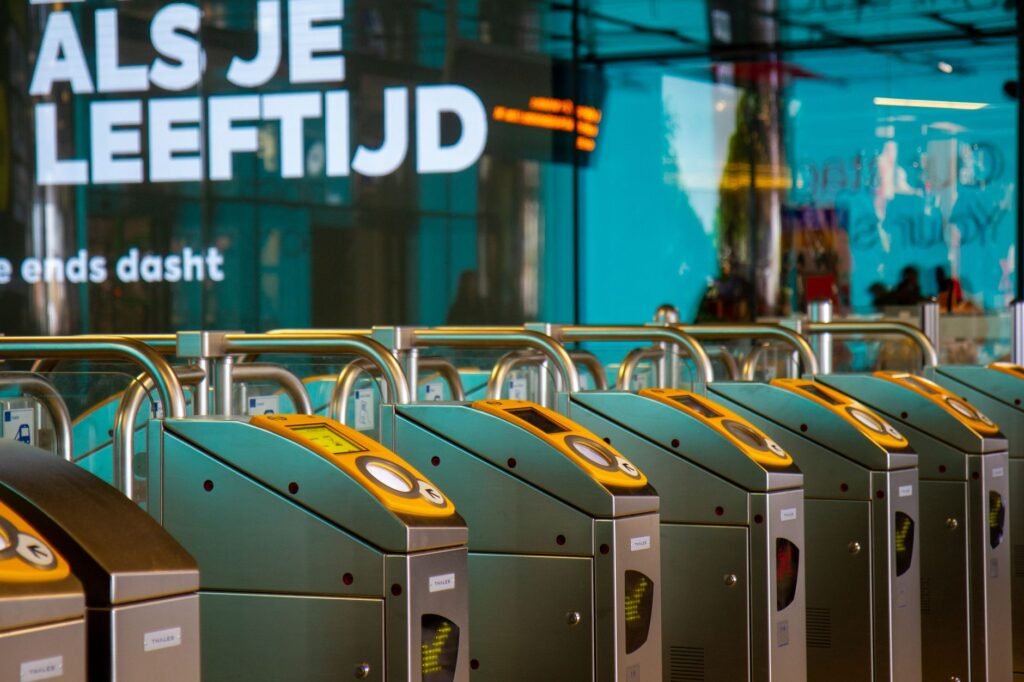
A contactless bank card or phone taps in and out on trams, buses, the metro and national rail through OVpay, and the anonymous OV-chipkaart is being retired, so buy one only if you specifically need a season product it still carries.
Housing And Which Area
The rental market moves in days and viewings are competitive rather than casual.
Start two to three months out, use Funda for buying and Pararius for rentals, and expect roughly 1,500 to 2,800 euros a month for a central one-bedroom and 3,000 to 6,000 for a family three-bedroom.
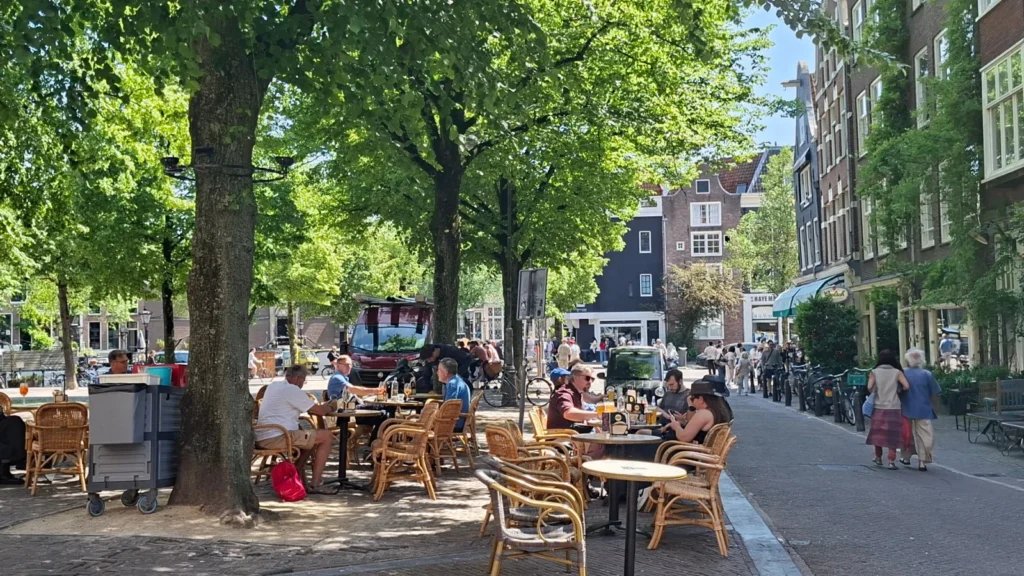
De Pijp is the dense, café-heavy option, built around the Albert Cuyp market.
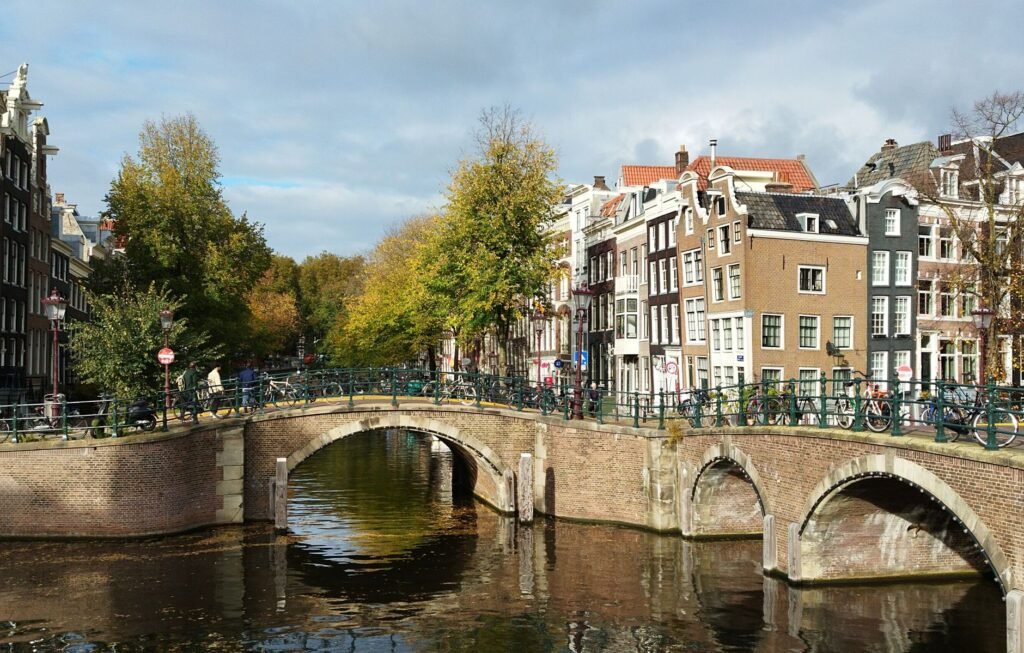
The Jordaan gives you the canal-house streets at a premium, and Oud-West trades some of that charm for more residential space with Vondelpark on the doorstep.
Oud-Zuid is the expensive family choice, close to the Zuidas and the international schools.
Amsterdam-Noord across the IJ is where the space-per-euro is best, particularly around NDSM, reached by the free ferries behind Centraal.
Watergraafsmeer, east of the centre, is quieter and greener with schools nearby.
Check that whoever is renting to you actually owns or lawfully sublets the property, and never transfer a deposit before a signed contract and a viewing in person.
Rental fraud targets people in a hurry from abroad, and copied listings at low prices are the standard form it takes.
Schools, Healthcare And Family Life
Amsterdam offers Dutch public schools, bilingual programmes and full international schools, and the choice shapes the whole move.
If an international school is on your list, our guide to Amsterdam’s international schools sets out the subsidised and private options and how to apply.
The Amsterdam International Community School is government-subsidised and teaches the IB, charging an annual parent contribution rather than full fees.
The International School of Amsterdam is fully private with tuition in the tens of thousands per year depending on the year group.
The British School of Amsterdam follows the English National Curriculum.
Dutch public schools are free and many now run bilingual Dutch-English streams, which is the route if you expect to stay.
Popular schools of every type run waiting lists, so register as early as the admissions calendar allows.
Healthcare runs on compulsory private insurance from a regulated basic package.
The basisverzekering covers GP visits, hospital care and prescriptions, you choose the insurer, and extras like dental and physiotherapy are bought on top.
Register with a local GP as soon as you have an address, because the GP is the gatekeeper for every referral in the system.
Amsterdam UMC is the academic hospital for specialist and emergency care and works in English.
Childcare is widely available and partly subsidised for working parents through the kinderopvangtoeslag, claimed from the tax authority with DigiD.
Apply for the allowance as soon as the place is confirmed, since it is paid monthly in advance and not backdated indefinitely.
Frequently Asked Questions
What documents do I need to register my address?
A valid passport, your birth certificate with apostille and a sworn translation if it is not in Dutch, English, French or German, the rental contract, and proof of your residence permit if you need one.
Registering a family means marriage and children’s birth certificates as well, all as originals, and the Gemeente Amsterdam appointment should be booked before you arrive.
How do I find housing and avoid the scams?
Stay on Funda and Pararius and treat any listing well below the market as fraudulent until proven otherwise.
Never send money before you have viewed the property, met the landlord or agent and signed a contract, because the copied-listing scam depends entirely on a transfer made in a hurry.
Which visa do I need from the US or the UK?
US citizens use DAFT for self-employment or a highly skilled migrant permit through an employer.
UK citizens need a work or study permit from the IND post-Brexit, and EU citizens need no permit but must still register with the gemeente.
What monthly budget should I plan for?
A single person should plan roughly 2,200 to 3,500 euros a month covering rent, groceries, utilities and transport.
A family of four runs 4,500 to 7,500 depending mostly on where you live and whether school is public or international.
What do people most regret about the move?
The housing shortage is the near-universal complaint, followed by the length of the grey season from November to March.
Many people also find that the easy friendliness of Dutch colleagues does not convert quickly into close friendships, which takes longer here than the first few months suggest.
How does health insurance work and when do I arrange it?
Take out a basisverzekering within four months of becoming liable, choosing your own insurer, and expect a premium in the region of 120 to 170 euros a month.
Children under 18 are covered free on a parent’s policy, and lower earners can claim zorgtoeslag towards the premium.