
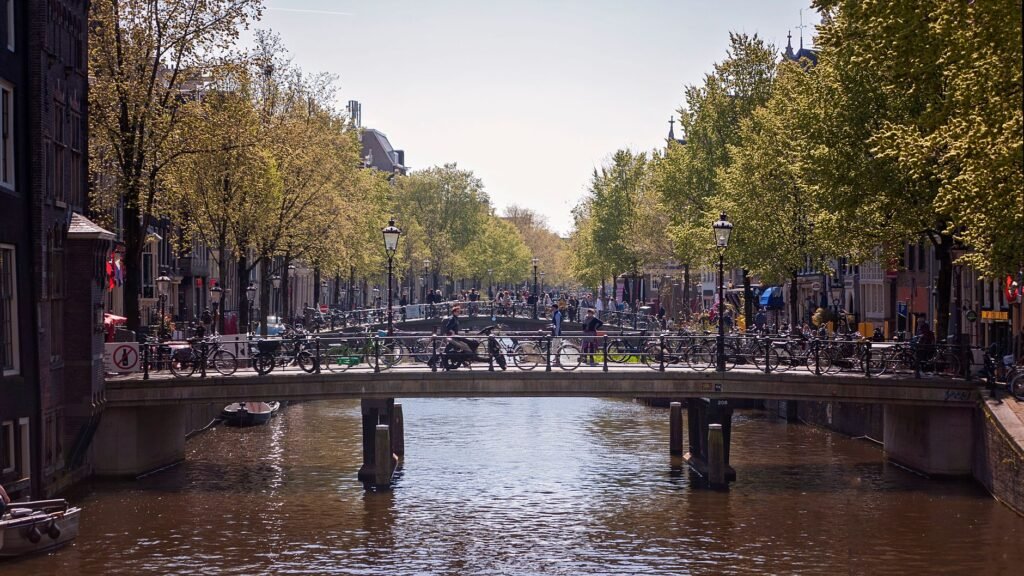
Amsterdam is small enough to cross on foot in an afternoon and dense enough that most first-time visitors still get the planning wrong.
The mistakes are always the same three: leaving the two biggest museums until they arrive, underestimating the accommodation bill, and expecting landmarks that are no longer there.
This guide deals with those first, then gets to what is worth your time.
Plan The Basics Before You Go
Mid-April to May brings mild weather and the tulips, which is why it is also the most expensive stretch of the year.
Autumn gives you low light on the water and far shorter queues, and winter is cold and wet but the city is at its most liveable.
The weather changes hour to hour in every season, so a rain jacket earns its space in the bag in July as much as in November.
Budget for the accommodation tax before anything else, because it is the largest hidden cost of a Dutch trip.
Amsterdam charges 12.5 per cent of the net room rate, the highest tourist tax in Europe, and from 1 January 2026 the national VAT on hotel stays rose from 9 to 21 per cent - together roughly a third on top of the headline room price.
That tax applies to hotels, hostels, B&Bs, short-stay flats and campsites alike, so there is no accommodation type that dodges it.
Check whether the price you are quoted includes it, since some booking sites show it and some add it at the desk.
Nearly everyone lands at Schiphol, and the train to Amsterdam Centraal takes about fifteen minutes and runs constantly.
A rental car is a liability here rather than a convenience.
For trams, buses and the metro, you can tap a contactless bank card or phone straight on the reader through OVpay, with no app, ticket or travel card needed.
That charges per journey, so if you expect more than three or four rides in a day the GVB 24-hour ticket at around €10 works out better.
Renting a bike is the classic move and the shops around Centraal all do daily and weekly rates, covered in the guide to how to rent a bike in Amsterdam.
Ride a few quiet streets before joining the Nieuwezijds Voorburgwal rush hour, because Dutch cyclists move fast and expect you to know the rules.
Cards are accepted almost everywhere and some places refuse cash entirely, which surprises visitors more than the reverse would.
The Netherlands currency and euro guide covers which card actually works here.
See The Essential Sights First
Book the Anne Frank House before you book anything else.
Tickets are online only, released about six weeks ahead, and the release slot empties within minutes - there is no ticket desk and no queue to join on the day.
The Van Gogh Museum is the other one that sells out, and two weeks ahead is the minimum for a slot you actually want.
The Rijksmuseum absorbs two or three hours comfortably and is easier to get into at short notice.
Museumplein puts the Rijksmuseum, the Van Gogh, the Stedelijk and the Moco within a few minutes’ walk of each other, which makes it the obvious first day.
Across the IJ, the EYE Filmmuseum and, on the Amstel, the H’ART Museum are both worth the trip for the buildings alone.
The letters spelling out “I amsterdam” that fill every older guidebook were taken off Museumplein in December 2018 and are not coming back.
A permanent set stands outside Arrivals 1 at Schiphol, and a travelling set turns up at festivals and events around the city, so the photo is still possible - just not where you were told.
The canal belt, the Grachtengordel, is a UNESCO site and the thing the city is actually built around.
Seeing it from the water changes the shape of the place, and companies such as Mokumboot rent small electric boats you steer yourself if you would rather not sit through commentary.
Guided options with commentary are in the round-up of family-friendly boat tours in Amsterdam.
Dam Square is the central meeting point and sits at the edge of De Wallen, the red light district.
Two rules there are enforced rather than suggested: guided tours are not permitted to stop in front of the windows, and smoking cannabis in the street in the old centre carries a fine.
Photographing the windows or the women is prohibited, and enforcement of that is social rather than legal but no less immediate.
For quiet, Vondelpark is the default and the Hortus Botanicus, founded in 1638, is one of the oldest botanical gardens anywhere.
More green space is listed in the guide to parks and gardens in and around Amsterdam.
Choose Neighbourhoods, Food, And Local Experiences
Where you sleep decides what your trip feels like more than which museums you pick.
The Jordaan is quiet, low-rise and full of small galleries and independent shops, with the Noordermarkt running on Saturday mornings.
De Pijp is younger and busier and built around the Albert Cuyp Market, six days a week and closed on Sundays.
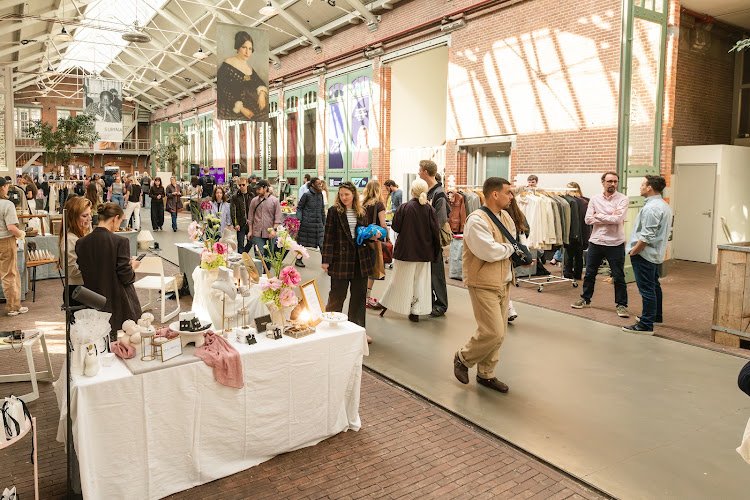
The Nine Streets, the grid of lanes threading between the main canals, is where the boutique shopping is concentrated - see boutique shops in Amsterdam.
Step outside the centre and both prices and crowds drop sharply.
Oud-West and Westerpark are walkable and well fed, Oud-Zuid is quieter and more expensive, and Amsterdam Noord is a free ferry ride from behind Centraal.
Noord is where STRAAT, the street art museum in a former shipyard warehouse, and the waterfront bar Pllek sit.
The ferries run around the clock and cost nothing, including with a bike.
On hotels, the Pulitzer Amsterdam is spread across twenty-five linked canal houses in the Jordaan and the Conservatorium sits opposite Museumplein at the top of the price range.
Cheaper arrangements are in the guide to short-stay rentals in Amsterdam.
For food, Foodhallen in Oud-West is a covered market hall of stalls under one roof and works when a group cannot agree.
Restaurant De Kas grows a good part of its menu in the greenhouse you eat in, out in Park Frankendael, and needs booking well ahead.
Fabel Friet on the Runstraat is the frites queue people join deliberately.
The Albert Cuyp is where to eat a stroopwafel made in front of you and a paper cone of bitterballen for a couple of euros.
The Flower Market on the Singel is a photograph rather than a shop these days, most of it selling souvenirs and bulbs that will not clear customs.
Better ends to a day are in the guides to chocolate shops and Dutch beer culture in a brown café.
Seasonal Trips And Whether The Passes Pay
Keukenhof opens from mid-March to mid-May and is a bus ride from Schiphol rather than from the city.
Zaanse Schans, with its working windmills, is a short train ride north and free to walk around, with charges only inside the mills and museums.
Both are covered in the round-up of day trips from Amsterdam.
King’s Day on 27 April turns the entire city orange and closes it to normal movement, which is either the reason to come or the reason not to.
Pride’s Canal Parade takes over the water on the first Saturday of August.
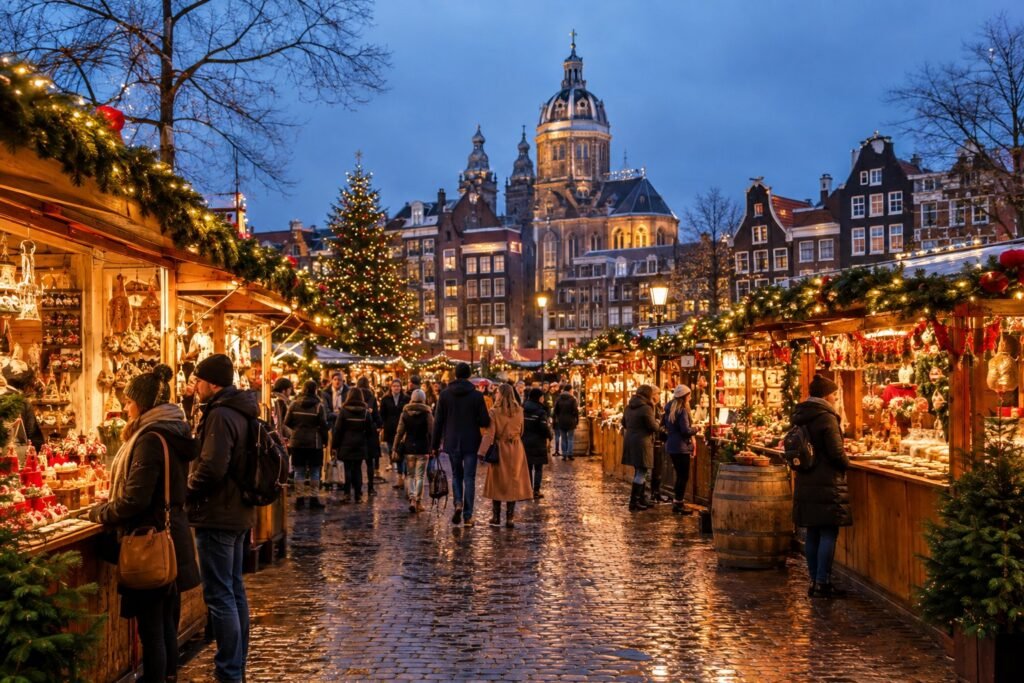
Museum Night opens dozens of museums after dark on the first Saturday of November, and the Amsterdam Light Festival runs installations along the canals from late November into January.
The I amsterdam City Card is worth doing the arithmetic on rather than buying on reputation.
It runs from €70 for 24 hours up to €120 for 120 hours, and covers unlimited GVB travel, one canal cruise and entry to more than seventy museums and attractions.
The catch is the exclusion list, and it is a serious one: neither the Van Gogh Museum nor the Anne Frank House is included.
Those are the two most first-timers came for, so the card pays off for people planning four or five of the other museums and not for anyone doing the famous two plus a cruise.
The Go City Amsterdam Pass bundles a different set of around forty attractions on the same logic.
For two or three museums, single tickets bought direct will nearly always be cheaper.
Frequently Asked Questions
What are the top things to do in Amsterdam for first-time visitors?
The Rijksmuseum, the Van Gogh Museum, the Anne Frank House, an hour on the canals and a walk through the Jordaan cover the art, the history and the shape of the city.
Two of those five need booking weeks ahead, which is the only part of the list that requires planning.
How can I plan a 3-day itinerary in Amsterdam efficiently?
Day one at Museumplein for the Rijksmuseum and the Van Gogh, with a canal cruise in the late afternoon when the light is best.
Day two starts with a booked Anne Frank House slot, then the Nine Streets and Vondelpark.
Day three belongs to De Pijp and the Albert Cuyp, then the ferry to Noord for STRAAT or the EYE.
What are the best free places to visit in Amsterdam?
Vondelpark, the canal streets of the Jordaan and the Grachtengordel, Dam Square and the Begijnhof courtyard all cost nothing.
The ferries to Noord are free, including with a bike, and are the cheapest boat ride on the IJ.
Which neighbourhoods in Amsterdam are best to stay in for tourists?
The Jordaan and De Pijp suit first-timers who want to walk to things, while Oud-West and Oud-Zuid trade a tram ride for quieter streets and lower prices.
Noord is the choice for anyone happy to plan around a ferry, and the guide to expat life in the Netherlands is the one to read if the stay is turning into a move.
What are the must-see museums and attractions, and how do I book tickets?
Book direct on each museum’s own site rather than through a reseller, since the resale markup buys you nothing and the timed slots are the same.
The full range is in the Amsterdam museums and attractions listing.
What is there for nightlife?
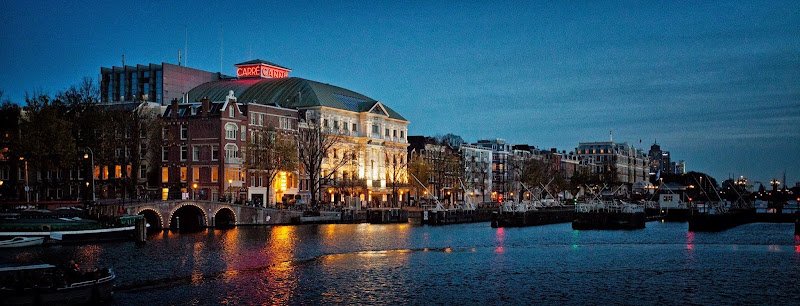
Leidseplein and Rembrandtplein hold most of the clubs and late bars and most of the stag parties with them.
Pllek in Noord and the rooftop bars are the quieter end of the same evening.
For live music, the programme at the live music venues in Amsterdam runs from jazz to electronic on most nights of the week.
![Top [count] Travel Blogs to Follow - OnToplist.com](https://www.ontoplist.com/images/ontoplist31.png?id=6a8dcf108f478)