The city’s own figures put the risk where visitors rarely expect it.
Police registered just over 80,000 crimes in Amsterdam in 2025, and the wijken where residents most often report being a victim are the Burgwallen-Oude Zijde and Burgwallen-Nieuwe Zijde, the Jordaan, Amsterdamse Poort and Buitenveldert Oost.
Three of those five are places a first-time visitor spends most of their trip.
What that concentration is made of matters as much as the total.
Most of it is high-volume theft rather than violence, and the single most useful thing you can carry is the right phone number for when something does go wrong.
What The Numbers Actually Show
Registered crime in Amsterdam fell from roughly 100,000 offences in 2012 to just over 64,000 by 2021, rose again between 2022 and 2024, and dipped slightly to a little over 80,000 in 2025.
The city splits its data into high-impact crime such as assault and street robbery, and high-volume crime such as theft, and it is the second category that dominates.
Between 2024 and 2025 the volume crime fell across the city while the high-impact figures stayed roughly flat.
Pickpocketing on the Burgwallen-Oude Zijde, the old centre around the Oudezijds canals, dropped noticeably in the same period.
It rose sharply somewhere most tourists never go, around Amsterdamse Poort in Zuidoost, where the reported victim index more than doubled.
That pattern is worth reading properly: the risk moves, and last year’s warning about a particular street is often a year out of date.
The Oosterparkbuurt saw its own rise, mostly shed and storage-box break-ins, bicycle theft and drug offences, which is a residents’ problem rather than a visitors’ one.
The Risks You Will Actually Meet
Theft from the person is the realistic one, and it happens where you are distracted rather than where you are alone.
Ticket machines, the tram doors at Centraal Station, the crush along the Damrak and the narrow stretch of Albert Cuyp Market are all places where you stop, look at a screen or a stall, and stop watching your bag.
A zipped bag worn across the front costs nothing and removes the opportunity entirely.
Street harassment is common enough here that the city measures it, and 45 per cent of Amsterdam residents surveyed reported experiencing it within twelve months.
Three per cent reported being touched or grabbed against their will with sexual intent in the same period, most often in the street, with women under 35 reporting it most.
None of that makes the city dangerous to walk in, but it does mean an incident is worth reporting rather than shrugging off, and the police take reports of street intimidation.
Bicycles are the other genuine hazard, and the mistake is a specific one rather than general carelessness.
The red asphalt is a bike lane and it is used at speed, so the danger is stepping backwards off a kerb to frame a photograph, not crossing normally.
Canals in Amsterdam mostly have no railing, the edge is often slick, and the water is cold and deep at the wall, which is why late-night walks along a quiet gracht deserve more care than the same walk on a street.
Getting Around Without Trouble
Trams, metros, buses, ferries and trains are all run to a schedule you can rely on, and the ferries behind Centraal Station are free.
Contactless bank cards and phones work directly at the gates and readers on GVB and on the trains, so an OV-chipkaart is now optional for a short visit rather than something to buy on arrival.
Check in and check out both matter, because failing to check out charges you the maximum fare.
Taxis are the place where visitors most often lose money rather than safety.
Use a rank or a booked ride rather than a driver who approaches you outside a club, and agree that the meter is running before you set off.
Driving into the centre is a poor plan: the streets are narrow, most of the centre is permit parking at high hourly rates, and a car left with anything visible inside is an invitation.
Who To Call, And For What
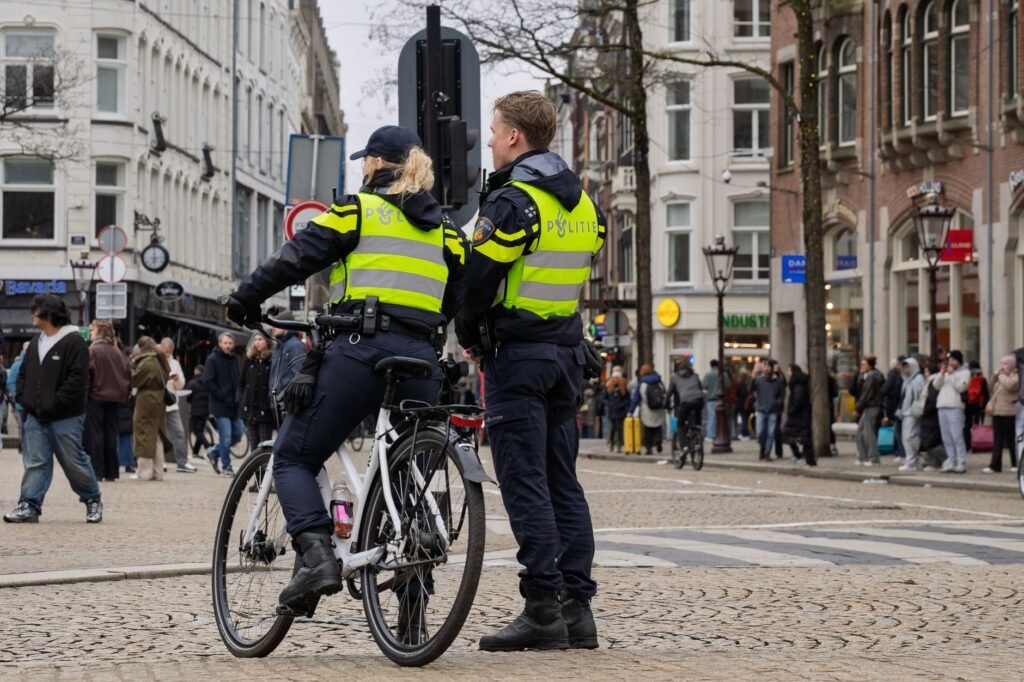
The emergency number across the Netherlands is 112, free from any phone including a locked one.
For anything that is not an emergency - a theft you want to report, a question, an appointment at a station - the police number is 0900-8844, charged at two cents a minute plus your own operator’s access charge.
From outside the country the same service answers on +31 343 578 844, which is the number to keep if you are calling about something that happened after you flew home.
Crimes can be reported anonymously on 0800-7000, free of charge.
Report a theft even when you have no expectation of getting anything back, because a travel insurance claim will normally require the police reference and the report can be filed online.
A stolen passport needs two calls: the police, and then your own embassy for an emergency travel document.
For local detail on the city while you are here, you can sign up for the Essentially Amsterdam newsletter.
Visiting De Wallen?
Our Red Light District visiting guide covers the rules, the late-night limits and what to see beyond the windows.
Frequently Asked Questions
These are the questions that come up before a first trip, answered with what the city’s own figures and the police service actually say.
Is Amsterdam safe to visit?
Yes, on the basis that the crime the city records is overwhelmingly theft rather than violence, and the high-impact figures have been broadly stable.
The practical risk to a visitor is losing a phone or a wallet in a crowd, not being attacked.
Which areas have the most crime?
By reported victimisation the highest wijken are the Burgwallen-Oude Zijde and Burgwallen-Nieuwe Zijde in the old centre, the Jordaan, Amsterdamse Poort in Zuidoost and Buitenveldert Oost.
The first three are heavily visited, which is largely the explanation: crowds and theft travel together.
Is Amsterdam safe for solo female travellers at night?
Broadly yes, and the central areas stay busy late, which helps.
The city’s own survey found 45 per cent of residents had experienced street harassment within a year, so the honest answer is that it is safe rather than free of unpleasantness, and both the police and the city take reports.
What are the most common scams and thefts?
Distraction theft is the dominant one: someone occupies your attention at a ticket machine, a market stall or a tram door while your bag is opened.
Bicycle theft is the highest-volume property crime in the city, so a hired bike needs both locks used and a fixed object to lock to.
What number do I call in an emergency?
112 for police, fire or ambulance, free from any phone.
For non-urgent police matters call 0900-8844 inside the Netherlands, or +31 343 578 844 from abroad.
What do I need to enter the Netherlands?
The Netherlands is in the Schengen area, so a visitor passport must have been issued within the previous ten years and stay valid for at least three months beyond your intended departure.
Visa requirements depend on your nationality and are worth confirming with the Dutch authorities or your airline rather than a forum.