Amsterdam is run by a council of 45 members, elected every four years, and by a college of a mayor and wethouders that the council puts in place.
The mayor is not elected - that is the first thing that surprises people who arrive from almost anywhere else.
This guide covers who decides what, who may vote, and how to get at any of it between elections.
Who Actually Decides
The gemeenteraad has 45 seats and is the city’s highest body, setting policy and holding the executive to account.
The college van burgemeester en wethouders is the executive: the mayor plus a set of wethouders, each holding a portfolio such as housing, traffic or finance.
Wethouders are appointed by the council after a coalition is formed, and they need not have been candidates themselves.
The mayor is appointed by royal decree for a six-year term rather than elected, and holds public order, policing and the fire service directly.
That combination - an unelected mayor with the police portfolio and an elected council with the budget - is the structure behind most Amsterdam political arguments.
Below the city sit seven stadsdelen - Centrum, Noord, West, Nieuw-West, Zuid, Oost and Zuidoost - plus the stadsgebied of Weesp.
Each has a dagelijks bestuur and an elected stadsdeelcommissie that advises on local matters, and neither has independent power over the big city-wide decisions.
Whether You Can Vote
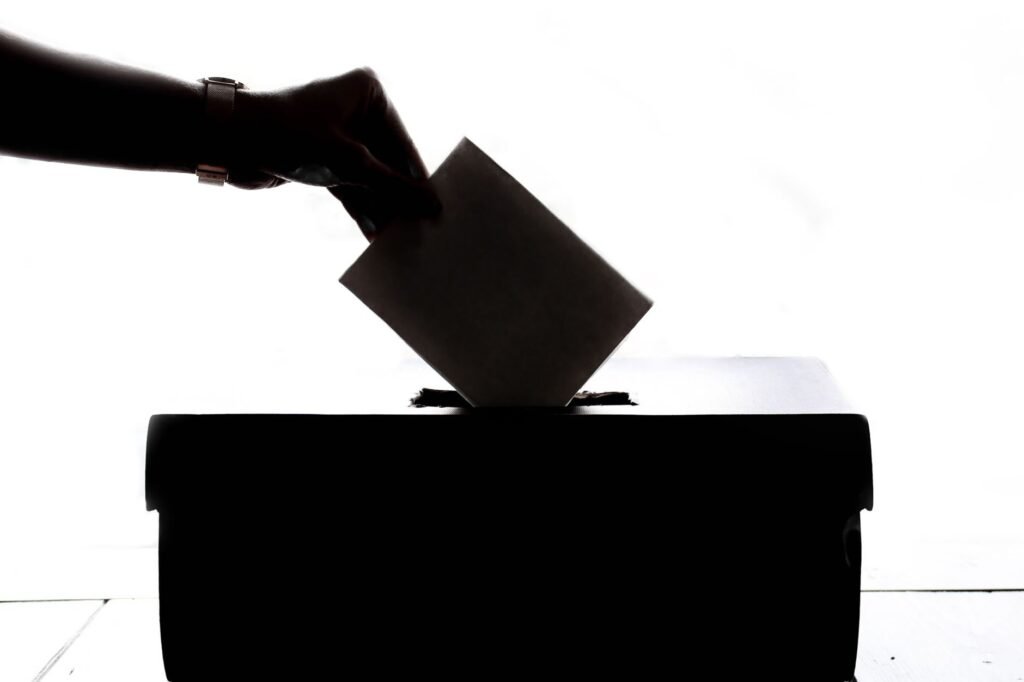
Dutch nationals registered in Amsterdam vote in the municipal elections.
Citizens of other EU countries living here vote in them too, on the same terms, with no additional qualifying period.
Non-EU nationals gain the municipal vote after five years of continuous lawful residence in the Netherlands.
None of that gives you a vote in national parliamentary elections, which remain restricted to Dutch nationals.
If you are entitled, a stempas arrives by post at your registered address automatically - there is no separate registration step, but there is also no vote if your BRP address is wrong.
You vote with the stempas and a valid ID at any polling station within the municipality, not only the one nearest you.
How The Vote Works
The system is open-list proportional representation, so you cast a single preference vote for one named candidate on one party’s list.
Seats go to parties in proportion to their total vote, and candidates with enough personal preference votes can jump the list order.
Amsterdam elections routinely return a dozen or more parties to the 45 seats, so no party governs alone and a coalition is always negotiated afterwards.
That negotiation, not the election night result, is what determines the actual programme for the next four years.
At election time, Stemwijzer and Kieskompas publish comparison tools that match your answers against the parties’ positions, and both are free.
Getting At It Between Elections
Council meetings, committee meetings and every document that goes with them are published at amsterdam.raadsinformatie.nl, and the meetings are streamed.
Anyone may inspreken - speak - at a raadscommissie meeting on an agenda item, including non-residents and non-voters, by registering in advance.
This is the single most underused route for internationals, because it does not require a vote or Dutch nationality.
Individual raadsleden are contactable directly and most respond, particularly on district-level matters.
Planning decisions, licences and local regulations are published as bekendmakingen, with a fixed window to object, and missing that window is usually final.
For a specific street or building, the stadsdeel is the faster route than the central council.
What The City Actually Controls
Housing allocation, the social housing stock and short-let rules are municipal, which is why Amsterdam’s rental rules differ from the rest of the country.
Parking permits, parking tariffs and the emission zones are set by the city, and they are the levers it pulls hardest.
Waste, street maintenance, permits, the Stadsloket and the BRP register are all municipal.
Health insurance, income tax, immigration and benefits are national and no amount of local lobbying moves them.
Knowing which of the two you are dealing with saves months, because the wrong body will simply not answer.
Frequently Asked Questions
Can I vote in Amsterdam as a foreigner?
EU citizens registered here can vote in municipal elections immediately; non-EU nationals after five years of lawful residence.
National elections are for Dutch nationals only.
Do I need to register to vote?
No - if you are entitled, a stempas is posted to your registered address.
Keeping your BRP address current is what makes that work.
Is the mayor elected?
No, the mayor is appointed by royal decree for a six-year term.
Only the 45 council seats are voted on.
How often are municipal elections held?
Every four years, on a date set nationally, with all Dutch municipalities voting on the same day.
What do the stadsdelen do?
They handle local matters within their district and advise the central city, through a dagelijks bestuur and an elected stadsdeelcommissie.
The money and the major decisions stay at the city level.
How do I object to something being built near me?
Watch the bekendmakingen for your postcode and file an objection inside the stated window, which is short.
You can also speak at the relevant raadscommissie whether or not you hold a vote.
Where do I follow what the council is doing?
amsterdam.raadsinformatie.nl carries the calendar, the papers and the video for every meeting.
Committee papers are published before the meeting, which is the point at which influence is still possible.
In the news
- Amsterdam residents can report threatened local facilities 7 October 2026
- Officials seize neighbourhood trampolines from Jekerstraat playground in Zuid 5 October 2026
- Utrechtsestraat will not become one-way after all 2 October 2026
- ABN Amro towers to become new Zuidas neighbourhood 23 September 2026
- Floradorp residents seek bonfire alternative after unrest 12 September 2026