
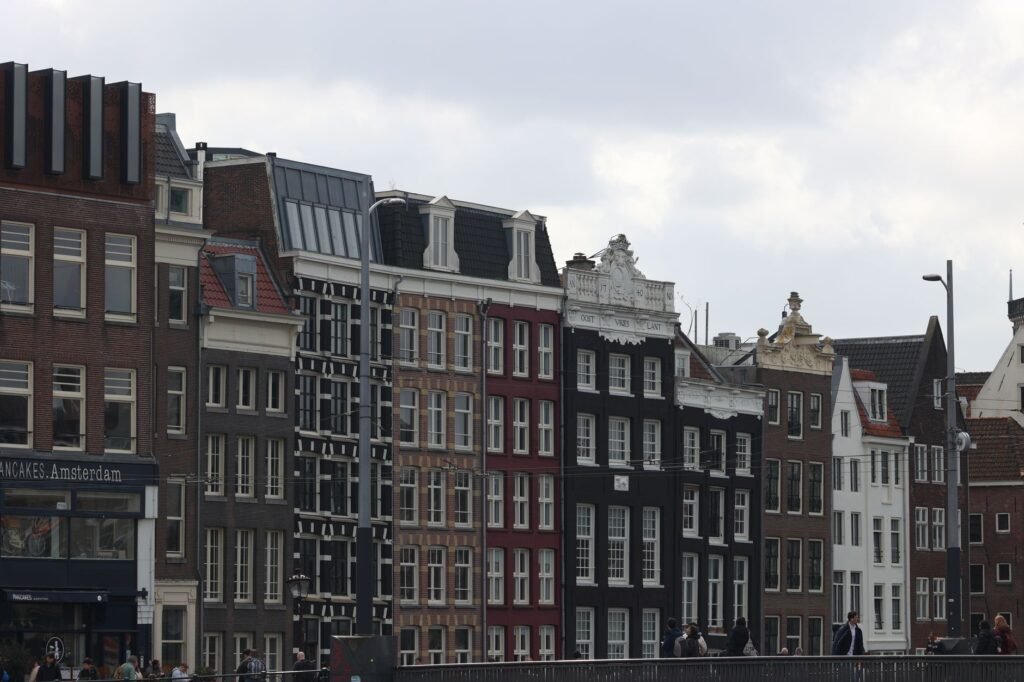
Budget €3,100 to €3,800 a month for one person living alone in Amsterdam, and €4,500 to €5,000 for a couple.
Sharing a flat or living outside the ring brings the single figure down to roughly €2,400.
Rent is 40 to 55 per cent of that, and it is the only line big enough to change your total.
Everything else moves by tens of euros; rent moves by hundreds.
The Monthly Lines, One Person
Rent: €1,700 to €2,400 for a one-bedroom inside the ring, €1,300 to €1,700 outside it.
Utilities: €150 to €200 for gas, electricity and water, plus €32 to €67 for internet.
Health insurance: around €160 a month for a basic policy, and it is compulsory from your first day of residence.
Groceries: €250 to €350 shopping at Albert Heijn, Jumbo or Lidl.
Transport: around €100 for a monthly GVB pass, or close to nothing once you own a bike.
Phone: about €20 for a SIM-only plan with 10 GB.
Add the Dutch tax system to the picture before you compare with an American salary.
Income tax is higher than in most US states, and it is buying the healthcare, transport and social insurance you would otherwise pay for line by line - read your payslip guide before your first pay date.
Housing: The Line That Decides Everything
Studios run €1,400 to €2,200, one-bedrooms €1,300 to €2,400 depending on the side of the ring, and two-bedrooms start around €2,200.
Landlords routinely ask for proof of income at three times the rent, so have your employment contract and last payslips ready as a single PDF before you start viewing.
Social housing is capped well below market rent but allocated by a waiting list measured in years, so newcomers are in the private market by default.
The regulated-rent ceiling is reset every January by the government, and the Huurcommissie at huurcommissie.nl is where you check whether a rent you have been quoted is even legal.
Pararius and Funda carry most private listings; a rental agency shortens the search and charges for it.
Allow one to two months of hunting, and cover the gap with a short-stay rental rather than accepting the first bad lease.
Buying is a different budget entirely, and Amsterdam’s price per square metre is far above the national average with the canal belt higher again.
Check the current quarterly figures on funda.nl and read the Dutch mortgage process before you assume you can borrow what you borrowed at home.
Arrival Costs You Will Not Have Budgeted For
The train from Schiphol to Amsterdam Centraal takes about fifteen minutes and costs roughly €5 to €6.
A metered taxi to the centre is €45 to €60, and the drivers who approach you inside arrivals are not the ones to take.
You do not need to buy a transit card to start travelling, because OVpay takes any contactless bank card or phone on every tram, bus, metro and train.
Register a personal account later, once you know whether a subscription is worth it - the personal OV card guide covers which products need one.
A decent second-hand bike costs €100 to €250, and it will replace most of your transport spending within two months.
Budget for a good lock in the same breath, and read the bike insurance guide before deciding whether cover is worth it for what you paid.
Renting instead runs about €12 to €15 a day or €60 to €75 a week - see how to rent a bike in Amsterdam.
A car is the one thing that will not pay for itself: resident parking permits are rationed by waiting list, and commercial parking in the centre runs €300 to €500 a month.
If you still need one, read the full cost of car ownership and Amsterdam’s zero-emission zones first.
Daily Spending, And Where It Leaks
A coffee is €3 to €4, a beer €5 to €7, and a main course in a mid-range restaurant €18 to €25 before drinks.
Cooking at home holds groceries at €250 to €350; eating out three times a week roughly doubles your food line.
Prices within a few hundred metres of Dam Square and the Anne Frank House run noticeably higher for the same food, so walk five minutes further.
The restaurants outside the tourist ring are the ones locals actually use.
Entry to the big museums is €20 to €25 each.
A Museumkaart costs around €75 a year and covers most of them, so it pays for itself in about three visits - worth buying in your first week rather than your sixth month.
A gym membership is €30 to €50 a month.
The parks and the public libraries cost nothing, and the public libraries let you sit and work all day without buying anything.
Where You Live Changes The Total
The Jordaan and De Pijp cost more in rent and in everything sold within them.
Noord, Nieuw-West and the outer parts of Oost are several hundred euros a month cheaper with tram or metro links straight into the centre.
Living just outside the ring and cycling in is the single biggest saving available to most people.
Fifteen minutes on a bike is the difference between the two rent brackets above.
Related reading
In the news
- Dutch economy accelerates as household spending picks up 1 August 2026


![Top [count] Travel Blogs to Follow - OnToplist.com](https://www.ontoplist.com/images/ontoplist31.png?id=6a8dcf108f478)