
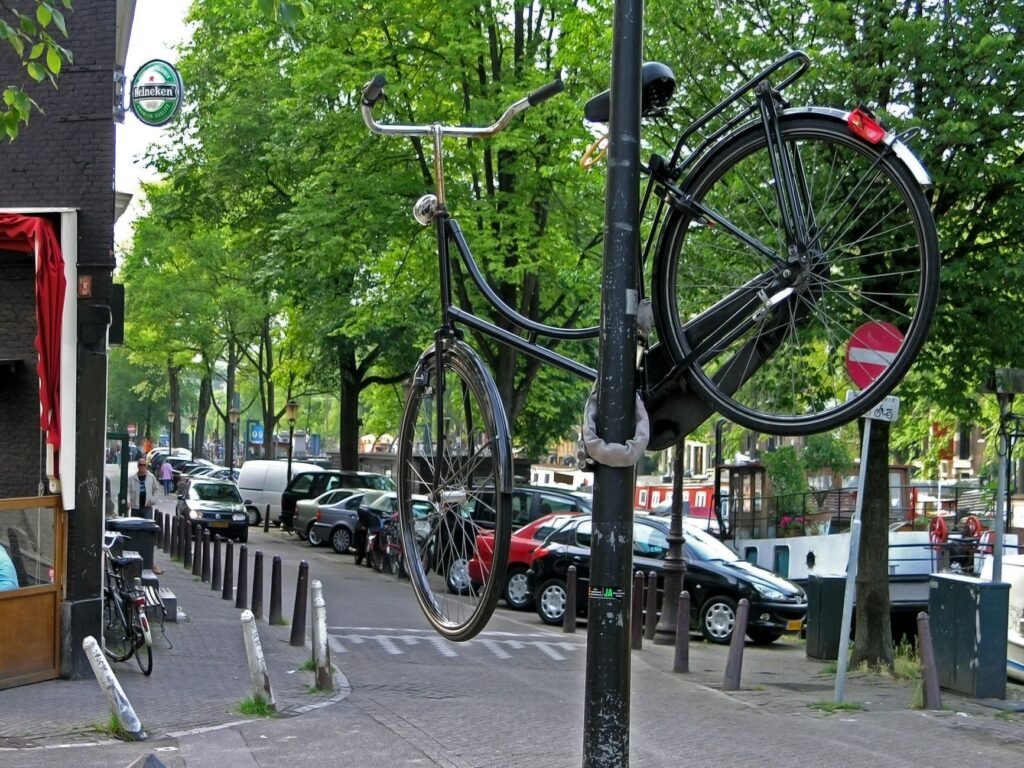
Bicycle insurance is not compulsory in the Netherlands, and for a lot of riders it is not worth buying.
This is how to work out which group you are in, what the two kinds of cover actually pay for, and roughly what you should expect to be quoted.
When It Is Worth Buying
The test is simple: would replacing the bike tomorrow hurt?
On a €100 secondhand stadsfiets the answer is no, and the premiums over three years will cost more than the bike.
Above roughly €500 the arithmetic turns, and above €1,500 it is not close.
E-bikes, speed pedelecs and cargo bikes commonly cost between €1,500 and €5,000, and they are the machines thieves go looking for.
Where you park matters as much as what you ride.
Leaving a bike at a station rack all day, every day, is a different risk from wheeling it into a hallway each evening, and insurers price it that way.
Amsterdam, Rotterdam and Utrecht carry the highest theft rates in the country, and premiums follow.
If you also depend on the bike to reach the train, factor in what a week without it would cost you in fares and lost time.
Theft-Only Or All-Risk
Theft-only is the cheaper of the two and covers the bike being stolen, usually including fixed accessories such as a child seat or basket.
It pays nothing if the bike is damaged in a fall, a collision or an act of vandalism.
All-risk adds accidental damage, fire, storm and crash damage on top.
For an e-bike that is usually the right choice, because a replacement motor or battery can cost a large fraction of the bike.
Expect all-risk to run roughly 30 to 50 per cent above the theft-only premium for the same bike.
On a cheap city bike that difference is a couple of euros a month; on a €3,000 e-bike it is real money and still probably worth it.
Road And Mountain Bikes
High-end road and mountain bikes fail in ways city bikes do not: carbon frames crack, wheels buckle, components snap in a crash.
Several insurers sell sport-cycling policies that extend to race-day incidents and damage in transit, which a standard bicycle policy will not cover.
If the bike costs as much as a used car, insure it like one and read what is excluded.
The Lock Is Part Of The Contract
Almost every Dutch insurer requires an ART-certified lock, and the required grade rises with the value of the bike.
Above about €3,000 you will generally be held to at least an ART-3 lock.
Keep the purchase receipts for both the bike and the lock, and keep the second key.
Claims are refused for missing paperwork more often than for anything else - an insurer that cannot see what you bought and how you secured it will not pay for it.
Aflopende Versus Doorlopende Policies
An aflopende policy runs for a fixed term, normally three or five years, and you pay the whole premium at the start.
The payout falls each year as the bike depreciates, so a claim in year three settles for less than the same claim in year one.
A doorlopende policy works like a subscription, billed monthly or half-yearly, and after the first year you can generally cancel at any time.
That flexibility is worth having if you are not certain how long you will be in the country or how long you will keep the bike.
Fixed-term suits someone who knows they will replace the bike in three years and would rather not think about it again.
Rolling suits everyone else.
What You Will Pay
Four things drive the premium: what the bike cost, what type it is, your postcode and the level of cover.
Purchase price does most of the work.
As a rough guide, a conventional city bike on theft-only cover runs about €3 to €10 a month.
E-bikes sit around €8 to €16, and fat bikes anywhere from €7 to €20 depending on the model and the town.
Postcode moves the number more than people expect, and insurers work from theft statistics at neighbourhood level rather than city level.
The same bike can be quoted differently in two parts of Amsterdam.
Watch for an eigen risico, the excess you pay on each claim, which on bicycle policies is commonly up to about €35.
A low premium with a high excess is not a bargain on a bike that gets scratched regularly.
Before You Sign
Run your postcode, bike type and purchase price through a Dutch comparison site rather than taking the first quote from the shop that sold you the bike.
Shop policies are convenient and are rarely the cheapest.
Check whether bundling with your other private insurance earns a discount, and check whether your contents policy already covers the bike when it is inside the house.
Some households discover they are paying twice.



![Top [count] Travel Blogs to Follow - OnToplist.com](https://www.ontoplist.com/images/ontoplist31.png?id=6a8dcf108f478)