
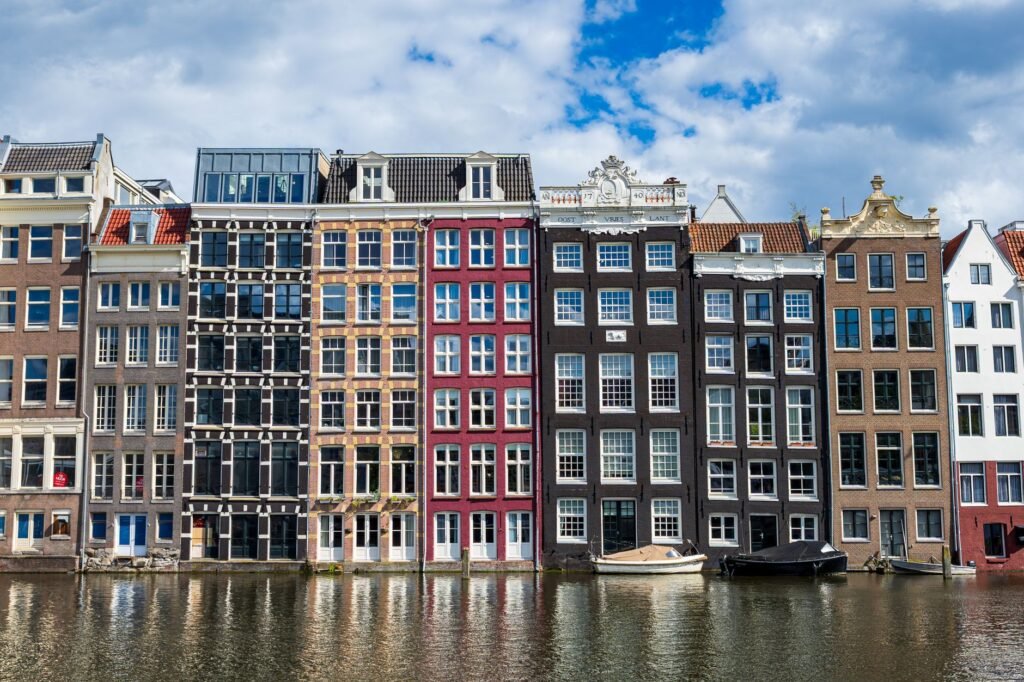
Most homes in Amsterdam sit on land the city still owns.
When you buy one, you buy the building and a right to use the ground beneath it, called erfpacht (a ground lease).
You pay the city for that right through a fee known as the canon, unless a previous owner already paid it off.
A woning op erfpachtgrond can look identical to a home on freehold land, yet its yearly costs, resale value and mortgage terms can differ a lot.
Two flats on the same street might carry very different lease bills.
Erfpacht in Amsterdam is manageable once you know which lease system applies, when the current period ends and what the canon will cost.
You will be able to read the key documents, estimate costs with the city’s own tools and judge whether a switch to perpetual erfpacht fits your plans.
What Are You Buying When the Land Is Leased?
You are buying a property right on city-owned land, and its rules depend on which of three lease types applies.
Most homes fall under continuing or perpetual erfpacht, while a small group holds temporary rights with their own conversion policy.
How Does an Erfpachtrecht Differ from Owning the Land?
With an erfpachtrecht, the Gemeente Amsterdam keeps legal ownership of the ground (called bloot eigendom), and you get the right to use it in exchange for a fee.
The city has issued land this way since 1896, with sale in full ownership a rare exception.
In daily life you use the home like any owner.
You can live in it, renovate within the rules, sell it and leave it to heirs.
The difference shows up in the paperwork.
Your erfpachtrechten come with a set purpose for the land (such as housing), rules about transfer and a canon payment.
A home on eigen grond has none of these extra obligations.
What Is the Difference Between Continuing and Perpetual Erfpacht?
Voortdurende erfpacht runs in periods, often decades long.
At the end of each period, the city sets a new land value and a new canon, which can rise sharply.
Eeuwigdurende erfpacht has no such periods.
If you pay an annual canon under the perpetual system, that amount is fixed for good apart from yearly indexing linked to national inflation, according to Amsterdam’s municipal audit office.
|
Feature |
Continuing (voortdurend) |
Perpetual (eeuwigdurend) |
|---|---|---|
|
Lease periods |
Yes, with revisions |
No end date |
|
Canon changes |
Reset at period end |
Indexed to inflation |
|
Who has it |
Most rights issued before 2016 |
New rights since July 2016, plus switchers |
|
Dispute at revision |
Expert committee possible |
City sets values |
Since July 2016, new land has been issued under perpetual rules.
Owners with older rights keep continuing erfpacht unless they choose to switch.
Where Do Temporary Lease Rights Fit In?
Tijdelijke erfpacht means the right ends on a fixed date.
Amsterdam still has a small number of tijdelijke erfpachtrechten next to the two main systems.
These rights follow a separate route.
The city’s calculator does not cover them, because a specific conversion policy for temporary rights (conversiebeleid tijdelijke rechten) applies instead.
If a listing mentions a temporary right, ask the seller and the city for the end date and conversion terms early.
That date shapes what a buyer can finance and what the home is worth later.
How Can You Check a Home’s Lease Terms?
You check lease terms by reading the deeds, the city’s erfpachtgegevens for the address and the general conditions that apply.
Those three pieces tell you the period end date, the canon status and which rulebook governs the home.
Which Deeds and Municipal Records Should You Request?
Start with the Kadaster, the national land registry.
Its property data shows whether erfpacht rests on a parcel under the “rechten” entries.
Two deeds matter most:
- The akte van vestiging (or uitgifte): sets the land’s purpose, transfer rules, maintenance duties and special clauses.
- The akte van levering: the purchase deed from the last sale, which lists the canon and the lease term.
The Kadaster sells a copy of an erfpacht deed for €19.85 by email or €22.25 by post.
If staff must search for an older founding deed, that costs €60 extra, charged even when nothing turns up.
The city publishes its own erfpacht information on the Gemeente Amsterdam erfpacht pages.
Current owners see their details in Mijn Amsterdam; as a buyer, ask the seller or your notary for them.
When Does the Current Lease Period End?
The end date of the current period (einde tijdvak) is the first number to find on a continuing lease.
It appears in the deed and in the city’s file for the address.
When a period ends, you can accept the city’s new offer for land value and canon, or ask a committee of three experts to set them.
You can also switch to perpetual erfpacht.
In figures from 2019, about 80% of owners accepted the city’s offer, around 16% switched and 4% used the expert committee.
A period ending within your first years of ownership deserves close attention, since the new canon will be based on today’s land values.
Which Conditions Apply to This Property?
Each lease falls under a set of erfpachtvoorwaarden called the Algemene Bepalingen (general conditions).
Common versions include the Algemene Bepalingen 1994, AB 2000 for renewed continuing rights and AB 2016 for perpetual rights.
The version matters in practice.
For example, owners under AB 1994 request a buy-off offer through the Overstapportaal, while others go through Mijn Amsterdam.
Ask your notary to name the conditions in writing and point out any special clauses.
Rules on renting out, splitting or changing the use of a home sit in these documents.
What Could the Lease Cost You?
Your lease cost comes down to the canon, how it is paid and the land value used to set it.
Prepaid leases cost nothing yearly until the paid period runs out, while annual canon adds a fixed line to your monthly budget.
How Do Annual Canon and Prepaid Canon Differ?
An annual erfpachtcanon is a yearly payment to the city.
You pay it on top of your mortgage, service costs and taxes.
A prepaid (afgekocht) canon means a past owner paid ahead for a set period.
Check exactly which period is covered.
A home “afgekocht tot 2040” still faces a new arrangement after that date.
Under perpetual erfpacht you can also buy off the canon for good, or extend a buy-off (verlengd afkopen).
The city’s calculator gives estimates for both options.
Why Do Land Value and Future Revisions Matter?
The canon is a share of the grondwaarde, so higher land value means a higher bill.
Amsterdam calculates land value from the WOZ-waarde multiplied by a street-level ratio called the buurtstraatquote.
The city’s buurtstraatquote map shows what share of a home’s market value counts as land, street by street.
The city then lowers that land value by 10% to reflect the difference between erfpacht and eigen grond.
Attractive locations have higher ratios.
Both WOZ values and these ratios have risen in recent years, which pushes up new canon amounts at revision or when switching.
How Might the Lease Affect a Mortgage or Sale?
Mortgage lenders and the taxateur (valuer) look at the lease when judging the home.
A yearly canon counts as a housing cost, which affects how much you can borrow; our guide to Dutch mortgages explains the rest of that sum.
An upcoming period end or an expiring buy-off adds uncertainty to the value.
Buyers later will ask the same questions you are asking now.
Share the deed and city file with your mortgage adviser and valuer early.
They can then factor the canon and lease terms into the valuation and loan offer before you sign.
How Do You Explore a Switch to Perpetual Erfpacht?
Overstappen naar eeuwigdurende erfpacht starts with a free estimate and ends with an official offer you can accept or decline.
Only owners with a housing purpose can make the switch from continuing erfpacht.
What Can Amsterdam’s Calculator Estimate?
The city’s rekentool gives an indication of two things: the cost of switching to perpetual erfpacht, and the cost of buying off or extending a buy-off of your canon.
You can search by postcode and house number or by dossier number.
If an address with an addition gives no results, try again without it.
Some limits apply:
- Only lease rights with a postcode are covered.
- Temporary rights, housing corporations and Port of Amsterdam leaseholders are excluded.
- Streets with very mixed homes, rare home types or many new builds without a WOZ value may not work.
The calculator’s results are indications only; you cannot claim rights from them.
Buyers can use it before the home is in their name.
How Do You Request and Review an Official Offer?
Final amounts appear only in the offer the city sends after you apply in the Overstapportaal.
Requesting a switch offer is free of obligation.
The portal currently shows a standard switch premium (overstappremie) of 35%, raised from 25%.
Applications that still list 25% need a few extra steps to update.
When the offer arrives, compare it with the calculator result and with your current canon path.
Note that switchers give up the right to an expert committee, since the city sets land value and canon.
Which Login and Application Route Applies to You?
Private owners log in to the Overstapportaal with DigiD.
Companies and institutions need eHerkenning niveau 3.
If you cannot log in, the city asks you to email overstaperfpacht@amsterdam.nl with your dossier number or address in the subject line.
For canon buy-off offers, the route depends on your conditions.
Owners under AB 1994 apply in the Overstapportaal, while others use Mijn Amsterdam.
Switch requests always go through the Overstapportaal.
Know the Terms Before You Commit
Erfpacht becomes a known cost once you have the right documents in hand.
Find out whether the home is on continuing, perpetual or temporary erfpacht, and which Algemene Bepalingen apply.
Then pin down the numbers:
- The end date of the current period, or of any prepaid canon
- The yearly canon you will pay, if any
- A calculator estimate for switching or buying off
- How your lender and valuer treat the lease
These choices involve large sums, so run them past your notary and mortgage adviser with the deed and city file on the table.
Rules and premiums change, so check the city’s current terms close to your purchase date.
Related Guides
- Amsterdam first home buyer guide
- Amsterdam mortgage guide for expats
- Amsterdam housing tax guide for homeowners
- Renting versus buying in Amsterdam
- Do you need a real estate lawyer in Amsterdam?
- Amsterdam notaries: a guide for internationals
Frequently Asked Questions
Does buying a home on erfpacht mean I own the land?
No, the Gemeente Amsterdam keeps ownership of the ground.
You own the building and a right to use the land, which you can sell or pass on.
Can Amsterdam’s ground rent rise after I buy?
Yes, under continuing erfpacht the canon is reset at the end of each period based on current land value.
Under perpetual erfpacht the annual canon stays fixed apart from inflation indexing.
Is perpetual erfpacht the same as owning the land?
No, the city still owns the land under perpetual erfpacht.
The lease has no end date, though, and a fully bought-off perpetual lease removes the yearly canon payment.
Can I buy off the canon without switching lease systems?
The city’s calculator estimates buy-off and extended buy-off costs for your current and perpetual periods.
Your Algemene Bepalingen decide whether you request that offer in the Overstapportaal or in Mijn Amsterdam.
Where can I find the official erfpacht details for my address?
Owners see their details and conditions in Mijn Amsterdam, and the Kadaster supplies copies of the deeds.
Owners can also view their own parcel’s property data for free through mijn.overheid.nl.


![Top [count] Travel Blogs to Follow - OnToplist.com](https://www.ontoplist.com/images/ontoplist31.png?id=6a8dcf108f478)