
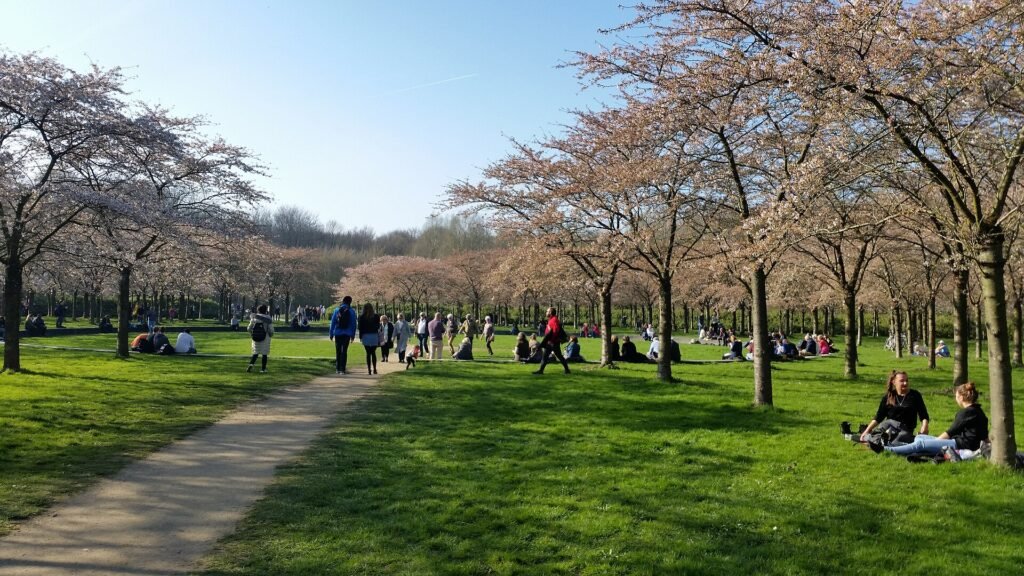
Your best bet for cherry blossom in Amsterdam is the Bloesempark in the Amsterdamse Bos, where 400 Japanese cherry trees bloom for about two weeks, usually starting in mid to late March.
The exact start shifts every year with the weather, so it pays to watch the forecast and check reports before you head out.
The window is short.
A warm week can open the flowers early, and a windy, rainy weekend can strip them fast.
If you know where to go and how to tell when the trees are ready, you can catch the pink at its best.
You can also find blossom closer to home in city parks like Westerpark and Vondelpark.
Plenty of day trips out of town are worth planning around too.
When Do the Cherry Trees Bloom?
Cherry blossom season in Amsterdam usually runs from mid or late March into early April, but no one can fix the dates in advance.
Spring weather decides the timing, and the peak often lasts only a week or two.
Both points shape how you plan your visit.
Why Does Peak Bloom Change Each Spring?
The trees respond to warmth.
After a mild late winter, buds open sooner.
After a cold snap, they wait.
At the Bloesempark, the Japanese cherry trees bloom from mid or late March in most years.
The flowering period lasts about two weeks in March or April, and the exact timing depends on temperature, wind and rain.
Wind and rain also cut the show short.
Strong gusts blow petals off, and heavy showers bruise them.
So a bloom that starts well can end early if a storm moves in.
How Can You Check Whether the Blossoms Have Opened?
Keep an eye on a few signals from early March onward:
- Weather forecast: a run of mild, dry days is a good sign. The Buienradar forecast for Amstelveen shows temperature, rain chance and wind for the park’s area.
- Official updates: the Amsterdamse Bos posts news about the Bloesempark on its own site and social channels.
- Local news: the Essentially Amsterdam newsletter covers seasonal openings and park updates as they happen.
- Social media photos: recent posts tagged at the park show you how open the flowers are.
Look for photos taken in the last day or two.
Pictures from last year can mislead you.
How Do You Visit Bloesempark?
Bloesempark sits inside the Amsterdamse Bos, and you can reach it easily by bike or bus from the city.
Its 400 named trees have a story worth knowing, and weekday visits are calmest.
Where Is the Park, and How Do You Get There by Public Transport?
The park is also called Kersenbloesempark, or simply the blossom park.
It lies in the Amsterdam Forest (Amsterdamse Bos), on the Amstelveen side of the woods, south of the city.
You have several options:
- By bus: several bus stops sit near the park, and from there it is a short walk. Use 9292 to plan your trip, since stops and routes can change.
- By bike: during the blossom season, the Amsterdamse Bos sets up special bike and scooter parking along the Burgemeester A. Colijnweg.
- By car: a temporary car park opens on the paved part of the Land van Bosse event grounds, with signs pointing you to the trees.
The park asks visitors to come by bike, on foot or by public transport where possible.
Cycling from Amsterdam Zuid is a pleasant ride through green space.
What Makes Its 400 Trees Special?
In 2000, the Japanese Women’s Club gave 400 cherry trees to Amstelveen.
They are Prunus yedoensis, a classic Japanese variety.
Each tree has a name: 200 carry a Japanese woman’s name and 200 carry a Dutch woman’s name.
The park stands as a symbol of friendship between the Netherlands and Japan.
It is also home to a Tsunami monument and is a beloved spot for the Japanese community in and around Amsterdam.
Two Japanese words help explain the mood.
Sakura means cherry blossom, and it stands for spring, hope and a fresh start.
Hanami means “flower viewing”, the custom of gathering under the trees to enjoy the short bloom together.
The park is changing.
The trees stand in waterlogged clay that decades of visitors have trodden hard, and their roots are failing.
The plan is to remove all of the original trees after the 2028 bloom and plant about 400 new ones, already around ten years old and spaced further apart, which should flower from spring 2029.
A few unsafe trees may go sooner, so expect some gaps.
When Is the Quietest Time to Visit?
Weekdays are your best choice.
The trees draw thousands of visitors every spring, and weekends during the bloom get very busy.
Try to arrive early on a weekday morning.
You can also check Google Maps for live crowd levels before you leave.
If you miss the cherries, come back in May, when purple rhododendrons ring the park.
Where Else Can You See Blossoms in the City?
You don’t have to leave the city to see pink trees.
Westerpark, Vondelpark and the streets around Museumplein and De Pijp all have blossom in spring, and each sits on easy tram or metro lines.
Westerpark: Blossom Near the Former Gasworks
Westerpark blends a green city park with the old buildings of the Westergasfabriek, dating from 1885.
It sits at the edge of the centre, at the start of the Haarlemmerweg.
The big lawns by the water are made for picnics.
After your walk, you can grab coffee at the cafés on the Westergas site.
Getting there is easy.
Trams and buses stop close to the park, and it is a short bike ride or walk from Centraal Station.
Vondelpark: A Central Park Walk
Vondelpark is the city’s best-known park (our Amsterdam parks guide covers the rest), and in spring its trees and flower beds wake up fast.
Blossom trees dot the paths, so a full loop lets you spot several kinds of spring flowers.
Trams to the Van Baerlestraat area drop you near the park’s east side.
From there, you can walk the long paths toward the west end.
Go early, because sunny spring days fill the lawns quickly.
Museumplein and De Pijp: Trees to Look for Along the Way
Museumplein has blossom trees around the square and near the Rijksmuseum.
These make a nice stop if you are already visiting a museum.
De Pijp is close by.
Its smaller streets and squares have flowering trees that brighten up the old brick houses.
You can reach it on the Noord/Zuidlijn metro at De Pijp station, or on foot from Museumplein in about 15 minutes.
Treat these spots as a city walk.
Wander, look up and enjoy what you find.
What Should You Know Before You Go?
A little planning helps you enjoy the cherry blossoms without fighting crowds or harming the trees.
Timing, park rules and photo habits all play a part.
Choosing a Time of Day and Preparing for Crowds
Early morning brings soft light and fewer people.
Late afternoon also works well, as the sun lowers and day-trippers head home.
Midday on a sunny weekend is the busiest time.
If that is your only option, try these tips:
- Travel by bike or bus, since parking fills up.
- Bring snacks and water, as nearby cafés get busy.
- Pick a spot on the edge of the park, away from the centre paths.
- Plan to stay a shorter time and come back on a weekday.
Checking Picnic and Dog Rules Before Your Visit
Rules differ from park to park.
The Amsterdamse Bos publishes house rules and a code of conduct for the Bloesempark, so read them before you pack a picnic or bring your dog.
In Westerpark, the city lists clear rules.
You can picnic on the lawns, barbecues are only allowed at special barbecue spots, and dogs may run off-leash in one part of the park.
A map shows where.
Protecting the Trees While Taking Photos
The Japanese cherry trees are delicate.
Keep these habits in mind:
- Never pull or shake branches to make petals fall.
- Don’t climb the trees or hang things on them.
- Stay on paths and keep off tree roots where you can.
- Take your rubbish home with you.
Fallen petals on the grass make great photos too, and you don’t need to touch a single branch.
Where Can You See More Blossom Beyond Amsterdam?
Spring in the Netherlands offers plenty of blossom outside the city.
You can choose a whole neighbourhood of cherry trees in Almere, fruit orchards near Utrecht and in the Betuwe, or tree-lined streets in The Hague and Rotterdam.
Almere’s Regenboogbuurt and Other Nearby City Trips
Almere is a quick train ride away.
In its Regenboogbuurt, 850 Japanese cherry trees line the Spectrumdreef, and their pink stands out against the brightly coloured houses.
The trees inspired an annual cherry blossom festival, and residents picnic under them in early spring.
The Hague is another easy trip.
Cherry trees bloom across many neighbourhoods in March and April, with lots of trees at the Zeeheldentuin, Prins Hendrikplein and Sweelinckplein.
Rotterdam has its own spring trees.
A walk along the Statensingel, or around the green areas near the Euromast, pairs well with a city day out.
Orchard Blossom Near Utrecht and in the Betuwe
Fruit orchards give you a wider, more rural view.
Near Utrecht, a 14 km blossom and fruit walking route starts in Wijk bij Duurstede and follows the Kromme Rijn past orchards near Cothen.
That route lists a helpful bloom order:
|
Fruit tree |
Usual bloom time |
|---|---|
|
Cherry |
Late March to early April |
|
Pear |
Early to mid April |
|
Apple |
Mid April to early May |
In the Betuwe, the Betuwse Bloesemtocht walk is set for Saturday 10 April 2027.
It starts at Geldermalsen, with routes of 9, 15, 27 and 40 km through blooming orchards.
How Keukenhof Differs from a Cherry Blossom Outing
Keukenhof is a large, ticketed flower garden (see our tulip season guide) in the bulb region, and its focus is tulips and other spring bulbs.
It opens for a set season each spring.
The garden welcomed more than 1.4 million visitors in its 2026 season.
A cherry blossom trip is looser and free.
You follow the trees, and the timing rests on the weather.
If you want both, plan Keukenhof for mid to late April, after the cherries have passed.
Make the Most of a Short Bloom
Cherry blossom season in Amsterdam is brief, so a little preparation goes a long way.
Start watching from early March, when mild weather can push the buds open.
Here is a quick plan:
- Watch the Amstelveen forecast and recent photos for signs the trees have opened.
- Aim for Bloesempark on a weekday morning, by bike or bus.
- Read the park’s house rules before you bring a picnic or a dog.
- Add Westerpark, Vondelpark or Museumplein for blossom closer to home.
- If you miss the peak, follow the fruit blossom calendar near Utrecht into April.
Keep a backup day in mind.
If rain wipes out your plan, the next dry, calm morning is often still good.
Related Guides
- Amsterdam parks guide for every type of visit
- 5 must-see parks and gardens in and around Amsterdam
- Amsterdam tulip season guide
- Nature in and around Amsterdam
- Top 6 day trips from Amsterdam
Frequently Asked Questions
Is Bloesempark in Amsterdam or Amstelveen?
Bloesempark is in Amstelveen, inside the Amsterdamse Bos.
The trees were given to the municipality of Amstelveen in 2000, though the forest is managed for the whole Amsterdam area.
How long do the cherry blossoms usually last?
The blossoms at Bloesempark last about two weeks.
Warm, calm weather keeps them going, while wind and rain can end the show sooner.
Is Bloesempark free to visit?
Yes, Bloesempark is a public part of the Amsterdamse Bos, and you can walk in without a ticket.
Parking for cars during the bloom is in a temporary area at the Land van Bosse grounds.
Can you have a picnic under the cherry trees?
Hanami, the Japanese custom of gathering under the blossom, is part of the park’s story, but the Amsterdamse Bos has restricted picnics and dogs in the Bloesempark on very busy days before.
The Amsterdamse Bos sets house rules for the Bloesempark, so check them before you spread out a blanket.
Are dogs allowed in Bloesempark?
The Amsterdamse Bos lists what is allowed, including any dog rules, in its Bloesempark house rules.
In Westerpark, dogs may run off-leash in one marked part of the park.

![Top [count] Travel Blogs to Follow - OnToplist.com](https://www.ontoplist.com/images/ontoplist31.png?id=6a8dcf108f478)