The inburgeringsexamen is the set of tests that proves you can function in Dutch and understand how the country works, and passing it is a precondition for permanent residence and for naturalisation.
Which tests you sit depends entirely on which law applies to you, and that is decided by the date on your residence permit.
This guide covers the components, who is obliged to take them, how to register, and what happens if you miss the deadline.
If the move itself is still ahead, the moving to the Netherlands checklist sets the wider order.
What The Exam Includes
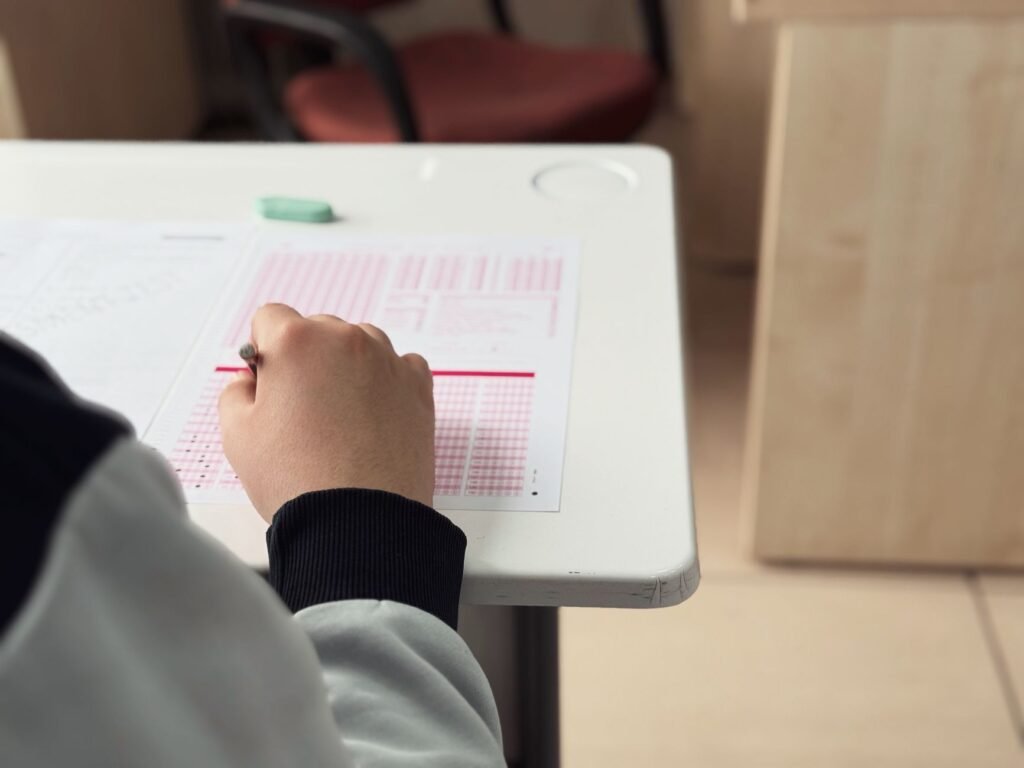
The inburgeringsexamen is not one test but a set, and passing all of them produces the inburgeringsdiploma.
Under the Wet Inburgering 2021 the language component covers reading, listening, writing and speaking at A2 or above.
Alongside it sits KNM - Kennis van de Nederlandse Maatschappij - a multiple-choice test on Dutch history, government, healthcare, housing and everyday custom, built around real situations rather than dates.
The third component is ONA, Oriëntatie op de Nederlandse Arbeidsmarkt, which covers how the Dutch labour market works.
Under the 2021 law you also complete a participation declaration and agree a personal integration plan with your municipality, which replaces parts of the older state-exam route.
A more demanding alternative exists: the NT2 staatsexamen at B1 or B2, which is what Dutch universities and a number of regulated professions ask for.
If you are applying from abroad, the Basisexamen Inburgering Buitenland is a lighter A1-level test taken at a Dutch embassy or consulate before your MVV is issued.
Who Must Take It And Which Rules Apply
Most non-EU newcomers between 18 and the AOW state pension age carry the inburgeringsplicht.
The Wet Inburgering 2021 governs anyone whose residence permit was issued on or after 1 January 2022; permits issued before that date fall under the 2013 law, which works differently on money and on deadlines.
You can check which applies to you on inburgeren.nl.
DUO - Dienst Uitvoering Onderwijs - runs the process and writes to you once the obligation starts, and that letter is the document that states your personal deadline.
Under the 2021 law your municipality is also a party to it, and you build the personal integration plan with a caseworker there rather than alone.
EU, EEA and Swiss citizens are outside the obligation entirely.
So are people holding a Dutch diploma or a qualifying equivalent, and temporary residents here only to work or study.
Exemptions and dispensations are applied for through DUO with supporting documents, not assumed.
The standard deadline is three years from the date on the DUO letter, extensions exist for medical and personal grounds, and they must be requested before the deadline passes rather than after.
Missing it without a granted extension brings a fine, and the fines escalate on repetition.
How To Register, Prepare, And Pass
Registration goes through inburgeren.nl, where the Mijn Inburgering account lets you book dates, choose a test centre and track which components you have passed.
Slots fill weeks ahead, so book the moment you have a target date rather than when you feel ready.
Start preparation with the official practice exams on inburgeren.nl, because they match the real format and timing exactly and will tell you which component is actually your weak one.
Structured classes are what most people need on top of that, and Amsterdam has a dense cluster of Dutch-language schools.
Koentact on Elandsgracht 70 in the Jordaan, NedLes on Derde Oosterparkstraat 271 in Oost, TaalBoost on Chasséstraat 34 in West and School for Dutch on Ceintuurbaan 384 in De Pijp all run group courses; ask each whether their track is aimed at the inburgering exams or at general Dutch, because the two are not the same syllabus.
The Dutch language courses in Amsterdam guide compares them in more detail.
For KNM, work through the official material on Dutch law, healthcare, housing and civic norms.
Reading up on how the healthcare system and the tax system actually work does double duty, because you need both anyway.
ONA rewards the same kind of practical knowledge about finding work in the Netherlands.
On the day, bring the ID you registered with, arrive early enough to clear check-in, and leave the questions you are unsure of until the end rather than burning time on them.
Costs, Deadlines, Results, And Next Steps
Under the 2021 law the municipality arranges and generally pays for your language courses and exam fees as part of the integration plan.
Under the 2013 law the money works the other way: DUO lends you the cost, and the loan converts to a gift only if you pass everything before your deadline.
That difference is the single biggest reason to establish which law applies to you before enrolling in anything.
Results and the diploma itself appear in your account on inburgeren.nl.
The diploma is what a permanent residence permit application and a naturalisation application both require, so keep the download rather than relying on the portal being there years later.
With it settled, the rest - banking, work, and the ordinary business of expat life here - stops being provisional.
Frequently Asked Questions
What topics are covered in the Dutch civic integration exam?
Reading, listening, writing and speaking Dutch, plus KNM on Dutch government, healthcare, education, housing and social norms.
Depending on your route you also sit ONA on the Dutch labour market.
How difficult is the Dutch civic integration exam, and what is the passing score?
The language components sit at A2 on the CEFR scale, which is functional everyday Dutch rather than fluency.
Each component has its own pass mark and you need all of them to receive the diploma, so a single weak skill holds up the whole thing.
What is the best study plan to prepare for the inburgering exam in a short timeframe?
Thirty to sixty minutes daily across speaking, listening and reading beats a weekly marathon.
Sit the official practice exams first to find the weak component, then weight your time towards it.
An intensive course plus Dutch television at home is the fastest combination.
Where can I find a reliable PDF study guide and practice questions for the A1 Dutch exam?
The official Naar Nederland pack is the material written for the A1 Basisexamen Inburgering Buitenland, and it includes practice tests, audio and booklets.
inburgeren.nl carries further practice exams, and the best ways to learn Dutch covers what to use alongside them.
What is the format of the Basic Civic Integration Examination Abroad, and how is it assessed?
You sit it at a Dutch embassy or consulate before your MVV is issued.
It tests A1 Dutch across speaking and reading plus knowledge of Dutch society, and the outcome is a straight pass or fail.
Which free or low-cost resources are most effective for practicing listening, speaking, and knowledge of society?
The practice exams on inburgeren.nl are free and mirror the real test, which makes them the highest-value hour you can spend.
NPO’s subtitled programming trains listening on real speech rather than classroom recordings, and Dutch children’s news is pitched at roughly the level you are being tested at.
For KNM, reading about the practical things you will meet anyway - public holidays, the school system - covers a large share of the syllabus.