
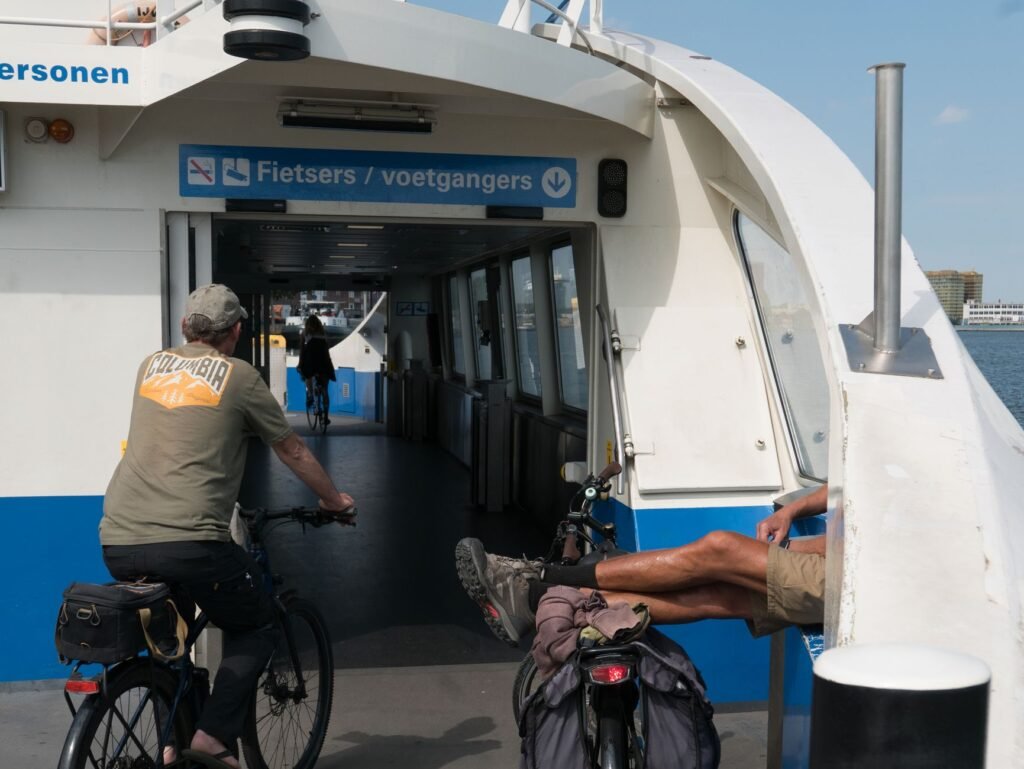
Ferries across the IJ will halt during the upcoming public transit strike, leaving cyclists travelling between Amsterdam-Noord and the rest of the city with few options. The city administration has decided not to arrange replacement transport or open the IJtunnel to bicycle traffic.
City officials cited road safety for keeping the IJtunnel closed, pointing to eight accidents that occurred when it was briefly opened to cyclists in 2019. The municipality also noted that speed differences between different types of bicycles have grown wider since then.
Dispute over tunnel access
Cyclists advocacy group Fietsersbond Amsterdam questioned that reasoning, pointing out that thousands of riders will pedal through the same tunnel later this month during the Dam tot Dam FietsClassic.
The organisation argued that the city should examine the conditions under which bikes could safely use the tunnel during transit disruptions.
Without ferries or tunnel access, cyclists must detour east to the Schellingwouderbrug and the Amsterdamsebrug. That route is currently the only permanent crossing over the IJ for cyclists, and the group warned it will face heavier bike and car traffic during the strike.
Reliance on ferry network
The organisation stated that the strike exposes a structural problem created by the municipality, which has left Noord overly dependent on ferry connections. People who cannot work from home or do not own a car face the greatest impact when those boats stop running.
The Fietsersbond argued that planned bridges across the IJ are urgent infrastructure rather than simple upgrades. Permanent crossings are necessary to prevent the cycling network from failing whenever ferry operations cease.

![Top [count] Travel Blogs to Follow - OnToplist.com](https://www.ontoplist.com/images/ontoplist31.png?id=6a8dcf108f478)