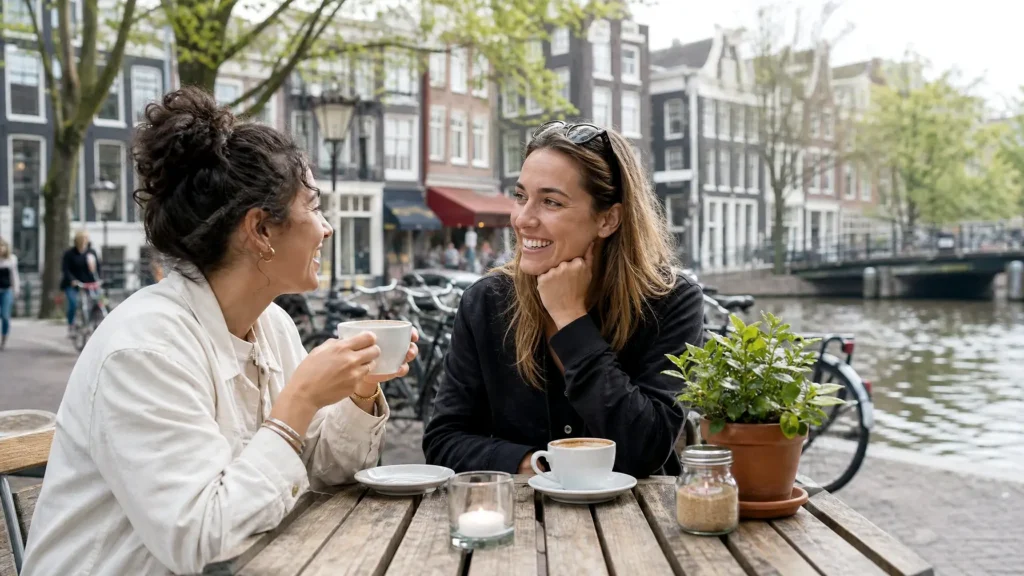
The thing that stalls most newcomers’ social life in Amsterdam is not coldness, it is the agenda.
Dutch friends plan weeks ahead, so an invitation for next Thursday is warm and an invitation for tonight is unusual, and reading the first as distance is the standard early mistake.
The practical consequence is that anything recurring beats anything spontaneous.
A weekly class, a club with a clubhouse, a Tuesday language café - formats that put you in the same room as the same people repeatedly are what actually produce friends here.
How Dutch Socialising Actually Runs
Plans go in the agenda and stay there, and cancelling late is treated as genuinely rude rather than as flexibility.
The upside is reliability: once you are in someone’s calendar, the plan happens.
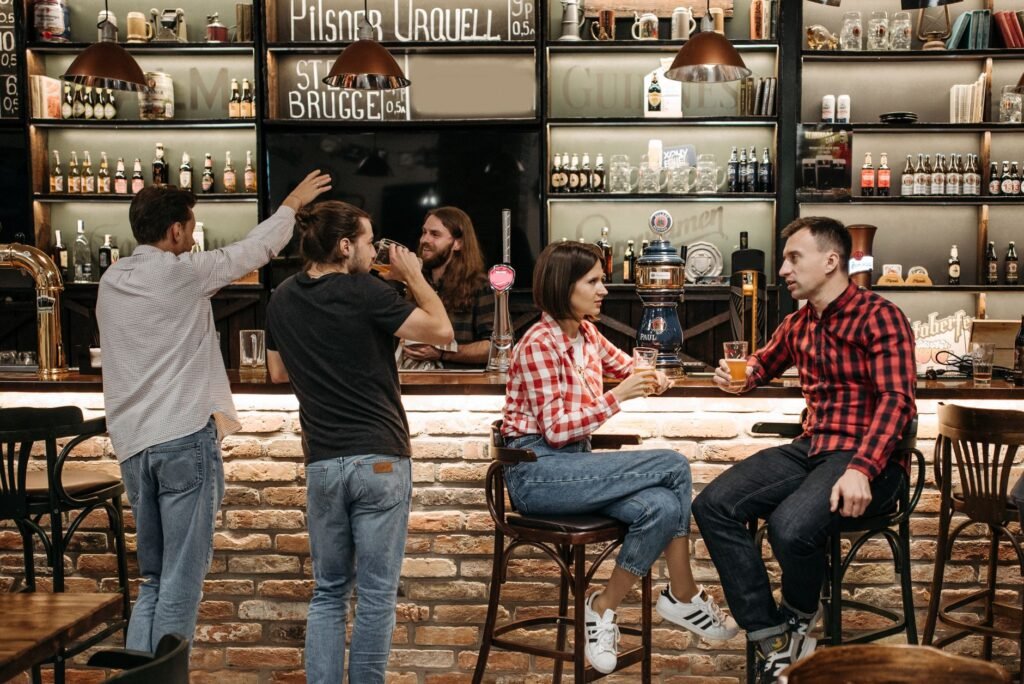
The borrel is the default social unit, an after-work drink that starts around five and is over by eight.
It is not a warm-up for the evening - it is the evening, and treating it as pre-drinks is how a newcomer ends up alone at half past nine.
Dutch birthdays deserve a warning, because you will be invited to one.
Guests sit in a circle, you congratulate not only the birthday person but their partner, parents and siblings too, and coffee with cake precedes anything stronger.
Money is split precisely and without embarrassment, almost always through a Tikkie payment request that arrives on your phone the same night.
Sending one is normal, receiving one for €4.50 is normal, and objecting to either marks you out more than the amount ever will.
The Formats That Actually Produce Friends
A Dutch vereniging - a members’ club with its own clubhouse and canteen - is the single most effective social structure in the country and the one internationals use least.
Hockey, rowing, korfbal, football and tennis clubs across Amsterdam all run adult recreational teams, and the bar after the match is the point as much as the match is.
The OBA Taalcafé runs at library branches across the city for anyone practising Dutch at A1 to B1 level.
It is free, needs no registration and does not require library membership, which makes it the lowest-friction recurring thing a newcomer can join in their first week.
Volunteering works for the same reason a class does, with the added advantage that the other volunteers are not all in their twenties.
Neighbourhood buurthuizen, city festivals and food banks all take shift volunteers, and the commitment is usually one fixed morning a week.
Meetup groups fill the gap while the slower routes bed in, and Amsterdam International Community is the largest of the newcomer-facing ones.
The honest limitation is turnover - a lot of the room will have left the country within two years, so treat it as a way in rather than a destination.
Where You Live Changes How Easy This Is
De Pijp puts the most cafés, market stalls and young internationals within walking distance of each other, which is why it absorbs newcomers faster than anywhere else in the city.
The Albert Cuyp market and the streets either side of it do most of the work.
The Jordaan runs on brown cafés and small terraces, with an older and more settled crowd and the closest thing Amsterdam has to a village pace.
Oost is the same trade with more space and lower rent, built around Oosterpark, the Dappermarkt and the Javastraat.
Noord takes a free ferry from behind Centraal and rewards it with NDSM, Shelter and a creative scene that has room to spread out.
West and De Baarsjes sit between the two, with Westerpark and the Foodhallen at De Hallen as the reliable meeting points.
Centrum is the one to be careful with, because Dam Square, Leidseplein and De Wallen are built around people who leave after three days.
You can live there happily, but you will have to go elsewhere to become a regular anywhere.
Going Out Without The Tourist Bubble
The reliable rule is to choose a venue for its programme rather than its location, because the venues with a programme have an audience that comes back.
Paradiso in a converted church and Melkweg next door both run near-nightly gigs, and Bimhuis on the IJ is the jazz venue with the concert hall behind it.
Club NYX on Reguliersdwarsstraat is the central LGBTQ+ club with a mixed crowd across three floors.
Shelter, under the A’DAM Toren in Noord, is where the underground techno went, and the ferry runs all night.
Museums are underrated as a first meeting with someone new, because they supply the conversation instead of demanding it.
The Rijksmuseum, Stedelijk and Oude Kerk all work better as an hour before coffee than a dinner does as a first plan.
Frequently Asked Questions
How do I meet people if I have just arrived?
Commit to two things that repeat weekly and hold them for three months, because repeated contact rather than charm is what turns acquaintances into friends here.
A sports club, a Dutch class, a volunteering shift and the free OBA Taalcafé are the four that work most consistently.
Why do people keep suggesting dates three weeks away?
Because the Dutch calendar is planned rather than improvised, and a distant date is a sincere yes, not a polite brush-off.
Propose specific dates yourself rather than “sometime soon”, which reads as vague rather than relaxed.
Do I need Dutch to have a social life?
No - English is close to universal in Amsterdam and entire friendship groups operate in it.
It changes what you can reach, though, since sports clubs, neighbourhood life and Dutch-born friends’ families all run in Dutch once the group relaxes.
What should I know before a Dutch birthday party?
Congratulate everyone in the family, not just the person whose birthday it is, and expect a circle of chairs and coffee before any alcohol.
Arriving with flowers or a modest gift is standard, and the party genuinely ends when it ends rather than drifting.
Is it normal to be sent a Tikkie for a small amount?
Completely, and it carries no judgement whatsoever.
Pay it promptly and send your own without apology, because hesitating over both is what actually reads as odd.
What makes this hard, and what helps?
Housing pressure scatters people across the city and the international population turns over fast, so groups keep losing members.
The counter is to invest in the parts of your social life that are anchored to a place rather than to individuals - a club, a neighbourhood, a weekly fixture - because those survive people leaving.