Amsterdam’s culture is not confined to its museums, though the museums are where most first trips sensibly start.
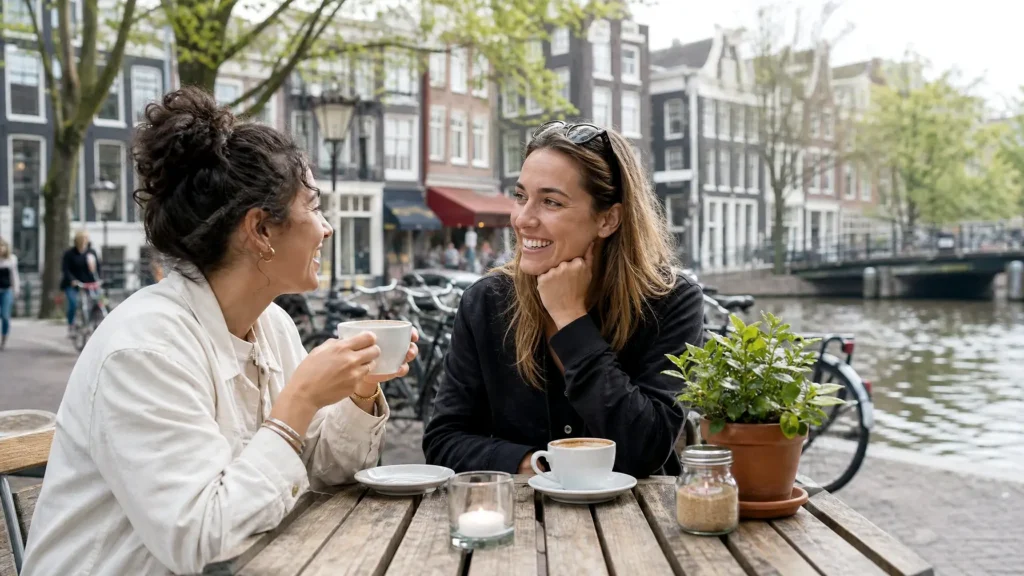
It is also in the brown cafés at dusk, the markets, the bikes crossing canal bridges, and the ordinary way people occupy public space here.
The plan that works is a mix: a morning with the paintings, an afternoon on or beside the water, an evening somewhere with a crowd in it.
Start With Amsterdam’s Cultural Icons
Museumplein is the obvious first stop, because four of the city’s major institutions sit within a few minutes’ walk of each other.
The Rijksmuseum is the Dutch Golden Age in one building, and the collection makes the trade, wealth and civic self-image of the seventeenth century unusually legible.
Rembrandt’s The Night Watch is the one thing here that photographs genuinely fail at, because the scale and the sense of movement are the point.
A few minutes away, the Van Gogh Museum holds the largest collection of his work anywhere, arranged with the letters alongside the paintings.
Seeing Almond Blossom next to the darker Dutch-period canvases is what makes the trajectory obvious in a way the famous images alone do not.
For modern and contemporary work the Stedelijk Museum covers art and design together, while the Moco Museum is smaller, more pop and more crowded.
For music, the Concertgebouw is worth a ticket even without a strong interest in the programme, since the hall itself is one of the reasons the orchestra sounds as it does.
Free lunchtime concerts run there on Wednesdays during the season, which is the cheapest way into the building.
If you are visiting several museums in two or three days, the I Amsterdam City Card covers entry plus public transport - check it against your actual shortlist first, because it only pays off above about three paid attractions a day.
Canals, History, And The City’s Living Heritage
The Grachtengordel was built in the seventeenth century as a single planned expansion, which is why the canal ring is regular where medieval Amsterdam is not.
Walking Prinsengracht, Herengracht and Keizersgracht shows the pattern: narrow frontages taxed by width, deep interiors, and hoisting beams still fixed under the gables because the staircases were never wide enough.
A canal cruise early in the trip is worth the tourist tax, because seeing the city from the water is what makes the street layout make sense afterwards.
From a boat you notice the warehouse hooks, the bridge sightlines and the houseboats, none of which register at street level.
Several of the most significant historical sites are within a short walk of those canals.
The Anne Frank House sells out well in advance and releases tickets on a timed online system only, so book before you travel rather than on arrival.
Dam Square and the Nieuwe Kerk are the civic centre; the Begijnhof and Westerkerk are the quieter, older counterpoint a few streets away.
Beyond those, the Houseboat Museum, the Portuguese Synagogue, the National Holocaust Museum, the National Maritime Museum and the Rembrandt House each cover a distinct part of the city’s history.
The maritime collections are where the VOC and Amsterdam’s trading empire become concrete, including the colonial violence and slavery the wealth was built on, which the museum now addresses directly rather than around.
Where Contemporary Creative Life Feels Most Alive
For the current city rather than the historic one, take the free ferry north to NDSM Wharf.
The old shipyard buildings hold large-scale street art, studios, waterside bars and a rotating programme of events, on a scale the centre has no room for.
Next to it, the STRAAT Museum puts graffiti and mural work in a hangar big enough to show it at the size it was made for.
Amsterdam-Noord also has the Eye Film Museum, worth the crossing for the building and the view back over the IJ even if you see nothing there.
Back in the centre, the Foam photography museum is small, focused and changes exhibitions often, which makes it the antidote to a long morning at the Rijksmuseum.
For daily life, spend an hour in De Pijp around the Albert Cuyp Market, where a warm stroopwafel and watching people shop tells you more about the city than another gallery would.
The Jordaan, Vondelpark, the Amsterdam School architecture of the Spaarndammerbuurt and the Eastern Docklands each show a different century’s answer to how the city should be built.
Music, Festivals, And Cultural Experiences Beyond Museums
Evenings are where the city’s cultural life is least like the daytime version.
Nationale Opera & Ballet on the Amstel is the formal end, Paradiso is a converted church that has been the city’s main mid-size music venue for decades, and Boom Chicago does English-language improv comedy.
Each pulls an entirely different crowd, which is much of the point.
Festivals reshape the calendar.
ADE turns the whole city into an electronic music programme for five days each October, across hundreds of venues rather than one site.
The Amsterdam Light Festival runs through the winter and is best seen from a boat, which is the one time of year a canal cruise at night is the right call.
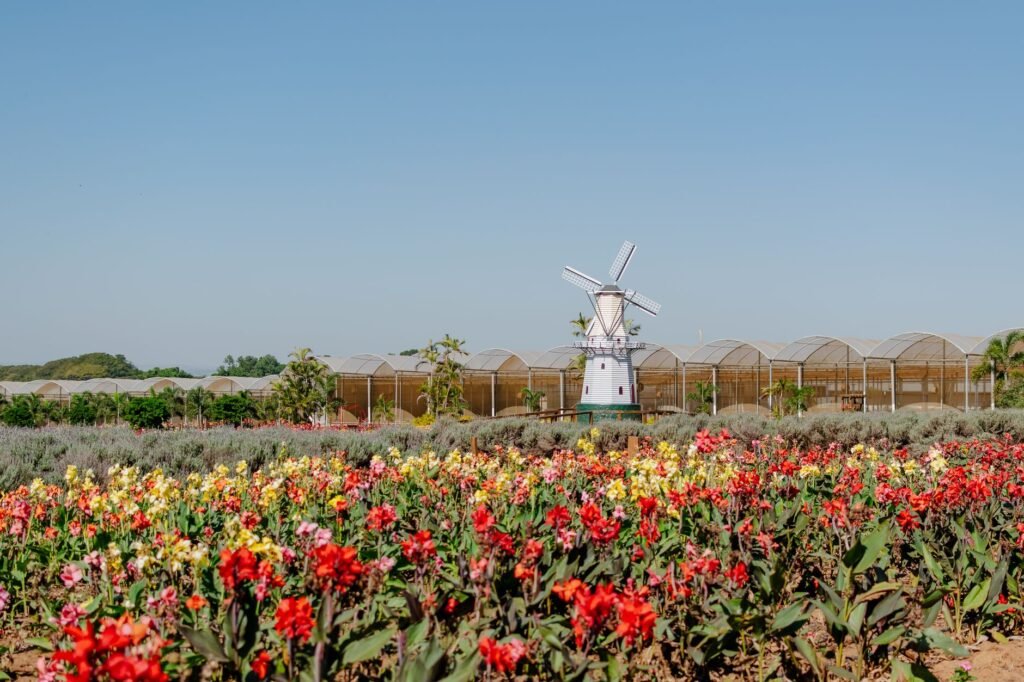
In spring, Keukenhof is the standard day trip - unapologetically touristic, open only about eight weeks from late March, and genuinely unmatched for what it does.
Frequently Asked Questions
What are the best ways to experience local Dutch culture in Amsterdam as a visitor?
Alternate the major museums with ordinary places: the free ferry to Noord, the Albert Cuyp Market, a canal cruise, and time in the Jordaan or De Pijp.
Sitting still in a brown café for an hour does more than another gallery once you have done two.
Which traditions and holidays are most important in the Netherlands, and how are they celebrated in Amsterdam?
King’s Day on 27 April is the big one, with orange clothing, a citywide street market and boats packed onto every canal.
Sinterklaas dominates late November and early December, and the winter months bring the light festival and the general commitment to gezelligheid in cafés.
What Dutch foods and drinks should I try in Amsterdam to understand the local culture?
Stroopwafel from a market stall while it is still warm, bitterballen with mustard, fries with sauce, poffertjes, and raw herring if you are willing.
A rijsttafel is the Indonesian-Dutch meal that explains a large part of the country’s colonial history at the table - and for drinks, try jenever in a brown café rather than a cocktail bar.
How do Dutch social norms and etiquette work, and what should tourists know before visiting?
People are direct, brief and practical, and it is not rudeness.
Be on time, never stand in a bike lane, keep your voice down on residential canals at night, and remember that most of the centre is somebody’s street rather than an attraction.
Where can I learn about Dutch history and everyday life through museums or neighborhoods in Amsterdam?
The Rijksmuseum, the Anne Frank House, the National Maritime Museum and the Rembrandt House cover the historical spine.
For everyday life, walk the canal belt, the Jordaan, the Begijnhof and De Pijp, where the buildings and street patterns carry as much information as any label.
What traditional Dutch clothing and design styles are worth knowing about, and where can I see them in Amsterdam?
Clogs and regional dress are not everyday clothing and have not been for a century, so you will see them in markets, souvenir shops and museum displays rather than on the street.
The living design tradition is elsewhere: the canal house facades, Dutch graphic clarity, and the brick expressionism of the Amsterdam School.
The Spaarndammerbuurt and the Eastern Docklands are the two places to see that last one properly.