A taxi in Amsterdam earns its money in three situations: luggage, late nights, and addresses the tram does not reach.
For everything else the meter beats you before the traffic does.
Dutch taxi fares are capped by national maximum tariffs that are re-indexed every January, so any figure you read without a year attached is worth ignoring.
For 2026 the ceiling on a car carrying up to four passengers is €4.31 to start the meter, €3.17 per kilometre and €0.52 per minute.
Those are maxima, not prices — licensed operators may charge less, and many do.
Spotting A Legal Taxi
Every licensed Dutch taxi carries blue number plates.
That is the national marker, and it is the one thing to check before you open a door.
Amsterdam adds a second layer that exists nowhere else in the country.
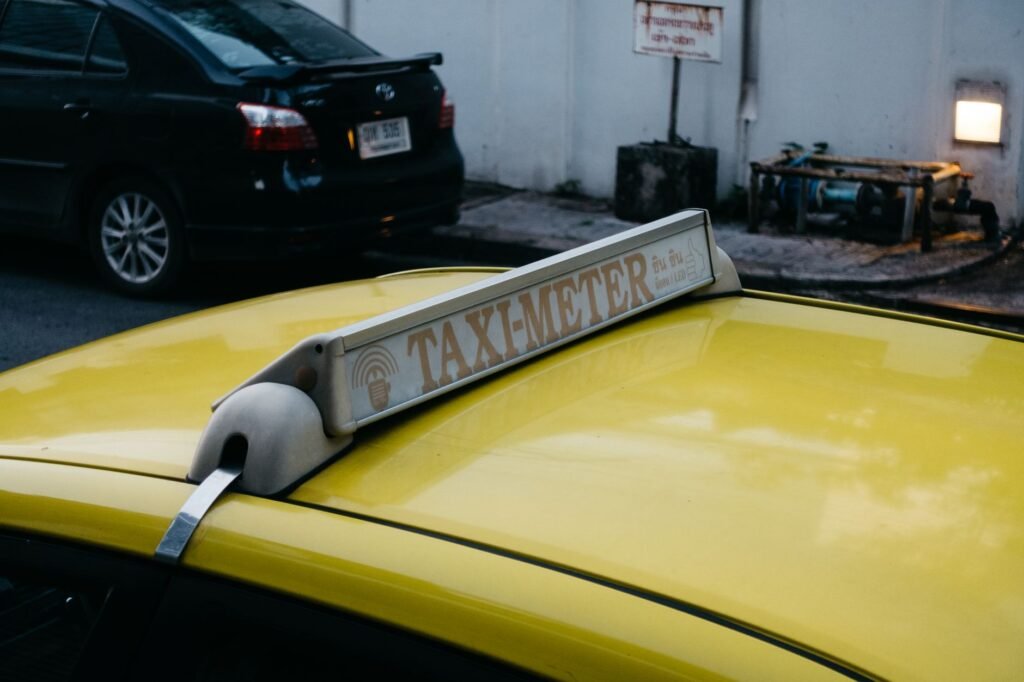
Drivers who pick up from a rank or from the street here must belong to a Toegelaten Taxi Organisatie, a licensed taxi organisation vetted by the city, and their roof light shows the TTO logo, the driver’s number and the three red St Andrew’s crosses of the Amsterdam coat of arms.
A car with blue plates but a plain roof light is licensed to carry pre-booked passengers only.
Anyone who approaches you inside a station hall or on the pavement outside a club and offers a ride is working outside that system entirely.
The ranks themselves are the safe route, and the busiest are outside Centraal Station, at Leidseplein, Rembrandtplein and Dam Square.
What A Ride Actually Costs
Street taxis run on the meter and the meter runs on both distance and time, which is why a short hop through the canal ring in afternoon traffic can cost more than a longer run down the Zuidas.
At the 2026 maxima, a five-kilometre trip taking fifteen minutes tops out near €28, and a two-kilometre crawl taking ten minutes lands closer to €16.
App-booked rides quote a fixed price before you accept, which removes the traffic risk but adds surge pricing on busy evenings.
Comparing the app quote against the metered maximum takes ten seconds and is the only reliable way to know which is cheaper on the night.
Card payment is standard in licensed cars and the meter prints a receipt on request.
Ask for one — it carries the driver and vehicle number, which is what you need if you leave something on the back seat.
Schiphol And The Airport Run
The official rank sits directly outside the arrivals doors at Schiphol Plaza, and it is the only pick-up point at the airport that is supervised.
Expect roughly 25 to 35 minutes to the city centre outside rush hour, and a fare in the €45 to €60 band depending on where in the city you are going.
Ride-hailing apps also serve Schiphol, but their pickup points are in the car parks rather than at the terminal door, which costs you a walk with your bags.
Pre-booking a fixed price is worth it for a departure before six in the morning, when demand at the rank is thin and the train has not started running.
For a straightforward arrival, the train is still the cheaper answer.
It runs from a platform beneath the terminal to Amsterdam Centraal in under twenty minutes for a single-figure fare, and a taxi only wins if your bags or your hotel location make the walk at the far end unattractive.
Booking Ahead
Taxicentrale Amsterdam is the city’s best-known licensed taxi organisation and dispatches by both phone and app.
Uber and Bolt both operate here and cover the whole city, with upfront pricing and in-app payment.
For a fixed-price airport transfer booked days ahead, the specialist transfer companies quote per vehicle rather than per meter, which is usually the better deal for four people with luggage and the worse deal for one person travelling light.
Book anything leaving before 06:00 the night before rather than on the morning itself.
When Something Goes Wrong
The recurring complaints are the same three: a refused short trip, a route longer than it needed to be, and a fare that does not match the meter.
Ask for the ritbewijs, the printed journey receipt, at the end of every ride – it carries the driver and vehicle details a complaint needs.
Photograph the number plate, complain to the taxi company first, and go to the municipality’s taxi enforcement if that gets you nowhere.
Every journey is GPS-logged, so an argument about the route is one you can actually win.
Older high-emission vehicles are progressively barred from central areas as the zero-emission zones expand, which is why a booking is occasionally refused for an address inside them.
The Cheaper Answer Inside The City
Trams and the metro reach every neighbourhood, run frequently, and cost a fraction of a taxi – tap any contactless bank card at the reader and stop thinking about it.
For distances under about three kilometres, a bike is faster than a car queuing for a canal bridge.
Keep the taxi for the early flight, the suitcases, and the evening the weather decides for you – and check a rain radar before you write off the tram.
Frequently Asked Questions
Price, apps and the airport account for almost every taxi question visitors ask.
How much does a 20-minute taxi ride cost in Amsterdam?
At the 2026 maximum tariffs, a twenty-minute ride covering six kilometres reaches about €34, made up of the €4.31 start, €3.17 per kilometre and €0.52 per minute.
Most licensed operators charge below the maximum, so treat that as the ceiling rather than the expected price.
How do I know a taxi is licensed?
Blue number plates are the national requirement, and in Amsterdam a car working the ranks must also show a roof light carrying its organisation’s logo, the driver number and the city’s three crosses.
If either is missing, walk to the rank instead.
Do Amsterdam taxis take cards?
Card payment is standard in licensed taxis and you rarely need cash.
Confirm it before the meter starts if you are carrying nothing else.
Is Uber cheaper than a metered taxi in Amsterdam?
Sometimes, and it depends entirely on the hour.
The app price is fixed and immune to traffic, while the meter is immune to surge pricing, so the honest answer is to check both when you are standing next to a rank.
What is the best way to get from Schiphol to the city centre by taxi?
Use the official rank outside arrivals at Schiphol Plaza, or pre-book a fixed price if you are landing late or leaving early.
Budget €45 to €60 and around half an hour.
Can I hail a taxi on the street?
You can, and it is legal, but only cars whose drivers belong to a licensed Amsterdam taxi organisation may take a street hail here.
Ranks are more reliable than the kerb, particularly after midnight.
In the news
- Public transport strike halts city services on Wednesday 8 September 2026
- Amsterdam drivers launch rival taxi booking app, NLCabs 1 September 2026
- NS ends alternative travel compensation during strikes 20 August 2026
- Independent Taxi Drivers at Schiphol Face Plunging Incomes Under New Rules 17 August 2026
- Schiphol Taxi Drivers Say New Rules Have Cut Their Income, and a Strike Is Back on the Table 17 August 2026