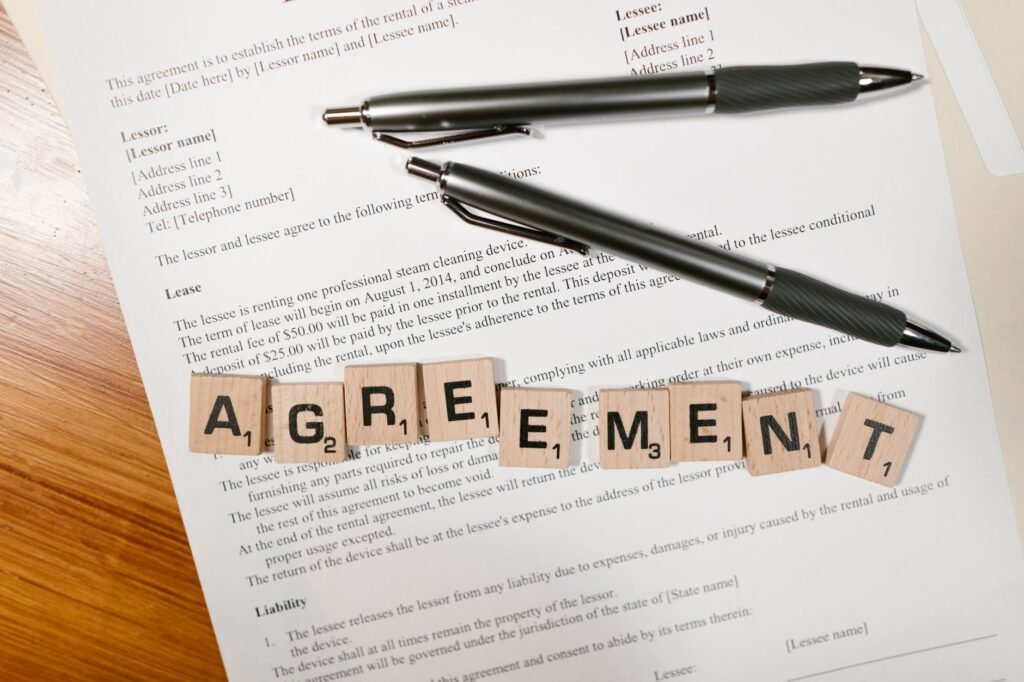
Almost every expensive Amsterdam rental mistake is made in the ten minutes before signing, and almost all of them are visible in the document.
Work through the list below with the contract open, and refuse to transfer anything until each line has an answer.
The Checklist
- Contract type. Open-ended (onbepaalde tijd) is the legal default since the fixed-term rules tightened in 2024. If you are offered a fixed term, ask which statutory exception applies - a landlord who cannot name one is offering something they may not be entitled to offer.
- Bare rent stated separately. The contract must show kale huur and servicekosten as distinct figures. One all-in number is not acceptable, because every legal test that protects you is applied to the bare rent alone.
- Service costs itemised. Each component listed, with a stated annual reconciliation against actual expenditure. Furniture rental, if any, should appear as its own line.
- Deposit no more than two months’ bare rent. Capped for contracts signed since 1 July 2023, with the return deadline written in - fourteen days after the tenancy ends, or thirty where deductions are itemised.
- Right to register at the address. In writing, in the contract. Without BRP registration you cannot obtain a BSN, and without a BSN you cannot bank, insure yourself or be paid properly.
- Move-in inspection report. A signed condition report, dated photographs of every room and appliance, and meter readings for gas, electricity and water. Email the set to the landlord the same day so the timestamp is not only yours.
- Inventory list for anything furnished, itemised and agreed, including the condition of each item.
- Repair responsibilities referenced to the Besluit kleine herstellingen rather than invented in the contract. Small routine items are yours; structure, boiler, wiring, plumbing and wear are the landlord’s, and no clause can reverse that.
- Notice periods. Yours is normally one month and can be given at any time. Anything longer for the tenant is a clause to query.
- House rules in writing. Guests, pets, smoking, bike storage, subletting, shared spaces and any owners’ association rules - if it was said at the viewing and is not in the document, ask for it to be added.
- No key money and no tenant-paid agency fee. Both are illegal where the agent acts for the landlord, which is nearly always. A demand for either is a reason to walk.
- Landlord identity verified. The name on the contract, the name on the bank account receiving the deposit and the registered owner should be the same person or company.
The Clauses Worth Slowing Down For
A diplomatenclausule allows a landlord who is temporarily abroad to reclaim the property on their return, and it is legitimate in that situation and abused outside it.
If one appears, ask where the landlord is living and for how long, and get the answer in the contract rather than in conversation.
Watch for a rent-increase clause that indexes to inflation with no ceiling, or one that indexes and then adds a fixed percentage on top.
In the free sector the statutory cap still applies and the lower of the two figures wins, so an aggressive clause is unenforceable rather than binding - but it tells you what kind of landlord you have.
Read any break clause in both directions.
A term that lets the landlord end the tenancy on short notice but locks you in for a year is not merely unfair, it is unlikely to survive contact with a court.
If a clause is in Dutch and you are signing in English, get the Dutch version too, since it is generally the one that governs.
Before You Transfer Any Money
Confirm the property exists, is the one you viewed, and is being let by someone entitled to let it.
The Kadaster ownership register will tell you who owns the address for a small fee, and it takes minutes.
Never pay a deposit or first month before you have a signed contract and, ideally, keys in hand.
Payment by bank transfer to a Dutch account in the landlord’s own name is normal; requests for cash, cryptocurrency or a transfer to a third party are not.
Score the home on the points system before you sign if the rent sits near €932.93 or €1,228.07, the 2026 boundaries between the social, middenhuur and free-sector bands.
The Huurcommissie calculator is free and !WOON will run it with you, and being one band lower than the landlord assumed changes your rights substantially.
Where To Get A Second Opinion
!WOON is the Amsterdam tenant advice service, free and funded by the city, and it will read a contract with you before you sign rather than after it has gone wrong.
Het Juridisch Loket gives free legal information nationally, including on deposits, eviction threats and unlawful clauses.
Keep an evidence folder from the first email: the listing screenshot, the draft contract, every payment receipt, the move-in photographs, the meter readings and the full message thread with the landlord.
Deposit disputes and repair arguments are decided almost entirely on which side kept records, and the folder costs nothing to start.
For the rest of settling in here, the Essentially Amsterdam newsletter arrives daily.
Frequently Asked Questions
What is the single most important clause?
The right to register at the address, because everything administrative in Dutch life runs through the BRP registration it enables.
A landlord who will not put it in writing is either letting the property irregularly or intends to treat you as a short-stay guest.
How much deposit is legal?
Two months’ bare rent at most for contracts signed from 1 July 2023, returnable within fourteen days of the tenancy ending, or thirty days where deductions are itemised.
A request for more, or for several months’ rent in advance alongside it, is unlawful and usually a sign of something worse.
How do I tell fixed-term from indefinite?
Look for an end date and wording saying the lease terminates automatically; onbepaalde tijd or the absence of an end date indicates an open-ended contract.
Since 2024 the open-ended form is the default, so a fixed term needs a specific legal justification that the landlord should be able to name.
Who pays for repairs?
National rules under the Besluit kleine herstellingen decide it, not your contract: small routine maintenance falls to the tenant and everything structural or installed falls to the landlord.
A clause transferring boiler or roof repairs to you is unenforceable, though disputing it is easier if you noticed it before signing.
What attachments should come with the contract?
An inventory list, a signed move-in inspection report with photographs, meter readings for all utilities, the house rules and an annex setting out the service costs.
Anything present in the flat but absent from those documents is a future argument you will lose.
What if I have already signed something that looks wrong?
An unlawful clause is void whether or not you signed it, so a bad contract is rarely as final as it feels.
Take it to !WOON or the Juridisch Loket, and act before a deadline passes rather than after the tenancy has run for a year.
Related reading
See also: Amsterdam Rental Scam Guide: How To Spot And Avoid Fraud.