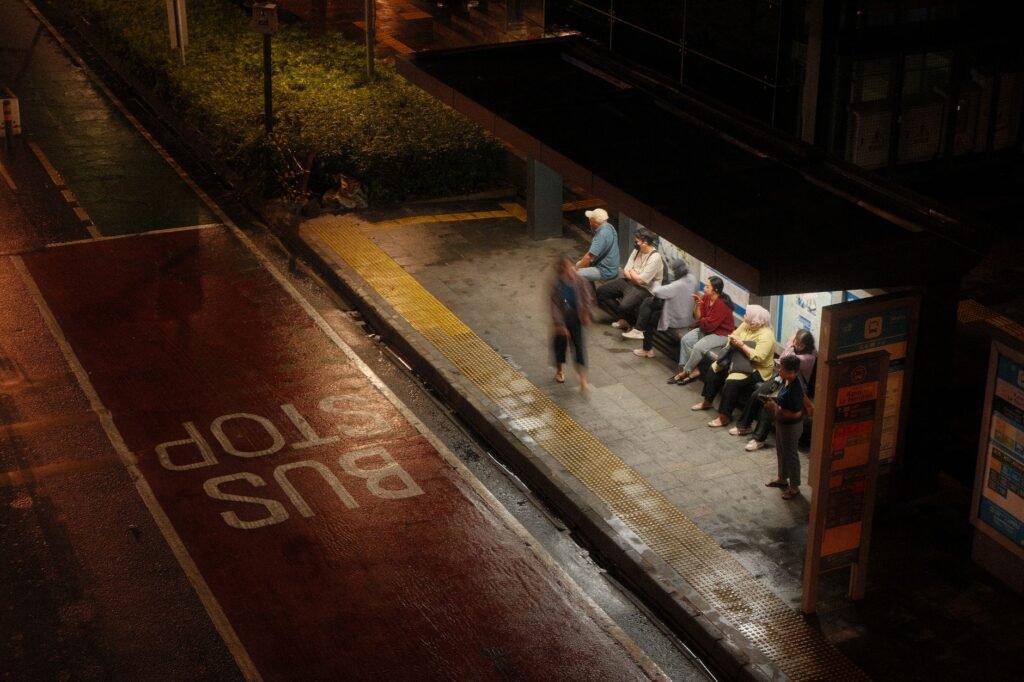
Trams carry most short journeys inside the canal ring; buses take over in the outer districts and after the trams stop for the night.
Both run on the same fares, the same readers and the same app, so the only thing worth learning in advance is which line goes where.
One caution before you memorise anything: GVB rewrote several tram routes on 29 March 2026, and engineering diversions are scheduled to run into 2027.
A printed map in a hotel lobby may be a year out of date, so check the app on the morning you travel.
Fares On Buses And Trams
Contactless payment through OVpay charges €1.16 to board plus €0.217 for every kilometre you travel, so most single trips inside the centre land between €1.50 and €2.50.
A one-hour ticket bought on board or in the app costs €3.40 and is only worth it if you change lines twice.
The GVB day ticket covers unlimited travel on trams, buses, metro and night buses: €10 for 24 hours, €16 for 48, €21.50 for 72, €27.50 for 96, €34 for 120, €39 for 144 and €43 for a full week.
Children aged four to eleven pay €5 for the 24-hour version.
Two people cannot share one bank card, because the reader treats each card as a single passenger.
Travelling as a pair means two cards, two phones, or two paper tickets.
The Tram Lines Worth Knowing
Tram 2 runs from Centraal Station through Leidseplein to the museum quarter and is the single most useful line for a first-time visitor.
Tram 4 leaves Centraal for Dam Square, then runs down through De Pijp past the Albert Cuyp market to Station RAI.
Tram 14 heads east from Centraal via Waterlooplein and the Rembrandt House to ARTIS and Javaplein in the Indische Buurt.
Tram 17 goes west, passing Westermarkt for the Anne Frank House and De Hallen in Oud-West before continuing to Osdorp.
Tram 26 is the one to take for the eastern waterfront, running past the Muziekgebouw along the IJ to IJburg.
Tram 1 threads Leidseplein and the Overtoom on its way out to Nieuw-West, which makes it the practical line for Vondelpark’s western end.
Where Buses Matter
Inside the canal ring the bus is almost always the slower option, and you can ignore it.
Outside it, buses do the work trams do not: much of Noord, the edges of Nieuw-West, and the industrial and residential streets in Zuidoost that sit away from a metro station.
Bus 397, the Airport Express, is the exception every visitor should know.
It runs between Schiphol and the city via Museumplein and Leidseplein, which beats the train if your hotel is in the south or west of the centre rather than near Centraal.
Night buses take over when the trams stop, roughly half past midnight, and they run from Centraal Station out along numbered N-routes.
They are included in a GVB day ticket and charged normally on OVpay.
Boarding, Tapping And Etiquette
Board at any door on a modern tram and tap the pink reader on the pole beside it, then tap out again on the same reader before you step down.
Forgetting to tap out charges you the maximum fare for that line, which is the most common and most annoying mistake visitors make.
Doors do not open automatically at every stop; press the button on the door or the pole if nobody else has.
Seats near the doors are reserved for older and disabled passengers and for anyone with a pushchair.
Let passengers off before you get on, and keep bags off the seat beside you when the tram fills.
Bicycles are not carried on trams or city buses, though the IJ ferries take them free of charge.
Frequently Asked Questions
Fares, routes and the airport cover almost everything people need before their first ride.
How much is a tram ride in Amsterdam?
Paying contactless costs €1.16 plus €0.217 per kilometre, which is under €2.50 for most journeys inside the centre.
A one-hour ticket is €3.40 and a 24-hour ticket is €10.
Which tram goes to the Van Gogh Museum and the Rijksmuseum?
Tram 2 from Centraal Station runs to the museum quarter via Leidseplein and is the most direct line from the station.
Museumplein is a five-minute walk from the stop.
Which tram goes to the Albert Cuyp market?
Tram 4 from Centraal Station runs the length of De Pijp and stops within a minute’s walk of the market.
It continues to Station RAI if you are heading out to the exhibition centre.
Do I tap out on Amsterdam trams and buses?
Yes, on every journey and with the same card or phone you tapped in with.
Missing the tap out means being charged the line’s maximum fare instead of the distance you travelled.
Is there a bus from Schiphol into the city?
Bus 397, the Airport Express, runs to Museumplein and Leidseplein and is more convenient than the train for hotels in the south and west of the centre.
Otherwise the train to Centraal is faster.
Where can I get a current tram map?
Use the GVB app, which reflects the route changes made on 29 March 2026 and the diversions running into 2027.
Printed maps at stops and in hotels are frequently out of date.
Do trams run all night?
No - trams stop around half past midnight and night buses take over from Centraal Station until the morning service starts.
Night buses are covered by a GVB day ticket.
Related reading
In the news
- Self-driving GVB minibuses could start in Amsterdam Noord 7 October 2026
- Columnist calls Strandeiland tram extension a ghost line 5 October 2026
- Linnaeusstraat crossing reopens two months ahead of schedule 2 October 2026
- Overtoomse Sluis bridge closes for over six months 9 September 2026
- Foundation work advances on De Clercqstraat bridge 8 September 2026