
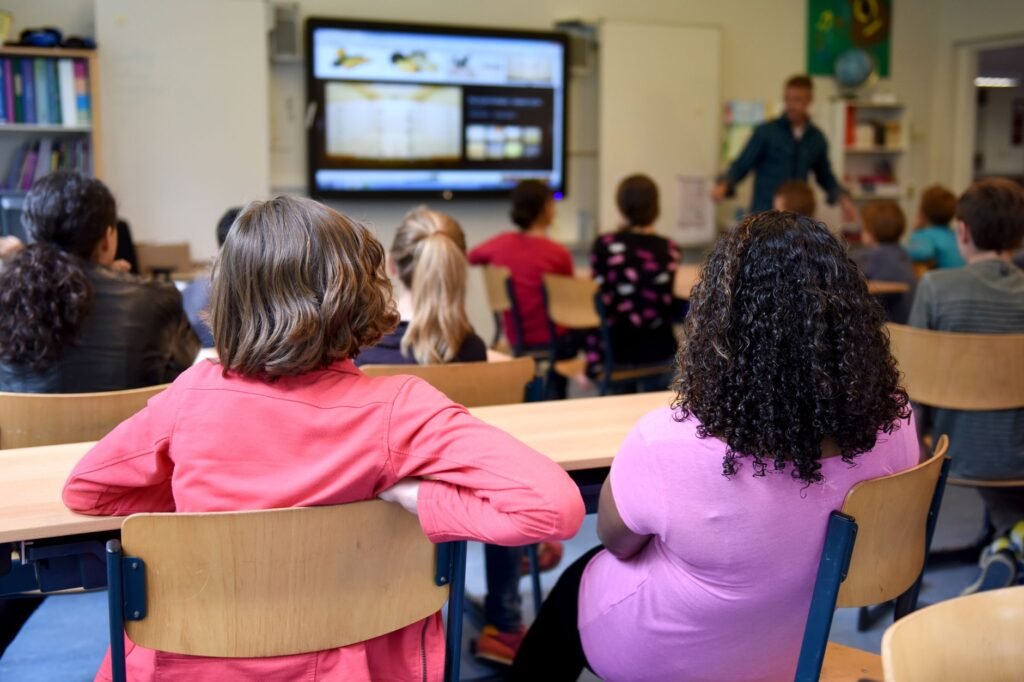
Pupils who score exactly the same on the Dutch end-of-primary-school test can still receive different secondary school recommendations depending on how they rank among their classmates.
Children who finish near the top of a weaker class are more likely to get a higher recommendation, such as vwo, than peers with identical scores in stronger classes.
Those at the bottom of a high-performing class face a greater chance of a lower recommendation, such as vmbo.
The research was led by Max Coveney, an assistant professor at the Erasmus School of Economics.
What the data show
The team analyzed records from Statistics Netherlands covering about 460,000 pupils from 200,000 families between 2006 and 2021.
It examined end-of-primary test scores across more than 5,000 elementary schools, the advice each child received, background characteristics, and later educational outcomes.
Coveney said he had not expected a child’s position in the class to prove so decisive for the advice given.
He noted that he comes from Australia, where sorting by level happens later than at the end of primary school.
How teachers form advice
The class-rank effect appears strongest among the most experienced teachers.
Teachers may not always realize what is shaping their recommendations.
One possibility is that they unconsciously treat a child’s rank order in the class as a benchmark.
Another is that higher-ranked pupils show more self-confidence, and teachers partly base their judgment on that behavior.
Who tends to be underrated
The findings line up with earlier research showing that certain groups are systematically underestimated.
These include children from lower-income families, pupils from rural areas, and students whose parents did not complete higher education.
Girls are underestimated more often than boys.
Coveney believes that making teachers aware of these conscious or unconscious biases can help reduce some of the effects.
In the Dutch system the primary-school recommendation still carries lasting weight, because it steers children toward the vmbo, havo, or vwo tracks that shape much of what comes next.
For families whose children are about to get that end of primary advice, it helps to know how school choice works in Amsterdam before the vmbo, havo or vwo decision lands.

![Top [count] Travel Blogs to Follow - OnToplist.com](https://www.ontoplist.com/images/ontoplist31.png?id=6a8dcf108f478)