
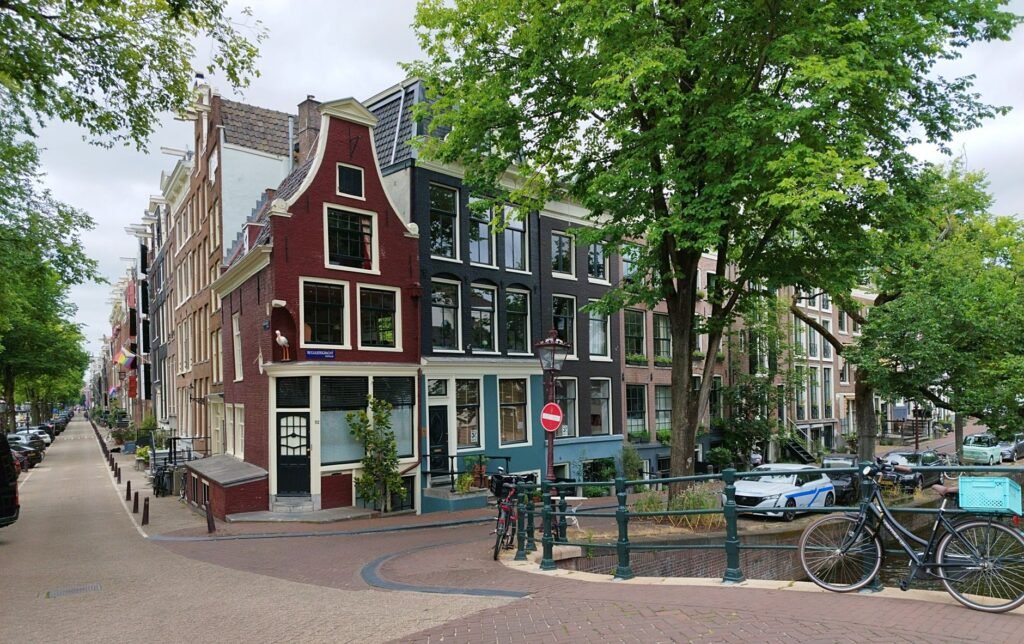
Warmer temperatures are allowing exotic plants to take root in Amsterdam pavements and quay walls. Discarded seeds from kiwis, figs, grapes and other southern flora are increasingly germinating on their own without human cultivation.
City botanist Ton Denters has tracked wild urban plants across the capital since 1985, having previously worked as a municipal urban ecologist.
According to Denters, the Netherlands now has the climate of the South of France, creating conditions where seeds that once rotted in the cold can successfully sprout.
Urban heat accelerates the process, as the mass of stone keeps the city six to seven degrees warmer than surrounding countryside. Coastal cities offer particularly favourable conditions due to milder winter temperatures.
Spontaneous growth from discarded fruit
Near the outer pillar of the Central Station canopy, a kiwi bush grows out of a hole above an old, covered quay wall. Denters believes it germinated from discarded fruit washed by rainwater into a sheltered space before the station roof was built.
Denters first spotted wild kiwi plants in Bruges and Ghent in 2001, before finding three in Amsterdam in 2008. The city now has about ten wild kiwi shrubs, which can reach heights of four to six metres, though he has not yet seen naturally grown bushes bear fruit.
Figs are far more widespread, with more than one hundred wild specimens now growing across Amsterdam. At the Drieharingenbrug on Prinseneiland, a fig tree wedged in a quay wall is at least 35 years old and has been granted protected status so bridge renovations will spare it.
Denters spotted the city’s first spontaneous fig tree in 1990 nearby on Minnemoersstraat. While these urban fig trees can produce sweet fruit when exposed to full sun, they cannot yet reproduce independently because the required Mediterranean parasitic wasp is not present in the country.
Imports and escaping garden plants
Both kiwi and fig shrubs originate as rock plants that need little nutrition, allowing them to thrive on brickwork, cellar openings and weathered cement joints. Young fig trees also regularly appear near daily markets and Turkish grocery shops from discarded produce.
Potted imports bring additional wild species into the streetscape. Olive trees imported in root balls from Southern Europe carry foreign weed seeds, introducing plants like wood sorrel, southern nettle and slip-leaved thistle, with around fifty tub weeds now officially naturalised nationwide.
On Prinseneiland, Chinese fan palms planted in tubs during the 1980s have begun dropping seed clusters that sprout spontaneously between rocks.
Similar palm seedlings are increasingly escaping containers elsewhere in the city, leading Denters to suggest they may eventually supplement struggling traditional canal trees like elms.
Changing food habits also produce temporary street greenery that Denters describes as hipster flora. Plants such as chia, quinoa, goji berries and goldenberries occasionally appear outside organic groceries and on pavements, though these short-lived arrivals rarely produce lasting offspring.


![Top [count] Travel Blogs to Follow - OnToplist.com](https://www.ontoplist.com/images/ontoplist31.png?id=6a8dcf108f478)