
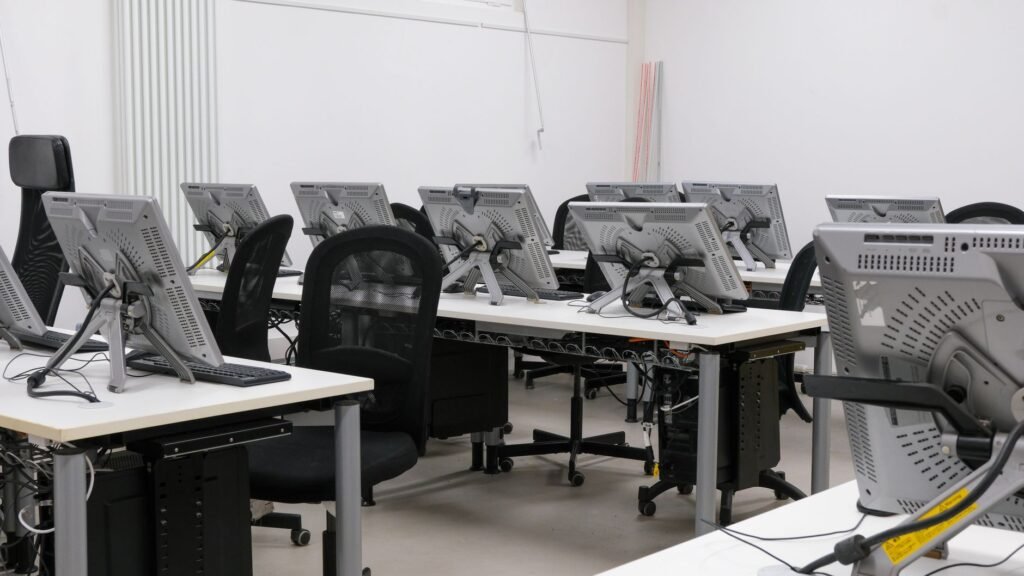
Candidates and teachers are raising concerns over noisy conditions during the Dutch civic integration speaking exam. Dozens of candidates take the mandatory test simultaneously in crowded rooms, speaking into headsets connected to computers.
Those who have taken the exam describe the rooms as sounding like call centres or busy cafes. Candidates hear others talking at varying volumes, and some report failing the test after losing concentration in the noise.
Two assessors grade each candidate by listening to the recorded answers afterwards. A former assessor noted that it was common to hear three candidates speaking over each other on a single recording while trying to score an answer.
Preparation and official response
Language teachers say the issue has persisted for years, arguing the exam room should be silent. One language-school operator now trains students in groups on identical speaking tasks so they can practise working through background noise.
The examinations board acknowledges the complaints but notes that only about 1% of candidates submit an official complaint. The board also states that candidates sit with an empty desk on either side, and no recent changes have been made to the test format.
Pass rates indicate that the speaking test remains a difficult obstacle. Between roughly 50% and 60% of candidates passed the exam last year.
Consequences of failing
Critics ask why individual booths or better headphones are not provided, or why the test cannot be conducted directly with a person. Failing the exam carries significant consequences for candidates, who must complete integration within three years to avoid fines.
Candidates often struggle to balance required lessons with paid work. Because study programmes require proof of spoken Dutch skills, failing the exam leaves educational and professional plans on hold.



![Top [count] Travel Blogs to Follow - OnToplist.com](https://www.ontoplist.com/images/ontoplist31.png?id=6a8dcf108f478)