
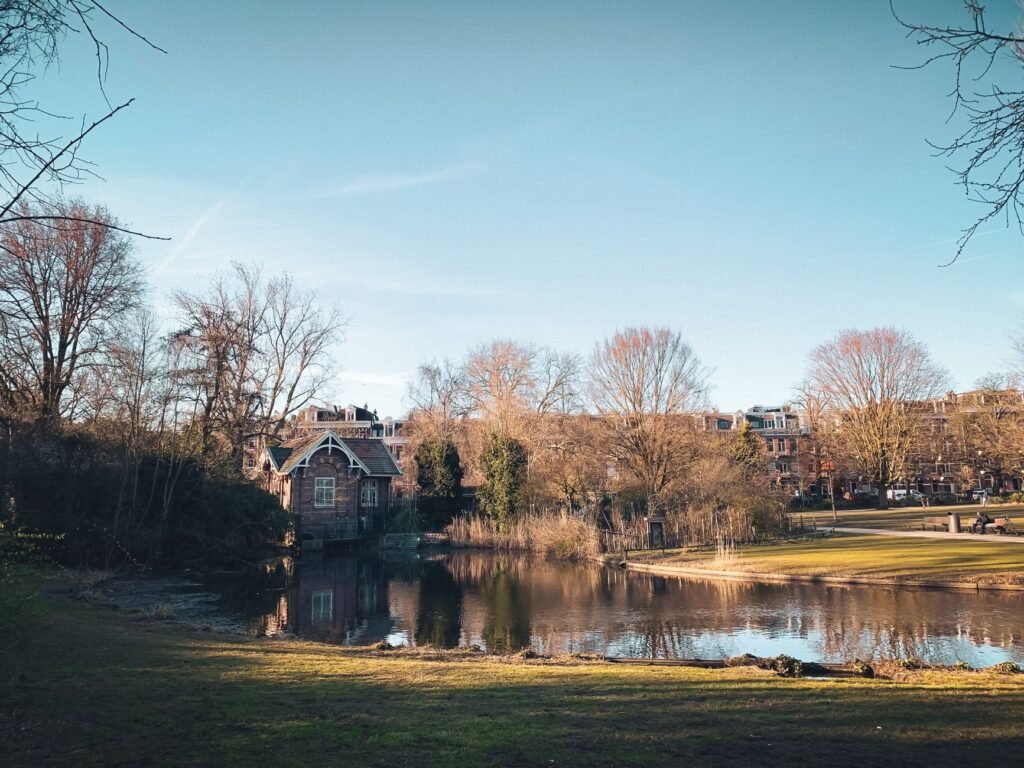
Amsterdam’s weeks of drought have left ponds dry and grass yellowed across the city.
City ecologist Geert Timmermans says it also explains something residents may have noticed: far fewer mosquitoes this summer.
Standing in a dried-out pond in Park Frankendael in Amsterdam Oost, Timmermans said the pond normally holds water year-round.
“I usually sleep under a mosquito net, but I haven’t needed one this year,” he said.
Not actually good news
Fewer mosquitoes is not something to celebrate, Timmermans said, since birds like swifts and animals like bats depend on them for food.
“When insects are struggling, the animals and birds that eat them often struggle too,” he said.
Amphibians such as toads and salamanders are less affected, since they only breed in spring, but he said any three-spined sticklebacks living in the pond would not survive it drying out.
A preview of what is coming
Park Frankendael still has bees, hornets and butterflies, and its trees and plants have not fully dried out, Timmermans said.
He warned against mowing grass during a drought, since it removes the flowers insects need for pollen and nectar and the grasses butterflies need to lay eggs on.
One dry summer is not a major concern on its own, he said, but repeated dry summers eventually kill trees like beeches and birches that depend on regular rain.
This year is not yet cause for alarm, he said, thanks to Amsterdam’s relatively high groundwater level.
“If we get structurally dry summers, we will simply end up with completely different vegetation,” Timmermans said.
“Life always adapts a little.”
For more places to enjoy the city’s green spaces, explore our guide to Amsterdam parks.
![Top [count] Travel Blogs to Follow - OnToplist.com](https://www.ontoplist.com/images/ontoplist31.png?id=6a8dcf108f478)