
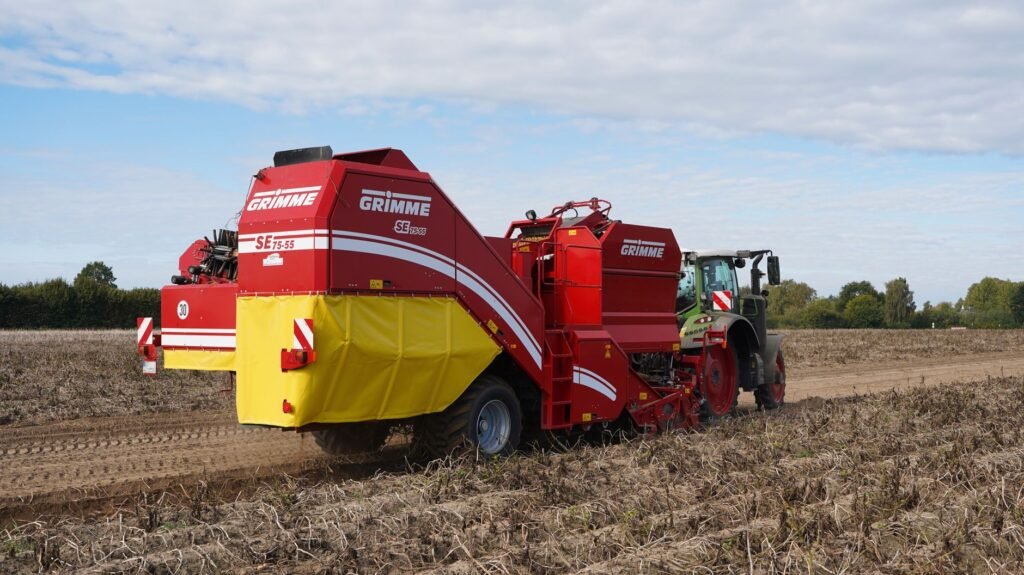
Prolonged drought has reduced harvest yields in the Netherlands by an estimated 10% to 30% this year, according to agricultural knowledge centre BO Akkerbouw.
The drop mainly affects staple crops including potatoes, sugar beets, onions, wheat, and barley.
Test harvests and early collections show that produce is smaller and lighter than normal, which directly reduces earnings because farmers are paid by weight.
Smaller sizes also make it harder to meet buyer specifications, such as minimum length requirements for potatoes used to produce french fries.
Higher prices offset lower yields
Despite the smaller harvest, BO Akkerbouw director André Hoogendijk stated that the season should not be viewed as a crop failure.
Because harvests are smaller across Northwest Europe, market prices have risen enough to keep average farming operations profitable.
However, growers who agreed to deliver fixed tonnages under pre-season contracts may struggle if their lighter crops fail to meet those commitments.
Water bans create regional differences
Results vary significantly across the country depending on local conditions and irrigation restrictions.
In provinces such as Overijssel and Brabant, authorities temporarily banned farmers from pumping water out of ditches, canals, and streams.
Growers who were allowed to continue irrigating their land achieved noticeably better yields than those subject to bans.
Dutch farms generally benefit from fertile soil and freshwater access compared to neighbouring countries, though scientists note that increasingly dry springs and summers are linked to a warming climate.