
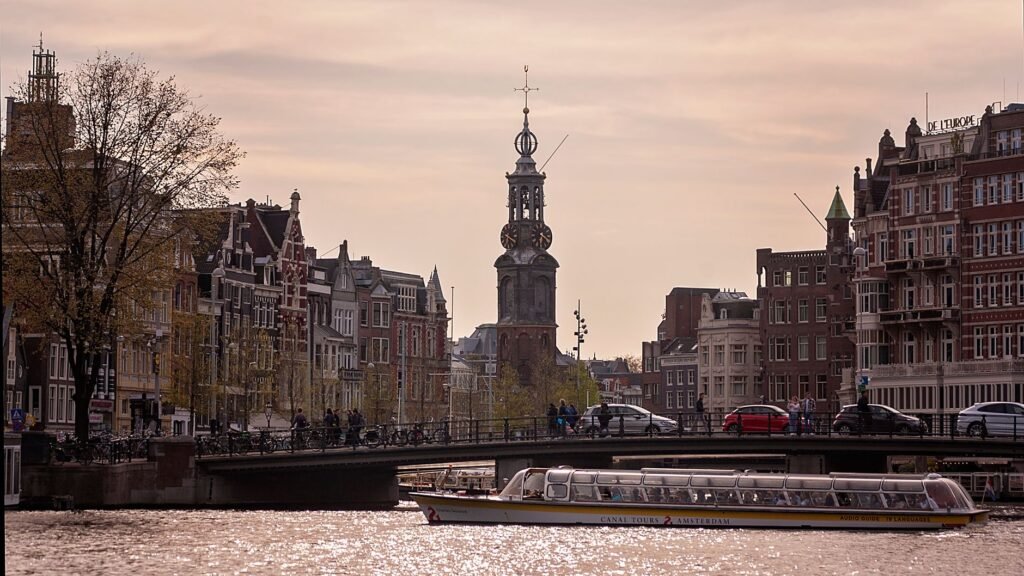
The Munt tower on Muntplein began as the Regulierspoort, a gate in the stone wall built around Amsterdam in the late 15th century.
A fire in 1618 destroyed most of the gate.
Hendrick de Keyser rebuilt part of the western tower to his own design and crowned it with a wooden spire carrying a gilded ox, which was lost in the Singel during a storm in 1640.
How a short-lived mint named the tower
In 1672, after the fall of Utrecht, Amsterdam’s exchange bank ran short of coins because moving gold and silver to the official mints in Enkhuizen and Dordrecht had become too risky.
The States of Holland gave Amsterdam temporary permission to strike gold ducats and silver riders, and mintmaster Gerrit van Romond, who had fled Overijssel, worked for twelve months in the guardhouse beside the old gate.
Those twelve months were enough for locals to name the tower and square the Munt, and the name stuck even after the square was officially renamed Sophiaplein in 1877 in honour of the late first wife of King Willem II.
For more of the city’s story, check out our guide to Amsterdam history.