Shopping here settles into a pattern within a fortnight: the supermarket on your own street for the basics, and a market for anything you actually want to eat that week.
What follows is which chain is which, which market is on which day, and the two mechanics - the loyalty card and the bottle deposit - that quietly move the bill.
The Supermarket Chains, Ranked By What They Are For
Albert Heijn is the default and is genuinely everywhere, with a full-size store within cycling distance of almost any Amsterdam address.
Its XL format is for a stock-up, and AH To Go at stations sells sandwiches and coffee at a premium.
Jumbo is the main rival and generally a little cheaper on branded goods, with small Jumbo City branches fitting into central streets.
Dirk van den Broek is the budget chain and the biggest single saving available to a household, with branches in De Pijp, West and Noord.
DekaMarkt and Vomar occupy the same value tier and are commoner in the outer districts than in the centre.
Ekoplaza is the organic chain, noticeably more expensive and considerably better for bread, dairy and prepared food.
Gall & Gall sells the wine and spirits that supermarkets are not allowed to, and there is usually one attached to the Albert Heijn.
Most branches open between 08:00 and 09:00 and close between 20:00 and 22:00, seven days a week, with the larger central stores at the later end.
The Markets, And Which Day To Go
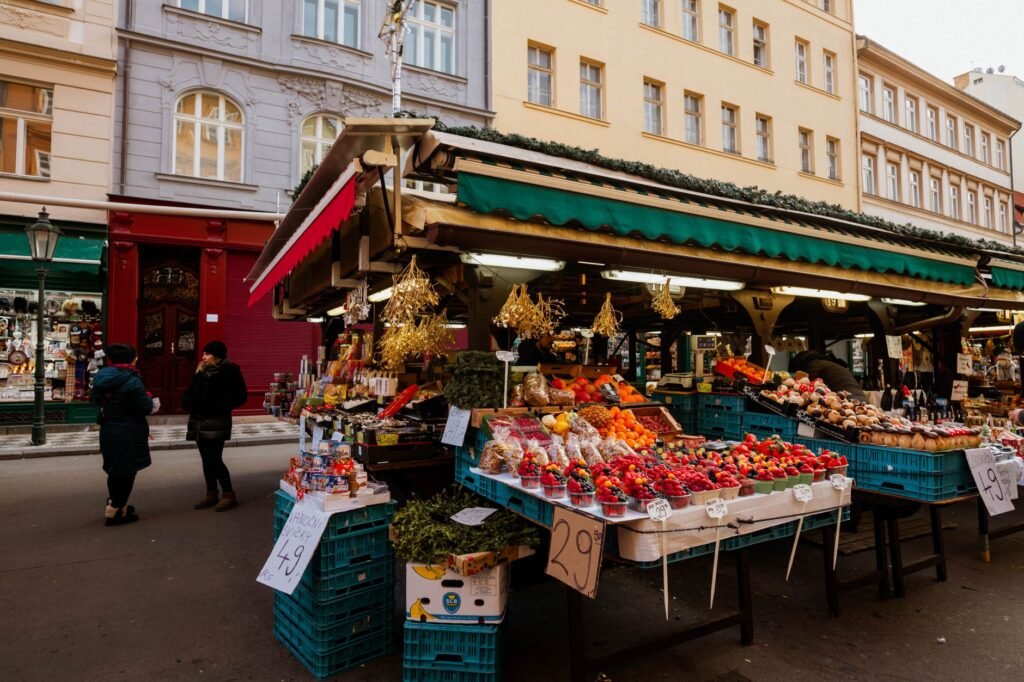
Albert Cuypmarkt in De Pijp runs Monday to Saturday, roughly 09:00 to 17:00, and is shut on Sunday.
It is the largest daily street market in the country and the cheapest place in the centre for fruit, vegetables, fish and cheese.
Dappermarkt on Dapperstraat in Oost runs Monday to Saturday and is the one locals use rather than photograph.
Ten Katemarkt in West runs Monday to Saturday, beside De Hallen and Foodhallen, so it combines the shop with lunch.
Noordermarkt in the Jordaan is the organic farmers’ market on Saturday morning, and a flea market on Monday morning running into the Westerstraat.
Lindengracht market, two streets away, is on Saturday, which makes a Jordaan Saturday morning the best single market run in the city.
Nieuwmarkt hosts a smaller farmers’ market on Saturday in the square below the Waag.
Waterlooplein is secondhand rather than food, Monday to Saturday, and IJ-Hallen at NDSM is a vast flea market on one weekend a month.
Go to any food market in the first hour for choice and in the last hour for price, because produce sellers discount heavily rather than pack it up again.
The Two Mechanics That Change Your Bill
Roughly half of Albert Heijn’s advertised offers only apply if you scan a Bonuskaart, and the card is free.
Without it you pay the shelf price while the person behind you pays the bonus price for the same item.
Jumbo runs the equivalent through its app, with personalised offers rather than a physical card.
Statiegeld is the deposit charged on drinks containers and refunded by a machine at the supermarket entrance.
Large plastic bottles carry €0.25, and small bottles and cans €0.15, which adds up faster than anyone expects across a month.
Bring your own bag: bags are charged for and nobody packs for you.
Dutch checkouts move fast and you are expected to bag while the next customer’s shopping arrives, which is the single most disorienting thing about the first visit.
What To Buy Because You Are Here
Buy cheese at a market stall or a supermarket counter by asking for a wedge rather than taking a pre-cut pack: jong, belegen and oud Gouda are three quite different things.
Stroopwafels made in front of you at Albert Cuyp are a different product from the packaged ones on the shelf.
Hagelslag - De Ruijter chocolate sprinkles on buttered bread - is a genuine breakfast staple here rather than a novelty.
Vla, the pourable custard sold in litre cartons in the dairy aisle, is the one Dutch supermarket item most newcomers never try and then buy weekly.
Herring from a street stall is eaten raw with onion, and the season for the new catch, Hollandse Nieuwe, starts in June.
Rather not carry it home?
Our guide to food delivery in Amsterdam compares supermarket delivery, meal boxes and the takeaway apps.
Frequently Asked Questions
Which supermarket is cheapest?
Dirk van den Broek, with DekaMarkt and Vomar close behind.
Albert Heijn is the most convenient and the most expensive of the mainstream chains.
What are the opening hours?
Most branches run from 08:00 or 09:00 until 20:00 to 22:00, seven days a week.
Markets keep their own hours and close far earlier, generally by 17:00.
Which market should I go to, and when?
Albert Cuyp, Dappermarkt and Ten Kate run Monday to Saturday for everyday food.
Noordermarkt is organic on Saturday and a flea market on Monday, and Lindengracht is Saturday.
Do I need a loyalty card?
Yes at Albert Heijn, where a large share of the offers require the Bonuskaart to apply.
Jumbo’s equivalent lives in its app.
What is statiegeld?
A refundable deposit on drinks containers - €0.25 on large plastic bottles, €0.15 on small bottles and cans - reclaimed at a machine in the supermarket.
Keep the receipt the machine prints and hand it in at the till.
Can I pay by card at a market?
Most stalls take Dutch debit cards, and a good number do not take foreign credit cards.
Carry some cash for the market specifically, even though you will rarely need it in a supermarket.
Where do I buy wine and spirits?
Gall & Gall, or a specialist slijterij - supermarkets sell beer and wine but not spirits.