
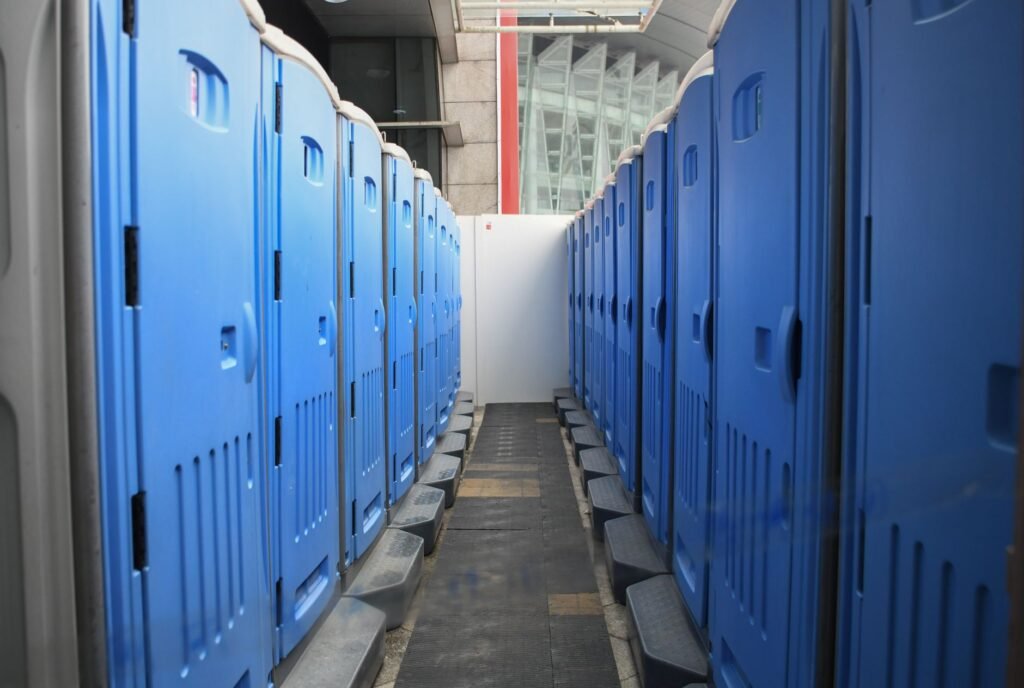
There is no Dutch law obliging a municipality to provide public toilets.
That single absence explains the whole situation: every city decides for itself, building and cleaning them costs money, and most councils have spent it elsewhere.
What fills the gap is a patchwork - paid toilets at stations, street urinals for men, and an informal understanding that cafés will let you in if you buy something.
Download the HogeNood app before you need it, because it maps the nearest toilet, free or paid, and it exists precisely because the official provision does not.
Why It Is Like This
Responsibility is local and optional, so provision varies enormously between cities and even between districts.
Many municipalities have no toilet policy at all, and the ones that do have generally arrived at it after a campaign rather than a plan.
The prevailing view has been that businesses, not the council, should supply the facility.
That works if you are able to buy a coffee and walk in, and not otherwise.
The MDL Fonds campaigns on this because the consequences fall hardest on people with Crohn’s disease, colitis or incontinence.
For them a walk in a park or a day out of the city becomes a route planned around known toilets, or it does not happen.
What You Will Actually Find
Expect to pay roughly 50 cents to just over a euro.
Carry coins, because a good number of these still take nothing else, though newer installations accept cards.
At many you will meet the toiletjuffrouw, the attendant who takes the money at the door and keeps the place clean.
It is a long-standing arrangement and the saucer of coins is not optional.
Reliable places to look: train stations, always paid; department stores such as De Bijenkorf; the larger museums; and the public library branches of the OBA, where the toilets are free and the buildings are open long hours.
Shopping centres usually have facilities, generally on an upper floor and badly signposted.
Street urinals for men are scattered across city centres, including the open-air ones around Leidseplein.
They exist to reduce wildplassen, public urination, which is an offence and is fined in Amsterdam.
Women have almost no street-level equivalent, so the café is the practical answer.
A café is not obliged to admit you, and buying something first is the version of this that works - a coffee near the places worth eating in costs less than the fine.
Who This Falls On
The gap between what men and women can find on the street is the clearest inequality in Dutch public space.
It became a national argument when Geerte Piening was fined for urinating outdoors in Amsterdam after failing to find a toilet, and spent years contesting it on the ground that the city provided her with no alternative.
The case did not overturn the fine but it did force the question into the council chamber.
Amsterdam has added facilities since, unevenly.
Portable urination devices - the P-Mate and similar - turn up at festivals and outdoor events for exactly this reason.
That they are a normal item to pack says most of what needs saying about the infrastructure.
Older people, pregnant women and anyone with a mobility aid face the same shortage compounded by accessibility.
A paid toilet up a flight of stairs behind a turnstile is not a facility for everyone.
The Design You Will Encounter
Older Dutch toilets often have the inspection shelf, a flat plateau in the bowl that holds the contents above the water until you flush.
Newer installations use the standard deep bowl, but the shelf survives in plenty of pre-war buildings.
The plaskrul is the spiral cast-iron street urinal, screened just enough for modesty and narrow enough for a canal-side pavement.
Some cities also use pop-up urinals that rise out of the ground for the evening and retract by morning.
The Practical Version
Go before you leave, and go again whenever you are somewhere that has one.
That is not advice for children; it is how people here actually manage the day.
Keep coins in a pocket and HogeNood on your phone.
Plan long walks and canal-side afternoons around the stations, libraries and department stores rather than hoping - the same forward planning the rest of visiting Amsterdam rewards.

![Top [count] Travel Blogs to Follow - OnToplist.com](https://www.ontoplist.com/images/ontoplist31.png?id=6a8dcf108f478)