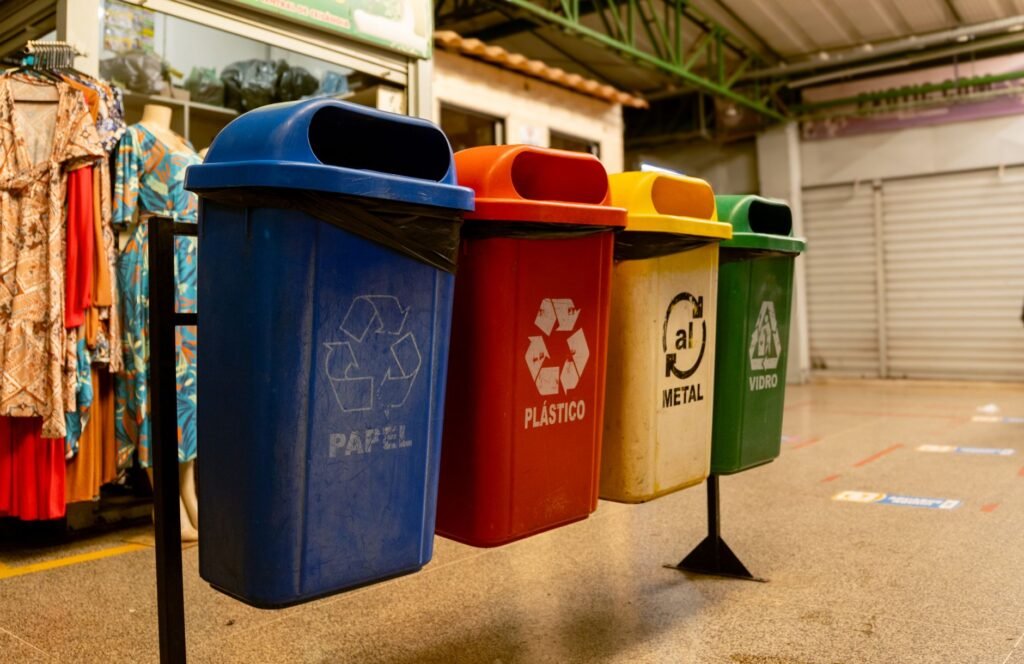
Amsterdam’s waste rules are set by address, not by city, which is why your neighbour two streets away can have a completely different setup from yours.
One block uses underground containers you can fill at three in the morning; the next has collection days you have to remember.
Check your own postcode and house number before you build any habits around what someone else told you.
What surprises most new residents is how much of the sorting Amsterdam does for you after collection rather than asking you to do it at home.
That is the single biggest difference from the systems most people arrive from.
How Amsterdam Household Waste Works Day To Day
The streams you will actually deal with are paper and cardboard, glass, textiles, organics where they exist, and restafval.
Restafval is residual waste, the catch-all for nappies, vacuum dust, broken crockery, greasy packaging and anything you cannot identify.
Amsterdam sorts recyclable plastic out of residual waste at a processing plant after collection, so large parts of the city have no separate pmd container at all.
If your street has no plastic bin, that is the system working rather than a gap in it.
Gft, the food and garden stream, is also not everywhere.
Dense apartment blocks in the centre often have no gft container within reach, while houses further out may have a wheelie bin for it.
Flats mostly use shared street containers, some of which open with a card and some of which do not.
That card is the afvalpas, and it is worth asking your landlord or building manager for it in week one rather than discovering you are locked out on a Sunday night.
What Goes In Each Bin And Container
Paper and cardboard need to be dry and reasonably clean, which rules out pizza boxes with grease soaked through the base.
Anything mixed, wet or unidentifiable belongs with residual waste.
The glasbak takes empty bottles and jars, often split by colour.
Ceramics, mirrors, oven dishes, drinking glasses and light bulbs melt at different temperatures and can ruin an entire load, so they stay out.
Lids come off and follow the packaging rules for your address rather than going into the glass container.
Deposit packaging is a separate economy here and it is worth handling properly.
Cans and small plastic bottles carry 15 cents of statiegeld, larger plastic bottles carry 25 cents, and both come back at the machines inside most supermarkets.
Textiles go into clothing containers only when they are clean and dry.
Dirty tissues, sanitary waste and cat litter never enter a recycling stream and always go to restafval.
Collection Days, Local Rules, And Address-Based Tools
Because the rules are address-based, the useful tools are the ones that ask for your postcode.
The waste calendar for Amsterdam and Weesp shows what is collected at your address and when, and the same lookup tells you whether you need an afvalpas.
Areas with underground containers have far fewer dates to remember, because most streams go in whenever you like.
Once you know which container on your street takes which material, the daily routine takes about four seconds.
Areas with kerbside collection are stricter, with set days, time windows and sometimes bagging requirements.
Missing the window there means the bags sit on the pavement until the next round, which is how fines start.
Where To Take Bulky, Hazardous, And Special Waste
Anything too big for a bag is grofvuil, and Amsterdam’s seven Recyclepunten take it free of charge with no appointment.
They are at Rozenburglaan 1 and Marie Baronlaan 13 in Oost, Toetsenbordweg 41 in Noord, Seineweg 1 and Henk Sneevlietweg 22 in Nieuw-West, Meerkerkdreef 31 in Zuidoost, and Nijverheidslaan 1 in Weesp.
All seven run Monday to Saturday from 08.00 to 17.00.
Toetsenbordweg, Henk Sneevlietweg and Meerkerkdreef also open on Sundays from 10.00 to 16.00.
Bring a passport, ID card or driving licence and something showing your Amsterdam address, and pack the car so you can unload into separate containers.
The Recyclepunten map plots all of them if you want the nearest one rather than the list.
Klein chemisch afval - paint, solvents, batteries, fluorescent tubes, car batteries - goes to the same sites and never into a street container.
Old medicines are the exception worth knowing: pharmacies take them back, which saves a trip across town.
For more of the practical side of settling in, the Essentially Amsterdam newsletter covers it daily.
Frequently Asked Questions
Most first-month confusion comes down to three things: which container, which day, and what the city refuses to take.
How does household recycling work in Amsterdam, and what goes in each bin?
You separate paper and cardboard, glass, textiles, organics where they are offered, and residual waste, then use whichever containers or collection days apply to your address.
Plastic packaging is the odd one out, because Amsterdam pulls it from residual waste after collection and many streets therefore have no pmd bin.
Where can I find a map of nearby garbage and recycling bins in Amsterdam?
The council’s Recyclepunten map covers the seven staffed drop-off sites, and the address-based waste calendar covers the street containers and collection days for your own postcode.
Between them you get both the everyday bins and the place to take everything that does not fit in one.
How do I arrange bulky waste collection or drop off large items in Amsterdam?
Drop-off at a Recyclepunt is free and needs no booking, so it is usually the quicker route if you can move the item.
For a kerbside collection, enter your address on the council’s grof afval page; waste may go out from 21.00 the evening before and must be outside by 07.00 on the day.
What should I do with residual (non-recyclable) waste in Amsterdam?
Nappies, cat litter, dirty packaging, broken crockery and vacuum dust all go into restafval, either in your street’s residual container or out on your collection day.
When you genuinely cannot tell which stream something belongs to, restafval is the safer answer, because a contaminated recycling load is worse than a correctly binned mistake.
Where can I dispose of old clothes and textiles in Amsterdam?
Clean, dry clothes, shoes and household linen go into a textile container or to a charity collection, and the Recyclepunten take them as well.
Wet or mouldy fabric ruins everything it is collected with, so that goes to residual waste instead.
What are the rules for putting trash out (days, times, and bagging) in my neighborhood in Amsterdam?
There is no citywide standard, so the afvalkalender for your address is the only reliable answer.
Underground-container streets let you dispose of most things at any hour, while kerbside streets have fixed days and time slots that are enforced.