Winter is the cheapest and least crowded time to see Amsterdam, and the trade is roughly eight hours of daylight and a fifty-fifty chance of rain on any given day.
If you can accept that, the museums that queue round the block in July are walk-in propositions in January, and hotel rates fall with them.
Meteorological winter runs December to February, but the season people actually plan around starts in November, when IDFA opens and the Light Festival switches on.
This Amsterdam winter guide covers the weather in real numbers, the events worth building dates around, and what to do on a wet afternoon.
For seasonal listings while you are here, join the Essentially Amsterdam newsletter.
What Winter Is Really Like
Daytime highs sit around 6°C (43°F) through December, January and February, with overnight lows around 1°C (34°F) and a handful of nights below freezing.
Those numbers understate it, because the city is at sea level on an exposed coast and the wind carries damp straight through anything that is not windproof.
A waterproof outer layer matters more than a thick one, and so do shoes that cope with wet cobbles.
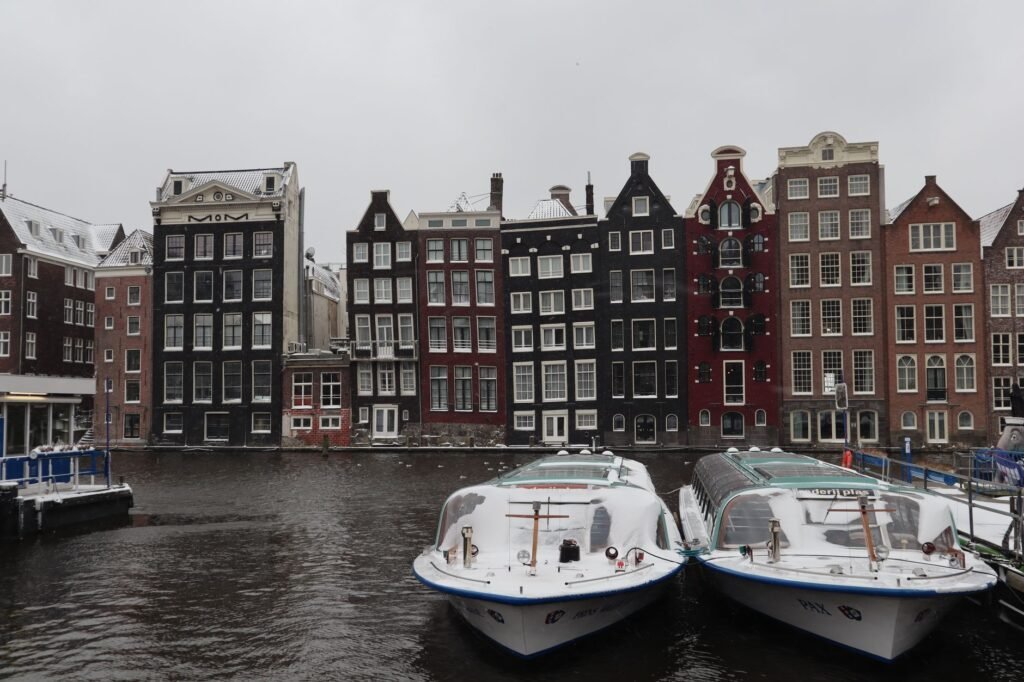
Snow falls a few times each winter and rarely lies for more than a day or two.
Rain is the realistic forecast, spread across roughly half the days rather than falling all at once, which is why an umbrella small enough to carry beats a large one you leave behind.
Daylight is the bigger adjustment: under eight hours around the solstice, with the sun up at about half past eight and down before half past four.
The compensation is that the Light Festival installations and the shop windows are lit from mid-afternoon, so the evening walking starts early rather than the day ending early.
Plan outdoor things for the morning and save the indoor ones for the dark, which is the opposite of how you would organise a summer visit.
Best Things To Do On Cold Days
Winter is the season to do the museums that are unpleasant in summer, because the difference in queueing is measured in hours.
The Rijksmuseum and the Van Gogh Museum both stay busy but move, and January and February are the quietest weeks of the year in both.
The Anne Frank House is the exception and still sells out, so book it the moment your dates are fixed.
The Moco Museum on Museumplein runs Banksy and contemporary work across a townhouse, and takes an hour rather than a morning.
The NEMO Science Museum is five floors of hands-on exhibits and the single best wet-afternoon option if you have children with you.
The Heineken Experience is a self-guided route through the old brewery on the Stadhouderskade ending in tastings, and it is indoors from start to finish.
The House of Bols, opposite the Van Gogh Museum, does the same for jenever and Dutch liqueurs and runs cocktail workshops if you book them.
Public swimming pools and the sauna complexes are the option nobody thinks of, and they are where locals go when the weather is at its worst.
Seasonal Events Worth Planning Around
The Amsterdam Light Festival runs from late November to mid-January and puts commissioned light installations along a route through the canal ring.
Walking it costs nothing, and the boat route sells out at weekends, so book midweek if you want the water-level view.
Check the current route map before you set out, because it changes each edition and the walking and boat routes are not the same.
The International Documentary Film Festival Amsterdam takes over cinemas across the city for around ten days in November and is the largest documentary festival anywhere.
Tickets go on general sale a couple of weeks ahead and the competition titles go first.
National Tulip Day falls on the third Saturday of January, when growers build a picking garden on Dam Square and give the tulips away free.
Arrive early: it opens mid-morning and the flowers are gone within a few hours.
Haarlem’s Christmas market fills the Grote Markt in December and is one of the larger ones in the country, fifteen minutes by train from Amsterdam Centraal.
Amsterdam itself has no single large Christmas market, which surprises people who have come expecting one.
Cosy Food, Cafés And Dutch Winter Culture
Gezellig is the word you will hear constantly and it has no clean English equivalent, covering warmth, low light and easy company all at once.
A brown café on a wet January evening is the thing the word was invented for.
Stamppot is the winter dish: potato mashed with kale, endive or sauerkraut, served with a smoked rookworst sausage and a well of gravy.
Snert is the other one, a split-pea soup cooked thick enough that the spoon genuinely stands in it, with pork and slices of sausage through it.
Both are on the menu at traditional Dutch restaurants from about October to March and disappear in spring.
Both are also cheap, which is not true of much else you will eat here.
Winkel 43 on the corner of the Noordermarkt has the apple pie most people in Amsterdam would name first, served warm under a great deal of cream.
Go on a weekday, because the Saturday market queue runs out of the door.
Terraces stay open through winter with blankets and gas heaters, and sitting outside in December is normal here rather than eccentric.
Ice Skating And Other Outdoor Experiences
The Jaap Eden rink in Amsterdam-Oost is the reliable option, open through the season regardless of the weather and the only outdoor 400-metre artificial speed-skating track in the Netherlands.
There is a separate area for casual skating and skates to hire, and it is where Amsterdammers actually learn.
Temporary rinks appear on Museumplein and the central squares in most winters, run by commercial operators, and they do not return every single year.
Check that one is actually up before building an afternoon around it.
Vondelpark is at its best in winter for the opposite reason to summer: bare trees, long sightlines and almost nobody on the paths before ten.
The Jordaan in low winter sun is the best two hours of walking in the city, and the light is gone by four so start early.
The canals freeze hard enough to skate on roughly once every few years, not annually, and when it happens the whole city stops and goes out on the ice.
If you are here for it, follow the crowds rather than testing ice yourself, because the depth varies with the boat traffic underneath.
Smart Day Trips And Trip Planning Tips
Winter is the better season for the day trips, because the places that are unbearable in August are simply quiet.
Haarlem is fifteen minutes by train and has the Frans Hals Museum, the Teylers Museum and a compact centre you can do in an afternoon.
Utrecht is around half an hour away and its canals have wharf cellars at water level that have been converted into restaurants, which is a format Amsterdam does not have.
Zaanse Schans and Volendam are the windmill-and-wooden-houses trips, and in winter you can see them without a coach party in every photograph.
Nationaal Park Zuid-Kennemerland puts dunes, woodland and the North Sea half an hour west of the city and is the nearest thing to real wilderness on the doorstep.
For transport, tap in and out with a contactless bank card or phone using OVpay, which now works on trams, metro, buses and the trains.
An anonymous OV-chipkaart is still sold but is no longer necessary for most visitors.
The I amsterdam City Card bundles museum entry and city transport and pays off only if you are doing several paid attractions in a short stay.
Pack a layer you can take off, because the swing between a heated museum and the wind on an open bridge is the thing that catches people out.
Looking for the best oliebollen?
Our guide to oliebollen in Amsterdam lists ten stalls and bakeries, including the best stall in Noord-Holland.
Eating out instead?
Our guide to Christmas dinner in Amsterdam lists menus, prices and how to book.
Frequently Asked Questions
What is the weather like in Amsterdam during winter, and how cold does it get?
Expect daytime highs around 6°C (43°F) and overnight lows around 1°C (34°F) across December, January and February, with a handful of nights below freezing.
Rain is far more common than snow and the wind off the water makes it feel several degrees colder, so waterproof and windproof beats thick.
Which months are considered winter in Amsterdam, and what should I expect then?
December to February is winter proper, though the winter events calendar opens in November with IDFA and the Light Festival.
December is the busiest and most expensive of the three; January and February are the quietest weeks of the year, with the shortest museum queues and the lowest hotel rates.
What are the best things to do in Amsterdam in January?
January is the month to do the big museums, because the Rijksmuseum and the Van Gogh Museum are as quiet as they ever get.
The Light Festival runs to mid-January and National Tulip Day fills Dam Square with free tulips on the third Saturday of the month.
How can I plan a 3-day trip to Amsterdam in December?
Day one, walk the canal ring in daylight and do the Light Festival route after dark, on foot or by boat if you booked ahead.
Day two, two museums with a long lunch between them; day three, the train to Haarlem for the Christmas market and back for dinner.
Where can I find the best Christmas and winter markets in Amsterdam?
Amsterdam has no single large Christmas market, which is the main thing to know before you come looking for one.
What it has instead are small neighbourhood markets in De Pijp and Westerpark, whatever pop-up is running on Museumplein that year, and the Haarlem market fifteen minutes away by train.
Are there any winter festivals or “winter wonderland” events in Amsterdam worth visiting?
The Amsterdam Light Festival is the one to plan around, running from late November to mid-January along a canal route you can walk for free.
Indoor winter events are also staged at the RAI convention centre most years, though the programme and the operator change, so check what is actually on for your dates rather than assuming.