Amsterdam’s cultural year has a shape, and knowing it is worth more than a list of names.
Two weeks of Pride at the turn of July and August, a fortnight of festivals in June, five days in October when the whole city is booked out, and a canal route lit up from December to January.
This guide gives the dates for 2026 where they are fixed, the recurring rule where they are not, and says plainly which is which.
The one thing to do before booking anything is check the organiser’s own site, because most of these move by a week or two from year to year.
For what is on while you are here, sign up to the Essentially Amsterdam newsletter.
The Fixed Dates For 2026
WorldPride Amsterdam is the anomaly in the calendar this year, running 25 July to 8 August 2026 and merging the city’s usual Pride with the international WorldPride programme.
The Canal Parade falls on Saturday 1 August, boats from noon to about six, and it is free to watch from the canalside.
The second week moves to Museumplein for the WorldPride Village, a human rights conference from 5 to 7 August, and a ticketed closing concert on 8 August.
The TCS Amsterdam Marathon runs on Sunday 18 October 2026, starting and finishing in the Olympic Stadium with a route out along the Amstel.
Amsterdam Dance Event takes five days in the second half of October and spreads across effectively every music venue in the city at once.
Book accommodation for ADE weeks before you would for anything else, because the whole city’s hotel stock goes at the same time.
The International Documentary Film Festival Amsterdam takes over the cinemas for around eleven days in November and is the largest documentary festival in the world.
Individual screenings sell out but the festival adds repeats, so a sold-out first showing is not the end of it.
Annual Festivals That Shape The City
The Holland Festival is the country’s oldest performing arts festival and occupies most of June with international opera, theatre, music and dance.
It programmes work that has not been seen here before rather than a repertory season, so read the descriptions rather than booking on a name.
Julidans does the same for contemporary dance across July, based at the theatres around Leidseplein.
The Grachtenfestival puts classical music on pontoons, in courtyards and inside private canal houses for about ten days in August, and the house concerts are the ones that sell out first.
The Kwaku Festival runs across weekends in July and August in Nelson Mandelapark in Zuidoost, the park many Amsterdammers still call the Bijlmerpark, with Surinamese and Caribbean food, music and a football tournament.
It is free, it is a genuine neighbourhood event rather than a programmed one, and it is nothing like anything in the centre.
National Mill Day falls on the second Saturday of May, when working windmills across the country open their doors, including several in and immediately around Amsterdam.
The Amsterdam Light Festival closes the year, running from late November to mid-January with commissioned installations along a canal route you can walk for nothing or see by boat for a fare.
Museums, Exhibitions, And Landmark Cultural Stops
The Rijksmuseum is the one to book first, ideally for the opening slot, because the Gallery of Honour is a different experience at nine than at noon.
Rembrandt’s The Night Watch hangs at the end of it, and the museum keeps it on view through conservation work rather than removing it.
The Nieuwe Kerk on Dam Square is now an exhibition space rather than a working church, and in 2026 it is showing Queer Amsterdam, The Pink City, marking twenty-five years since the Netherlands became the first country to open civil marriage to same-sex couples in April 2001.
Check the church’s own site for the run dates, since exhibitions there change two or three times a year.
The Moco Museum on Museumplein covers Banksy, Warhol, Basquiat and digital installation work in a converted townhouse, and the sculptures in front of it can be seen from the square without a ticket.
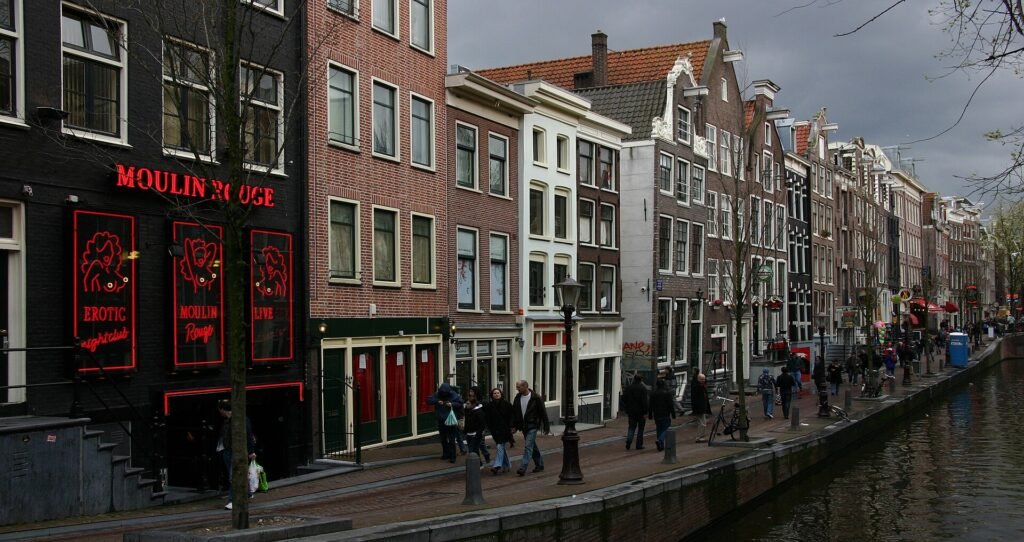
The other cultural stop that costs nothing is the Prinsengracht itself, where the gable stones above the doors identified the house before street numbering existed and the hoisting beams at the top are still in use.
Look up rather than ahead; almost everything interesting about a canal house is above eye level.
Music, Theatre, And Open-Air Performance Venues
The Nationale Opera & Ballet on the Amstel is home to the national opera and ballet companies and programmes across the season from September to June.
Returns and late releases go cheaply on the day, and the terrace bar over the water is open to ticket holders in the interval.
The Vondelpark Open Air Theatre programmes free theatre, dance, live music and children’s shows across weekends from late May to early September.
Nothing is bookable and nothing is reserved, so arrive an hour early with something to sit on.
The Muziekgebouw aan ‘t IJ on the waterfront covers contemporary composition, early music and large choral work, and the Bimhuis jazz venue is the black box attached to the side of it.
Paradiso and Melkweg, both near Leidseplein, between them take most of the touring acts that come through the city, from arena-scale names playing small to bands nobody has heard of yet.
Where To Experience Local Culture By Neighbourhood
The centre is where the events are staged; the neighbourhoods are where the culture is made.
Amsterdam-Noord was industrial until the shipyards closed and is now where most of the studio space and the large-scale events are.
The ferry from behind Centraal Station is free, runs constantly, takes bikes, and gets you to NDSM in about fifteen minutes.
NDSM Wharf is the old shipyard: murals on a shed-sized scale, artist studios in converted containers, waterfront restaurants, and the IJ-Hallen flea market on selected weekends each month.
Check the IJ-Hallen dates before travelling out, because it is monthly rather than weekly and the wharf is quiet without it.
De Pijp, south of the centre, is the densest and most mixed neighbourhood in the city and the one with the best eating.
The Albert Cuypmarkt runs down its spine six days a week with stroopwafels made in front of you, Surinamese roti, raw herring, fabric and flowers.
Sarphatipark is where the neighbourhood sits down and Gerard Doustraat is where it drinks, both a minute from the market.
Explore A Guide to Amsterdam’s Cultural Centres for more places to enjoy the city’s cultural events.
For the exhibitions, concerts and performances on right now, see our Amsterdam events calendar, updated every morning.
Frequently Asked Questions
What free cultural events are happening in Amsterdam today?
The reliable free options on any given day are the outdoor markets, the ferries to Noord, and the canal ring itself.
In season, add the Vondelpark Open Air Theatre at weekends and the Concertgebouw’s free Wednesday lunchtime concert.
Which cultural events are on in Amsterdam this weekend?
The I amsterdam events page is the official listing and is the one to trust for a specific weekend.
Most weekends carry live music at Paradiso and Melkweg, a market somewhere, and whatever seasonal festival is running.
Where can I find free events in Amsterdam this weekend?
The Vondelpark Open Air Theatre runs a free programme at weekends from late May to early September, with no booking and no reserved seats.
Beyond that, the Albert Cuypmarkt and Noordermarkt cost nothing to walk, and the city’s cultural agenda can be filtered to free listings.
What are the best cultural events in Amsterdam next week?
A week’s notice is enough to get into most theatre and concert programmes, which is not true of the Anne Frank House or a sold-out festival screening.
Check the Nationale Opera & Ballet, the Concertgebouw and the Muziekgebouw first, since those three release returns and rarely sell out completely.
What live music events are happening in Amsterdam today?
Paradiso and Melkweg have something on almost every night of the year, and their own calendars are more current than any aggregator.
For jazz, Bimhuis; for the electronic end, the listings on Resident Advisor cover the venues in Noord and the west that no tourist site indexes.
What major cultural festivals and events are scheduled in Amsterdam for 2026?
WorldPride Amsterdam runs 25 July to 8 August 2026, with the Canal Parade on Saturday 1 August and a closing concert on 8 August.
The Holland Festival occupies most of June, the Grachtenfestival takes ten days in August, and Kwaku runs across weekends in July and August in Zuidoost.
Amsterdam Dance Event follows in the second half of October, the TCS Amsterdam Marathon on 18 October, IDFA in November, and the Light Festival from late November into January.
In the news
- Circusbende Festival opens four-day run in Erasmuspark 27 August 2026
- Westerdag festival returns to Westergas on Sunday 25 August 2026
- Circusbende festival returns to Amsterdam amid municipal regulation challenges 12 August 2026
- Rob Jetten becomes first Dutch prime minister to sail in Amsterdam Pride parade 2 August 2026
- TicketSwap introduces price floors to prevent last-minute festival ticket discounts 30 July 2026