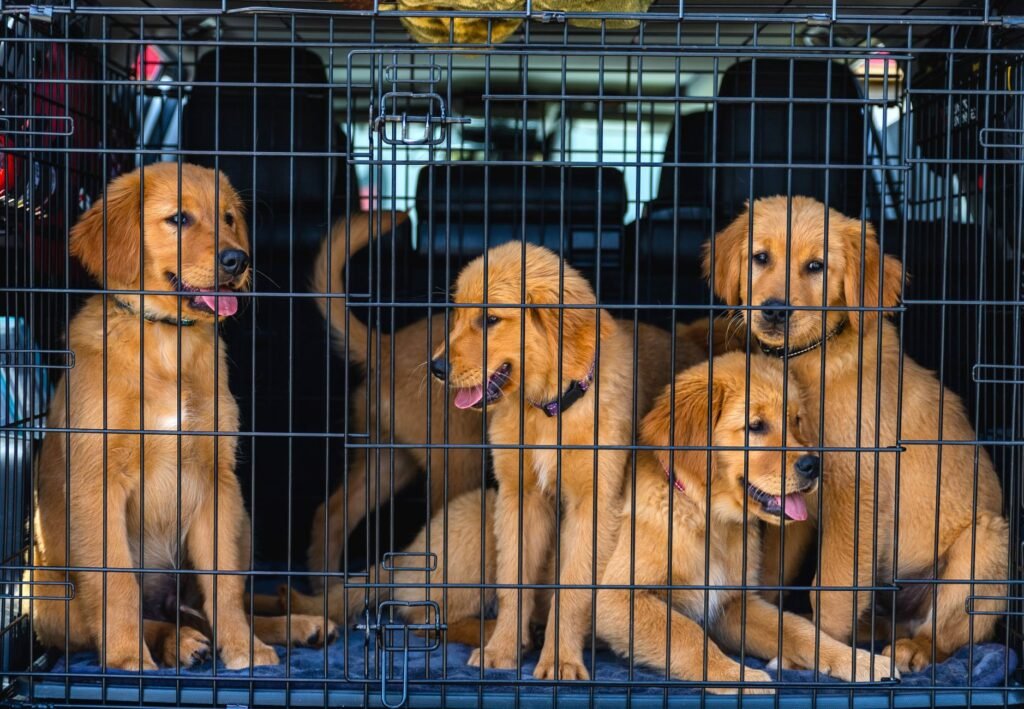
The order of two steps decides whether your pet flies with you or stays behind.
The microchip must go in before the rabies vaccination, and if it went in afterwards the vaccination has to be given again and the twenty-one day clock restarted.
Everything else in an EU pet import is paperwork with dates on it, and the dates are the part people get wrong.
The Five Entry Requirements, In Order
The rules are set at EU level and the Netherlands applies them without local discretion, so what works for Germany works here.
First, an ISO 11784/11785 compliant microchip, which is the identifier every other document refers back to.
Second, a rabies vaccination given after the chip and at least twenty-one days before travel, with the animal at least twelve weeks old on the day of the shot.
The twenty-one days are counted from the vaccination date and there is no discretion in them, including for a pet with a long history of previous rabies shots.
Third, for dogs only, a praziquantel tapeworm treatment administered by a vet between one and five days before entry, recorded with the date and time.
Cats and ferrets do not need it.
Fourth, an EU animal health certificate completed by an accredited vet and endorsed by the exporting country’s government veterinary authority.
Fifth, arrival through a designated Travellers’ Point of Entry, and Schiphol is one.
Dogs, cats and ferrets are the three species covered by this route, and anything else travels under different and considerably more restrictive rules.
Which Rules Apply Depends On Where You Are Flying From
Moving from another EU country is the simple case: a valid EU pet passport with the rabies vaccination in date is the whole requirement.
From a listed third country, which includes the United States, the United Kingdom, Canada, Australia, Japan and a long published list of others, you need the health certificate but no blood test.
Allow four to eight weeks from a standing start, which is the microchip, then the rabies shot, then the twenty-one day wait, then the vet examination and government endorsement inside the ten days before you fly.
From a non-listed country the timeline is different in kind, not degree.
A rabies antibody titration test has to be taken at an approved laboratory at least thirty days after vaccination, and you must then wait three calendar months from the date the blood was drawn before the animal may enter the EU.
That puts the realistic preparation window between four and six months, and it is the single thing most likely to strand a relocation.
The NVWA publishes the current country lists, and they are worth checking rather than assuming, because countries move between them.
The Certificate And Its Deadlines
The health certificate cannot be issued by just any vet; it must be a vet accredited by the exporting country’s authority, and in the United States that means USDA-accredited with APHIS endorsement afterwards.
Book the examination inside the ten days before travel, because the certificate’s validity for entry runs from the date the official vet signs it.
At that appointment the vet scans the chip, confirms the rabies record, checks the animal is fit to fly and completes the form.
The endorsement step is where the time goes, and it can be done by post or in person at a government veterinary office.
Going in person is worth the drive: a posted certificate returned with an error leaves you with days rather than weeks to correct it.
Once endorsed, the certificate covers entry within ten days of signing and then onward movement inside the EU for four months.
Ask the vet how many EU certificates they complete in a year before you book, because the ones who do this regularly do not make the errors that cost a flight.
Flying In And Clearing Schiphol
Book the animal by telephone with the airline rather than adding it to an online booking, since carriers cap the number of animals per flight and the cap is not visible in the booking flow.
KLM carries pets both in the cabin and as cargo on transatlantic routes into Amsterdam, with the cabin option limited by the combined weight of animal and carrier.
Cargo holds used for live animals are pressurised and temperature-controlled, and the crate has to meet the IATA live animal container specification.
Buy the crate several weeks early and feed the animal in it, because a crate first seen at the airport is a bad flight.
At Schiphol you present the endorsed certificate and the vaccination record at the border, and an officer may scan the microchip to check it matches.
There is no quarantine on arrival from the EU or from a listed third country when the paperwork is complete, so the animal leaves the airport with you.
After You Arrive
A dog brought in from abroad has to be registered in the Dutch national dog register run by RVO, which is done through a vet or online using the chip number.
Register with a local practice in the first fortnight and ask them to convert the health certificate into a full EU pet passport, which is issued only by a vet inside the EU and then covers travel for life.
Practices with long review records across the city include Dierenkliniek Vondelpark on Sophialaan in Zuid at 4.7 from 597 reviews, and Dierenkliniek De Wetering on Weteringschans, which is the most central of them at 4.7 from 256.
Dierenkliniek de Pijp on Ceintuurbaan and Dierenkliniek De Jordaan on Tweede Goudsbloemdwarsstraat cover the two neighbourhoods most new arrivals land in, at 4.7 and 4.6 respectively.
For anything that cannot wait, the Clinical Centre for Pets on Isolatorweg in Westpoort is the referral and emergency clinic, and its 1,139 reviews are the largest record in the city.
On the street, dogs must be leashed across most of Amsterdam, with marked off-leash areas in Vondelpark, Amsterdamse Bos, Westerpark and Sloterpark among others.
The Netherlands does not operate a breed-specific import ban, and a muzzle is required only where a specific animal has been formally designated as dangerous.
Frequently Asked Questions
What does my dog or cat need to enter the Netherlands?
An ISO-compliant microchip implanted before the rabies vaccination, a rabies vaccination given at least twenty-one days before travel, and an endorsed EU animal health certificate.
Dogs additionally need a praziquantel tapeworm treatment given by a vet one to five days before entry, and every document has to carry the microchip number.
Is there a quarantine?
No, not for animals arriving from the EU or from a listed third country with complete paperwork.
Animals from non-listed countries face the antibody test and the three-month wait before departure instead, which replaces quarantine rather than adding to it.
How far ahead do I need to start?
Four to eight weeks from a listed third country, driven by the twenty-one day rabies wait and the ten-day certificate window.
Four to six months from a non-listed country, because of the three-month wait after the rabies antibody blood draw.
What does it cost?
The cost stack is the microchip, the rabies vaccination, the vet examination and certificate, the government endorsement fee, the tapeworm treatment for dogs, an IATA-compliant crate and the airline’s own animal charge.
Airline charges differ sharply between cabin and cargo, so ask for both quoted against your animal’s weight with the carrier included before you choose.
Can I get an EU pet passport before I arrive?
No, only a vet established inside the EU can issue one, so the health certificate covers the journey and the passport is issued after you land.
Once issued it does not expire, and it replaces the certificate process for every subsequent trip within the EU.
Are any breeds banned, and are muzzles required in Amsterdam?
There is no breed-specific import ban in the Netherlands, and muzzling applies only where an individual animal has been officially classified as dangerous.
Leashing is the rule across most public space in the city, with signed off-leash zones in the larger parks.