

Amsterdam’s fast-moving international business scene draws ambitious people from around the world, and with that ambition comes the pressure to keep growing.
A good executive coach offers something rare: dedicated, confidential space to think clearly about your leadership, your career and the choices in front of you.
Executive coaches to start with
Executive coaching in this city runs from a single accredited practitioner to a firm that trains whole management teams, and the six below are deliberately not the same proposition.
Read for who each is set up for: top-level leaders and their organisations, startup and tech managers, owner-managers of small firms, or a team that wants training rather than one-to-one hours.
CLUB49
Run under the Tibor.nl banner from Nieuwendammerkade in Noord, CLUB49 sells structured programmes rather than open-ended hours, with a named protocol for its clients and a separate strand for young leaders.
It opens at eight and closes at five on weekdays, and its 684 reviews at a flat five stars are far more than any other coach in this block has gathered.
Karianne Kalshoven
Half past seven starts on three days, a nine o’clock start on Thursday and nothing at all on Wednesday: the week is built around leaders who want an hour before the office fills up.
An organisational psychologist with a doctorate in ethical leadership, Kalshoven works from Wenckebachweg in Overamstel on the patterns inside a company as much as on the individual, and holds 4.8 across 33 reviews.
NONONS
NONONS is the one here that trains groups of managers rather than working only one to one, building its programmes around doing the thing and then being given feedback on it.
Based on Linnaeushof in Watergraafsmeer, it runs half past eight to half past five on weekdays and has gathered 60 reviews at a flat five stars.
Miguel Baumann
Startup and tech leadership is Baumann’s stated ground, and his listing names the PCC and CPCC coaching credentials behind it, alongside a background as a founder and a corporate manager.
His Van Rappardstraat practice in Westerpark keeps the longest day in this block, nine in the morning to eight at night, on 20 reviews at five stars.
Jos Molema
Molema has founded, scaled and sold companies of his own, and now coaches owner-managers in the small and mid-sized bracket, working on strategy and growth rather than on leadership in the abstract.
He sees clients at Overhoeksplein in Noord from nine to six on weekdays, with 72 reviews at five stars behind him.
Master in Happiness
The pitch at Herengracht 420 is happiness research applied to work, positive psychology turned into coaching plans for professionals and for the organisations they run.
Second only to CLUB49 for review volume in this block, with 171 of them at five stars, it keeps plain nine-to-six weekday hours on the canal.
What a coach actually does
Coaching is not therapy and it is not consulting, it sits somewhere of its own.
A coach rarely hands you answers; instead they ask sharp questions, hold up a mirror, and help you find a path that fits your goals and values.
Sessions typically run over several months, building momentum through regular conversations and small, deliberate experiments between meetings.
The work is practical, forward-looking and squarely focused on results you can feel, both in how you perform and in how you experience the job day to day.
Leadership and transitions
Coaches are especially valuable at inflection points: a first management role, a jump to the C-suite, a merger, or the decision to change direction entirely.
These moments are where old habits stop serving you and new skills have to be built quickly, often under real pressure.
The right coach helps you lead with more confidence and less friction, which tends to ripple outward into your whole team.
Firms such as International People Solutions work in exactly this space of leadership and organizational development.
Coaching for internationals
Building a career in a second language and an unfamiliar work culture adds a real layer of challenge.
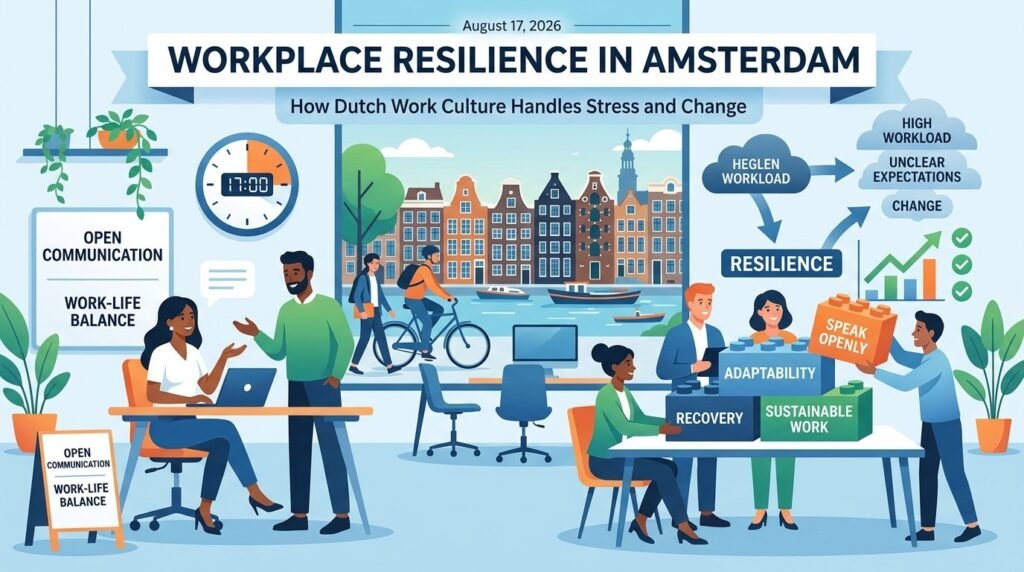
The Dutch style of direct communication and flat hierarchy can feel jarring at first, and a coach who knows the local context can help you adapt without losing your own voice.
This kind of guidance pairs naturally with your other professional advisers.
Just as your accountant keeps your finances on track and your lawyer protects your contracts, a coach looks after the way you lead and grow.
Beyond the boardroom
Not all coaching is about corner offices.
Many people turn to a coach when weighing a career pivot, launching their own venture, or simply trying to restore some balance between an intense job and the rest of life.
The best coaches meet you where you are, whether that means sharpening your executive presence or helping you decide whether the ladder you are climbing is even the right one.
That clarity is often worth as much as any promotion, and it tends to outlast whatever specific problem first brought you through the door.
Choosing the right coach
Chemistry matters more than almost anything else, so treat the first conversation as a mutual interview.
Ask about their background, their approach and the kinds of clients they usually work with, and notice whether you feel genuinely understood.
Credentials and a track record are reassuring, but the deciding factor is trust, you have to be willing to be honest in the room.
If you are also weighing a business venture, aligning early with your notary on structure keeps the practical side moving in step.
Making the investment count
Coaching is an investment of both money and effort, and you get out what you put in.
Come to each session with something real to work on, do the reflection between meetings, and be candid about what is and is not working.
Protecting your wider stability, from solid insurance to a clear financial base, frees up the mental space that makes coaching more effective.
A settled foundation lets you focus fully on growth.
Give the process time as well, since the deepest shifts rarely happen in a single breakthrough session but accumulate quietly across months of steady, honest work.
Handled well, coaching is less an expense than a multiplier, sharpening the judgment and resilience you draw on for the rest of your career, long after the final scheduled session has ended and the invoice is long forgotten.
Ready to invest in yourself?
Browse the full guide to Amsterdam executive coaches to find the right partner.
Related guides
- Amsterdam Mortgage Brokers: A Guide for Buyers
- How to Choose a Tour Operator in Amsterdam
- How to Choose a Real Estate Agent in Amsterdam

![Top [count] Travel Blogs to Follow - OnToplist.com](https://www.ontoplist.com/images/ontoplist31.png?id=6a8dcf108f478)