
Amsterdam is the most expensive place in the Netherlands to rent, and for a student that is the whole budget question rather than part of it.
New lets in the unregulated sector averaged €28,69 per square metre here in the second quarter of 2026, against €22,79 in Rotterdam and €21,61 in Utrecht.
Everything else a student pays is small, fixed and knowable.
Rent is the variable that decides whether the year works.
Choosing Where To Study
The two research universities sit at opposite ends of the city in every sense.
The University of Amsterdam is scattered across clusters - humanities near the centre, science at Amsterdam Science Park, medicine at the AMC in Zuidoost - while the Vrije Universiteit puts almost everything on one campus on De Boelelaan in Zuid.
The Amsterdam University of Applied Sciences is the hbo institution and works differently again.
Its bachelors run four years with placements built in, which changes both your timetable and how much of the year you spend outside a lecture hall.
Where you study determines where it is sensible to live, and students routinely get this backwards.
A room in Noord is cheap and fine for the VU only if you enjoy the ferry, and Science Park is its own small world with fast trains but little else after nine.
Check the language of instruction per programme rather than per university.
English-taught masters are common, English-taught hbo bachelors much less so, and the faculty page is the only reliable source.
Housing, Neighborhoods, And Daily Living
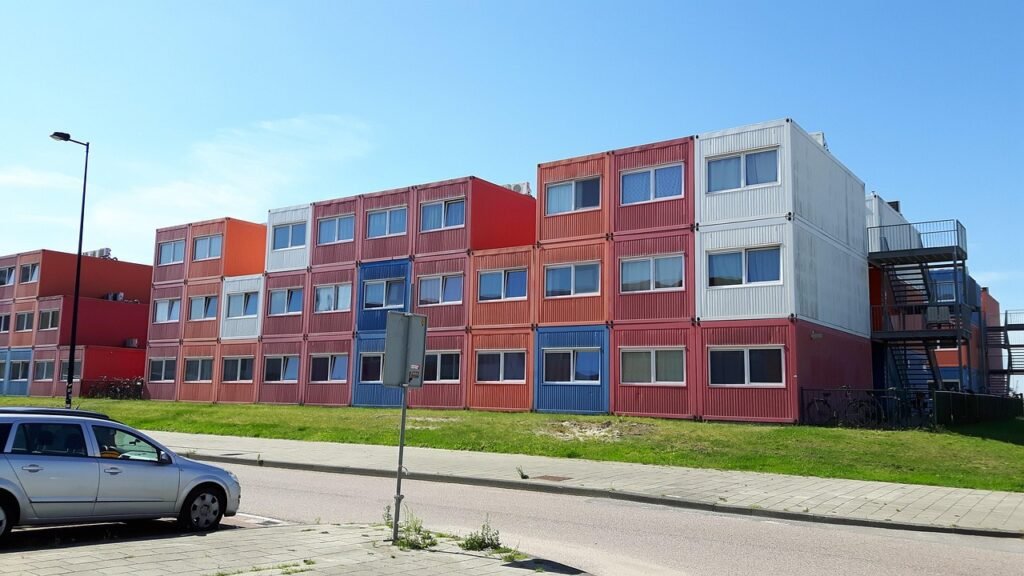
University housing is limited and generally reserved for first-year international students, so accept it the day it is offered.
Beyond that the market runs through ROOM, DUWO, StudentenwoningWeb and Kamernet, and the first three are queue-based.
Registration time is the currency in Dutch student housing.
An account opened a year before you arrive is worth more than any covering letter, and it costs a few euros to hold.
Moving one municipality out is the biggest single saving available.
Amstelveen averages €25,10 per square metre and Hoofddorp €23,87 against Amsterdam’s €28,69, and Amstelveen is on the tram and metro network rather than beyond it.
Inside the city, the districts that cost less are the ones without canals.
Bos en Lommer, Nieuw-West and parts of Noord and Zuidoost trade the postcard for floor space, and the ring is fifteen minutes on a bike from most of them.
Beware of anything advertised without a registration option.
If a landlord will not let you register at the address, you cannot get a BSN there, and without a BSN you cannot open a bank account, take a job or arrange insurance.
Budget, Transport, And Student Essentials
Health insurance is the fixed cost that catches internationals out.
Studying alone generally does not make you liable for Dutch basic insurance, but taking any paid work does, and the average basic policy costs €159,30 a month in 2026 with a €385 compulsory excess on top of it.
Transport is the cheapest line in an Amsterdam student budget and the easiest to overpay on.
A second-hand bike bought once beats every monthly product, and for the wet days a contactless bank card tapped on the GVB readers works on trams, buses and the metro without any card to buy.
The Dutch student travel product is a component of studiefinanciering rather than a separate purchase.
EU nationals can become eligible for student finance by working alongside their studies, which is worth investigating early because it changes the arithmetic more than any discount card.
Groceries have a clear hierarchy and it is worth using.
Aldi and Lidl are meaningfully cheaper than Albert Heijn for staples, the street markets undercut all three on fruit and vegetables, and cans and small bottles carry 15 cents of deposit with larger bottles at 25 cents, refundable at supermarket machines.
Making The Most Of The City
Join a study association in the first fortnight rather than the second term.
Dutch student life is organised around them, they run the introduction weeks, the drinks and the study trips, and joining late means joining a group that has already formed.
Museum access is the one cultural cost worth paying up front.
A Museumkaart pays for itself in a handful of visits and covers museums across the country, not just the Amsterdam ones.
Sport is cheaper through the universities than commercially.
Both research universities run their own sports centres with student rates well below any commercial gym in the city.
Learn enough Dutch to be polite even in an English-speaking programme.
Almost everyone here will switch to English immediately, which is exactly why the effort registers.
Still looking for a room?
Our guide to student housing in Amsterdam covers university lotteries, ROOM.nl and how to check a listing before you pay.
Frequently Asked Questions
Practical answers with 2026 figures, for students arriving from outside the Netherlands.
What’s student life like day-to-day in Amsterdam?
It runs on a bike, a study association and a small circle formed in the first weeks, with contact hours lower and independent reading higher than most systems.
Seminars expect you to argue, and grading uses a ten-point scale where a six passes and an eight is genuinely good.
How can I find affordable student housing in Amsterdam?
Take university accommodation if it is offered, and otherwise register on ROOM, DUWO, StudentenwoningWeb and Kamernet as early as possible, because three of the four allocate by waiting time.
Look one municipality out as well: Amstelveen averages €25,10 per square metre against Amsterdam’s €28,69 and is on the tram and metro network.
What are the best neighbourhoods in Amsterdam for students to live in?
Bos en Lommer, Nieuw-West, Noord and Zuidoost give you the most floor space per euro and are all within a manageable cycle or metro ride of the campuses.
De Pijp and the Jordaan cost what they look like they cost, and you pay for the location in room size.
Are there on-campus accommodation options at Amsterdam universities?
Both research universities offer a limited number of rooms through housing partners, generally prioritised for first-year international students and allocated with the admission offer.
The supply is far smaller than the demand, so treat an offer as a one-time opportunity rather than a fallback.
How much should a student budget per month to live comfortably in Amsterdam?
Start from the fixed costs you can actually pin down: €159,30 a month for basic health insurance if you take paid work, a €385 excess to hold in reserve, and near zero for transport once you own a bike.
Rent is the number that decides the rest, and at €28,69 per square metre Amsterdam runs about a quarter above Rotterdam for the same space, which is the honest reason to compare cities before you compare landlords.
What are the key do’s and don’ts for students new to Amsterdam?
Register at the gemeente within five days of moving in, never rent somewhere that forbids registration, and buy a proper lock before you buy a bike.
Join a study association in the first fortnight, and do not assume an English-taught programme means an English-speaking bureaucracy.
Related reading
In the news
- International students yield net profit for Netherlands 31 August 2026