
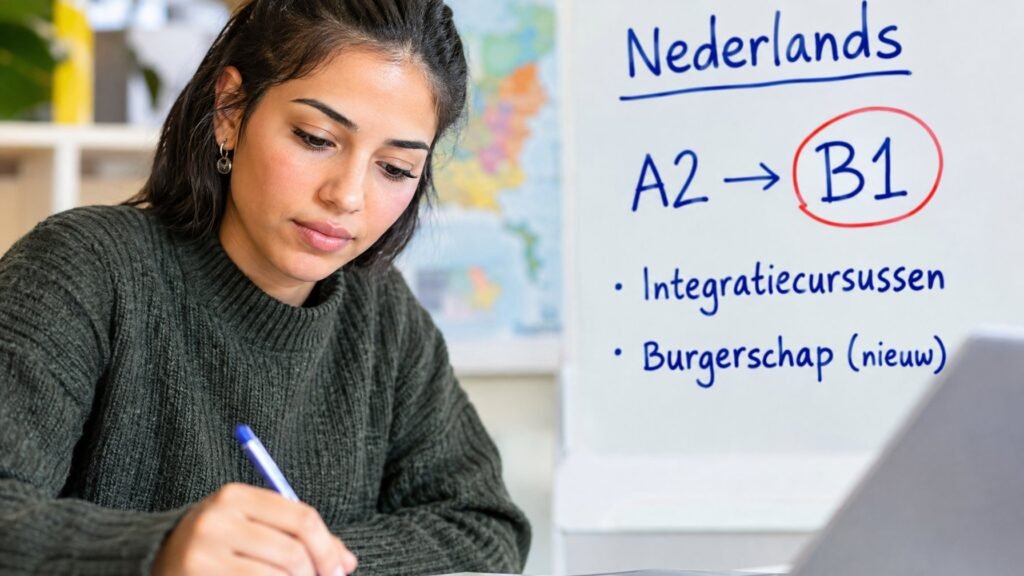
The Netherlands is raising the level of Dutch it expects from newcomers, from the basic A2 to the intermediate B1.
Since January 2022, people covered by the integration law, mainly refugees and partners joining someone here, have had to aim for B1.
They can drop down to A2 only after significant effort, including 600 hours of lessons, according to the municipal social services association Divosa.
Citizenship rules may follow
People who want to naturalise can still do so with an A2 diploma, and EU, EEA and Swiss nationals are largely exempt.
The coalition of D66, VVD and CDA wants B1 for a new citizenship route for people on temporary residence permits.
Three previous cabinets made the same promise and none put it into effect.
What B1 means in practice
At B1, a speaker can follow the main points of clear speech about work and school, and write simple connected texts.
That takes considerably more study than A2, where people manage simple routine exchanges about shopping, family and directions.
One learner at an Amsterdam language school says that, unlike three years ago, Dutch now appears in almost every job advert.
Check out our guide to Dutch lessons in Amsterdam.