
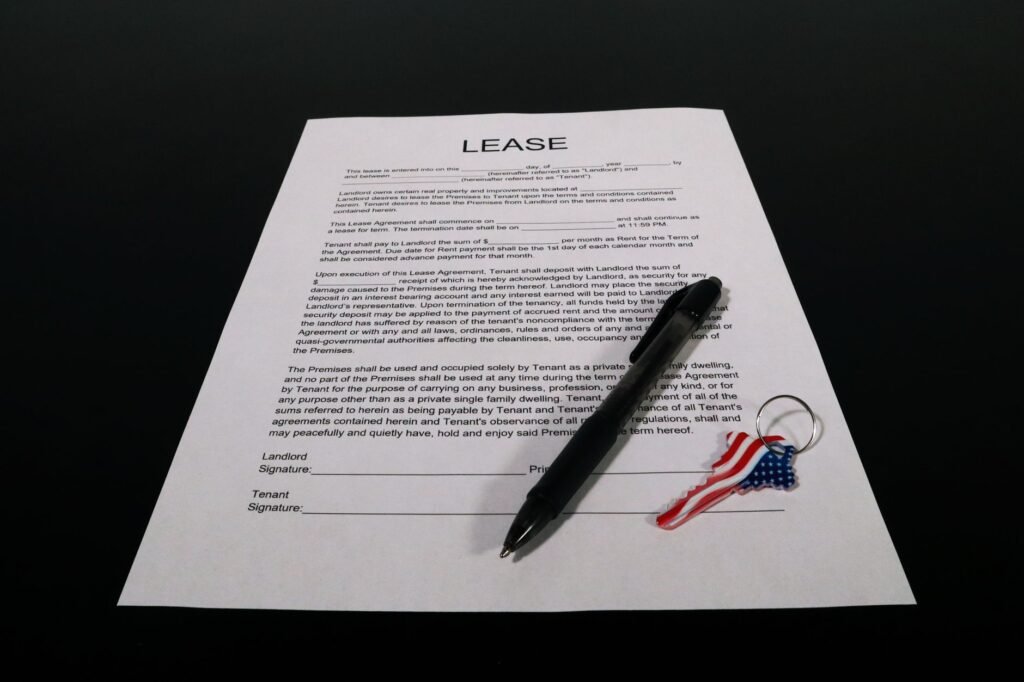
Dutch rental law protects tenants far more than the Amsterdam market’s speed suggests, and almost all of that protection depends on one number: your home’s score under the points system.
Below 187 points the rent is regulated no matter what your contract calls it, and a landlord’s description of a flat as “free sector” carries no legal weight at all.
The other rules follow from that: what can be charged, what can be increased, what the deposit may be, and who pays for the broken tap.
None of it is difficult, and all of it is worth knowing before you sign rather than after.
Read The Rent, Not The Price
The advertised figure is often the kale huur - the bare rent alone, without service costs, utilities or furniture charges.
Every legal test that matters, from the points ceiling to housing benefit eligibility to the rent-increase cap, is applied to the bare rent rather than the monthly total.
Service costs must be itemised and must reflect actual expenditure, with an annual statement reconciling what you paid against what was spent.
A landlord who bundles cleaning, furniture rental and “administration” into one round number is usually hiding rent inside charges the points system cannot see.
Sleutelgeld - key money, a payment simply for being given the tenancy - is illegal.
So are agency fees charged to you when the agent is working for the landlord, which is nearly every case in Amsterdam.
Ask three questions at the viewing: what the bare rent is, whether BRP registration is permitted, and what the service costs cover.
Vagueness on any of the three is the answer.
Regulated, Middenhuur Or Free Sector
The woningwaarderingsstelsel scores a home on floor area, energy label, kitchen and bathroom fittings, outdoor space, heating and the WOZ valuation.
Up to 143 points it is social rent, 144 to 186 points is middenhuur, and 187 or more puts it in the free sector where the landlord sets the price.
In 2026 those bands translate to a bare rent up to €932.93 for the social segment and up to €1,228.07 for middenhuur.
A flat priced just above one of those lines is worth scoring carefully, because the difference in your rights either side of it is substantial.
You can run the points calculation yourself on the Huurcommissie website with a tape measure, your energy label and the WOZ figure, which is public.
!WOON will do it with you free of charge, and it is funded by the city rather than by landlords.
Amsterdam added its own layer in July 2025, requiring landlords to hold a municipal permit to let middenhuur homes.
Ask whether the address has one, since an unpermitted letting is a problem you inherit.
Contracts, Notice And Eviction
An open-ended contract, onbepaalde tijd, is the legal default again after the fixed-term rules were tightened in 2024, and temporary contracts are now lawful only in a short list of defined situations.
Campus contracts for students and contracts under the Leegstandwet for properties awaiting demolition are genuine exceptions; a standard two-year term offered to a working tenant generally is not.
Your notice period is usually one month and you can give it at any time.
The landlord’s position is entirely different: ending a tenancy requires one of a fixed set of statutory grounds, written notice with a much longer period, and a court order if you do not agree.
There is no such thing as a lawful eviction in the Netherlands without a judge.
A landlord changing the locks, cutting utilities or telling you to leave by the end of the month is acting illegally, and that is worth knowing calmly rather than discovering in a panic.
Repairs, Service Costs And Housing Benefit
The split of repair responsibility is set nationally rather than by your contract, under the Besluit kleine herstellingen.
Small routine maintenance sits with the tenant - tap washers, blocked sink traps, internal decoration, garden upkeep, replacing bulbs - while structure, roof, boiler, wiring, plumbing and anything caused by age or wear stay with the landlord.
Report defects in writing and keep the thread, because the Huurcommissie can reduce your rent for the entire period a serious defect went unrepaired.
That remedy is retrospective, which makes the date of your first written complaint the most valuable thing in the file.
Huurtoeslag, the housing benefit administered by Toeslagen, is available where your bare rent and your household income both fall below set ceilings, with a lower rent ceiling for tenants under 23.
Test your eligibility the week your bare rent is confirmed rather than months later, since backdating is limited and the money is real.
Short Stay Is Not Renting
Holiday letting in Amsterdam is capped at 30 nights per calendar year for an entire home, limited to four guests at a time, and requires a registration number displayed in the listing plus a notification to the city for each let.
Those rules exist because short-stay use removes homes from the residential market, and the city enforces them with real fines.
The reason it matters to a tenant is that a property let to you on a short-stay or holiday basis is not a tenancy.
You will not be able to register at the address, your security of tenure is minimal, and the rent regulation described above does not reach you - so confirm the home is designated for normal residential use before any money moves.
For continuing coverage of the city’s housing rules, the Essentially Amsterdam newsletter runs daily.
Frequently Asked Questions
How do I find out which rent segment my home is in?
Score it on the points system using the Huurcommissie’s calculator, or have !WOON do it, since your contract’s label is not decisive.
In 2026 the bare-rent boundaries are €932.93 between social and middenhuur, and €1,228.07 between middenhuur and free sector.
Is key money legal?
No - sleutelgeld is prohibited, as are letting-agency fees charged to a tenant when the agency acts for the landlord.
Payments already made can be reclaimed, and a demand for one is a reliable indicator of how the rest of the tenancy will go.
Can my landlord make me leave at the end of a fixed term?
Only if the fixed term was lawful in the first place, which since 2024 it usually is not, and only on statutory grounds with proper written notice.
Without your agreement, ending a tenancy requires a court judgment, and no landlord may enforce it themselves.
Who pays for repairs?
National rules split it: small routine items are the tenant’s, and structure, installations and wear-and-tear failures are the landlord’s, regardless of what the contract says.
Put every request in writing, because the Huurcommissie can cut your rent for the whole period a serious defect went unfixed.
What does Amsterdam’s mid-rent permit mean for me?
Since July 2025 landlords need a municipal permit to let a middenhuur home, which also brings conditions on rent level and letting practice.
Ask whether the address holds one, as letting without a permit exposes the landlord to enforcement and you to uncertainty.
Can I get housing benefit?
Possibly, if your bare rent and household income are both under the ceilings, which are set nationally and are lower for tenants under 23.
Apply through Toeslagen as soon as the bare rent is confirmed, since the claim is limited in how far back it can run.