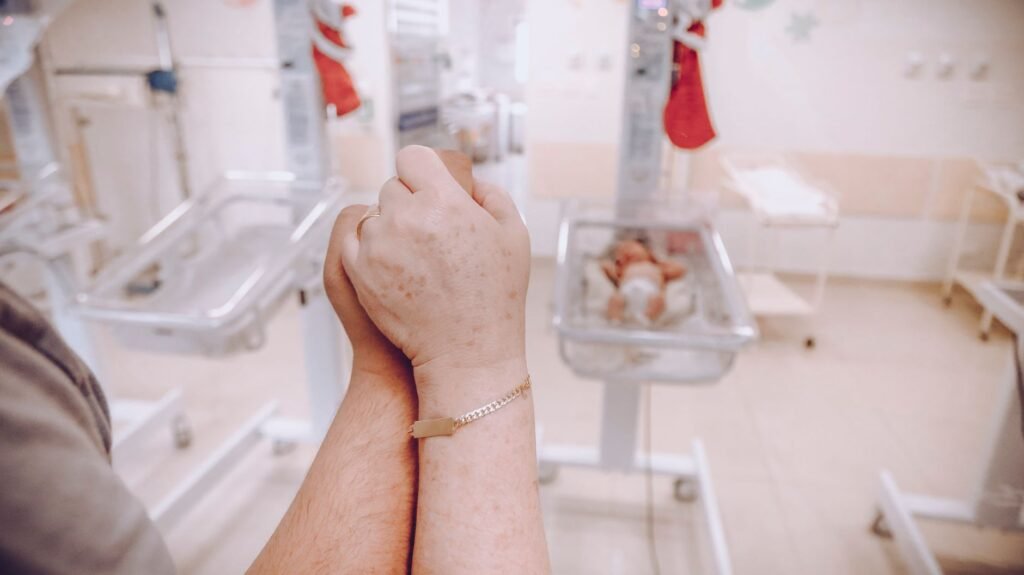
You have three days to register a birth in Amsterdam, in person, at a Stadsloket.
It is the only deadline in the whole process with a fixed number attached, and it is the one arriving parents most often discover late.
The rest of Dutch maternity care runs on a principle that surprises almost everyone: pregnancy is not a medical condition until something makes it one.
A midwife leads the whole thing, and an obstetrician appears only if there is a reason.
How Maternity Care Works In Amsterdam
Your first appointment is with a verloskundige, a midwife, and you book it yourself rather than being referred.
She runs the pregnancy, does the scans, and stays with you through the birth unless a medical indication moves you to a gynaecologist.
The GP is largely out of this, which catches out anyone used to a system where the family doctor coordinates everything.
Midwife practices in Amsterdam work in neighbourhood teams, so register early and ask how many midwives are in the rota, because you will meet all of them.
The money is the reassuring part.
Midwife care and maternity nursing are both exempt from the €385 compulsory excess for 2026, so the core of Dutch maternity care costs you nothing at the point of use.
The exception is a hospital birth without a medical indication.
Choosing a delivery room because you would prefer one, rather than because you need one, is charged as a personal contribution by your insurer, and the amount is policy-specific - ask yours before the third trimester rather than after.
Choosing Where And How To Give Birth
Three options are genuinely open to a low-risk pregnancy here, and the midwife will assume you have an opinion.
Home birth remains normal rather than alternative, a birth centre gives you clinical backup without an admission, and a hospital delivery is the default if any risk factor appears.
Amsterdam has dedicated birth centres, and Geboortecentrum on De Genestetstraat 2 in West is the best known of them.
Visiting one at around thirty weeks is worth the afternoon, because the decision is much easier once you have seen the room.
Transfer during labour is common and is not a failure of the plan.
Roughly speaking, if labour stalls, if pain relief beyond what a midwife can give is wanted, or if anything looks off, you move to hospital with your midwife and the obstetric team takes over.
Assemble the kraampakket, the maternity kit of sterile dressings and bed protection, by around thirty-four weeks.
Most insurers send it automatically once you register the pregnancy, and a home or birth-centre delivery cannot go ahead without it.
Postnatal Care And Baby Checkups
Kraamzorg is the part of the Dutch system that arriving parents rate highest and had never heard of.
A maternity nurse comes to your home for the first week or so after the birth, checks mother and baby, teaches feeding, and does the laundry and the shopping while she is there.
Book kraamzorg early, because the good agencies fill up.
Amsterdam has a dense field of them, including Kraamzorg Geluk on Borgerstraat in West, Pro Care Kraamzorg on Willem de Zwijgerlaan and Pregnanta Geboortezorg with offices at Koekoeksplein in Noord and Eef Kamerbeekstraat in Oost.
Two screening tests happen in the first week: the hielprik, a heel-prick blood sample, and a hearing test.
Both are done at home, usually between days four and seven, and the maternity nurse will have arranged them.
After that, the consultatiebureau takes over.
It is the free child health clinic that handles weighing, development checks and vaccinations until your child starts school, and you are assigned to the one for your district.
Leave, Registration, And Childcare Planning
Register the birth within three days at any Stadsloket, in person and without an appointment.
The father, duomoeder or mother normally does it; failing that, anyone present at the birth, a resident of the house where the child was born, or a member of staff at the hospital may.
Bring a valid passport, ID card, driving licence or residence permit, plus a copy of the mother’s, and the birth statement from the hospital or midwife if you have one.
If you have not yet acknowledged the child or chosen the surname, the mother has to come along, and the surname you choose for a first child then applies to every later child of the same relationship.
Leave entitlements are set nationally and are worth planning around a calendar rather than a hope.
The birth mother gets six weeks of pregnancy leave and at least ten weeks of maternity leave, sixteen weeks in total, and must stop work no later than four weeks before the day after the due date.
The partner gets one week of geboorteverlof at full pay, calculated as one times the weekly working hours and taken within four weeks of the birth.
After that comes up to five weeks of aanvullend geboorteverlof, paid by the UWV at up to 70 percent of daily wage rather than by the employer, taken within six months of the birth and only once the first week has been used.
Both parents also have ouderschapsverlof of up to 26 times their weekly hours, per child, usable at any point until the child turns eight.
Start the search for daycare during pregnancy rather than during leave, because Amsterdam waiting lists routinely run past a year.
Frequently Asked Questions
These are the questions that come up before the second scan, with the 2026 figures.
What should I know about giving birth in the Netherlands as a foreigner?
A midwife leads a normal pregnancy from start to finish and you book her yourself, without a GP referral.
Home birth is a standard option rather than an unusual one, and an obstetrician becomes involved only when there is a medical reason.
How much does it usually cost to give birth in Amsterdam?
Midwife care and kraamzorg are both exempt from the €385 compulsory excess, so the standard path costs nothing at the point of use if you hold Dutch insurance.
A hospital birth chosen without a medical indication attracts a personal contribution set by your insurer, so check your policy before you decide.
What kind of maternity leave can parents expect in the Netherlands?
The birth mother has six weeks before and at least ten weeks after, sixteen weeks in total, starting no later than four weeks before the day after the due date.
The partner has one fully paid week within four weeks of the birth, then up to five further weeks paid by the UWV at up to 70 percent of daily wage within six months.
Where can I choose to give birth - hospital, birth center, or at home - and how do I decide?
All three are open to a low-risk pregnancy, and the midwife expects you to have a preference rather than waiting to be told.
Visit a birth centre such as Geboortecentrum on De Genestetstraat at around thirty weeks, since seeing the room settles the question faster than any leaflet.
If my baby is born in the Netherlands, will they automatically get Dutch citizenship?
No, being born on Dutch soil confers nothing on its own, because Dutch nationality passes through parents rather than through place of birth.
The child takes the nationality of the parents, and you register the birth with your own embassy or consulate as well as with the Stadsloket.
Is Amsterdam a comfortable and practical city to live in with a newborn?
The postnatal support is unusually good, with a maternity nurse in your home for the first week and a free district health clinic afterwards.
The two real frictions are the staircases in older buildings, which make a pram a daily negotiation, and daycare waiting lists that need joining during pregnancy.