Amsterdam rental law now sorts every home into one of three price regimes, and which one yours falls into decides how much your landlord can charge and how much of it you can challenge.
In 2026 the boundaries sit at a bare rent of €932.93 and €1,228.07 a month.
Below the first figure a home is regulated social rent; between the two it is middenhuur, also regulated; above the second it is free sector.
Knowing which band a listing belongs to before you sign is worth more than any amount of search-platform strategy.
Where To Search And What To Have Ready
Pararius and Funda carry most whole apartments, and Kamernet covers rooms and shared houses.
Good listings collect dozens of replies within hours, so the search is won on response speed and a complete document pack rather than on a well-written message.
Have the pack assembled before you start looking: passport, employment contract, three recent payslips, an employer’s letter confirming the role is ongoing, and recent bank statements.
Landlords in the free sector conventionally want a gross monthly income of three to four times the bare rent, and agencies apply that rule mechanically rather than case by case.
Three furnishing terms decide what you actually receive.
Gemeubileerd means furnished including beds and sofas, gestoffeerd means floors, curtains and light fittings but no furniture, and kaal means genuinely bare - concrete floors, bare bulb sockets, no kitchen appliances and often no kitchen.
Budget for the gap, because a kaal flat costs a serious sum to make habitable in week one.
Sociale huur through the city’s woningcorporaties is far cheaper and allocated by registration time, with waiting lists in Amsterdam long enough that it is not a plan for anyone arriving now.
The Three Rent Bands And Why They Matter
Every rental home scores points under the woningwaarderingsstelsel, the WWS, based on surface area, energy label, kitchen and bathroom fittings, outdoor space and the property’s WOZ value.
Up to 143 points the home is social rent, from 144 to 186 points it is middenhuur, and above 186 points it is free sector where the landlord sets the price.
The points score is not a suggestion.
If your flat scores in the regulated range and you are paying free-sector rent, the Huurcommissie can order the rent reduced, and since the mid-rent reforms it handles middenhuur cases as well as social ones.
Run the points check before you sign and again after you move in, using the free tool on the Huurcommissie site or with help from !WOON, the city-funded tenant advice service.
The check takes an afternoon and is the single highest-value hour of admin available to an Amsterdam tenant.
Contracts, Deposits And Registration
Indefinite contracts are the default again since the fixed-term rental rules were tightened in July 2024, and a temporary contract is now only lawful in a short list of specific situations.
A landlord offering you a two-year fixed term as standard practice is either behind the law or hoping you are.
The deposit is capped at two months’ bare rent for contracts signed since 1 July 2023, and it must be returned within fourteen days of you leaving, or thirty days where deductions are itemised.
Agency fees charged to the tenant are prohibited when the agent acts for the landlord, which is nearly always.
Your contract must permit registration at the address, and a landlord who refuses it is the clearest warning sign in the entire Amsterdam market.
Without BRP registration you cannot get a BSN, and without a BSN you cannot open a bank account, take out health insurance or be paid properly.
Photograph every room, every appliance and every existing mark on the day you get the keys, and email the set to the landlord so the timestamp is not yours alone.
Deposit disputes are almost entirely decided by whether that evidence exists.
Choosing An Area
De Pijp, the Jordaan and the canal belt cost the most per square metre and give you the least of it, which is the trade central Amsterdam has always offered.
Oost, around the Indische Buurt, Oosterpark and Watergraafsmeer, is the usual compromise: fifteen minutes from the centre by bike, with the same café density and noticeably more space.
West and De Baarsjes work the same way on the other side, with Westerpark and De Hallen as the anchors.
Zuid and Buitenveldert suit anyone working at the Zuidas, and Rivierenbuurt is the quieter, cheaper version of the same commute.
Noord is the value play, reached by free ferries from behind Centraal that run around the clock, though the metro only serves part of it and the ferry queue at rush hour is real.
Nieuw-West, IJburg and Gaasperdam give you the most floor area per euro inside the city limits, and Diemen, Amstelveen and Zaandam extend that further with fast train or metro links.
Families weighing schools should check the actual journey rather than the map distance, because a fifteen-minute bike ride with two children in February is a different proposition from the same ride alone in June.
When Something Goes Wrong
!WOON gives free tenant advice in Amsterdam, including rent-level checks, service-charge disputes and maintenance complaints, and it is funded by the city rather than by landlords.
The Huurcommissie rules on rent levels, service costs and maintenance failures in the regulated bands for a small fee, and its decisions bind the landlord.
The Juridisch Loket covers free legal advice more broadly, including eviction threats and contract terms outside the Huurcommissie’s scope.
Go early rather than at the end, because a rent-reduction ruling can be applied from the start of the tenancy and a deposit argument cannot be reconstructed after you have handed back the keys.
For the rest of settling in, the Essentially Amsterdam newsletter runs daily.
Still looking for a room?
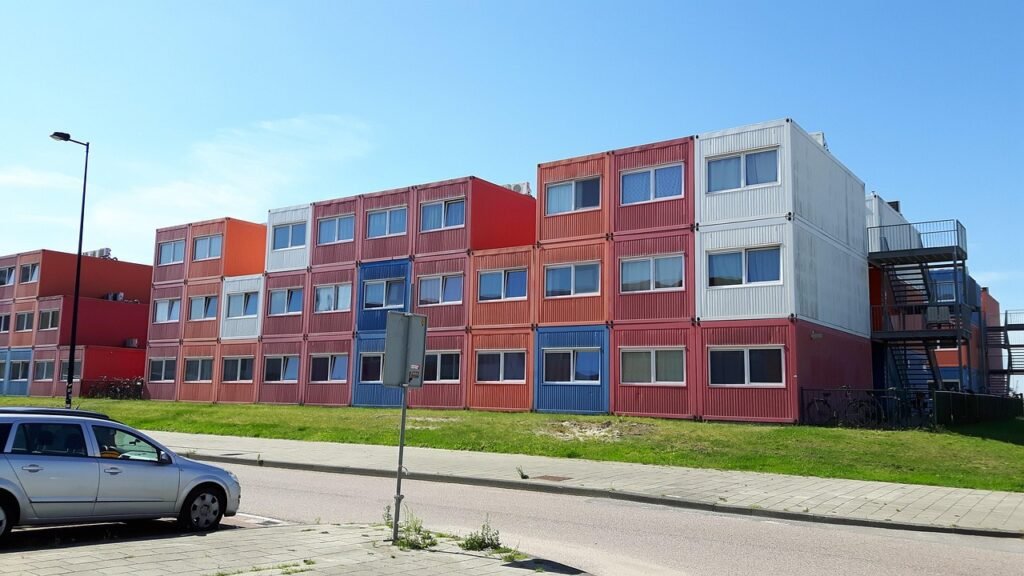
Our guide to student housing in Amsterdam covers university lotteries, ROOM.nl and how to check a listing before you pay.
Frequently Asked Questions
How hard is it to find a rental in Amsterdam?
Hard, and hardest for a self-contained flat in a central district at a reasonable price, where good listings receive dozens of applications within a few hours.
Speed, a complete document pack and flexibility on district are what separate people who find something in three weeks from people still looking in three months.
What documents do landlords ask for?
Passport or ID, employment contract, three recent payslips, an employer’s letter and bank statements, with a BSN once you have one.
Free-sector landlords typically require gross income of three to four times the bare rent, and will not usually make exceptions for savings.
How do I know if my rent is legal?
Score the home under the WWS points system, which is free to do on the Huurcommissie website using your flat’s measurements, energy label, fittings and WOZ value.
At 186 points or fewer the rent is regulated and can be challenged; above that the landlord sets it.
How much deposit can a landlord ask for?
Two months’ bare rent at most for contracts signed since 1 July 2023, and it must be returned within fourteen days of the tenancy ending.
Anything larger, or a demand for several months’ rent in advance on top, is a straightforward breach and often a sign of a scam.
What does gestoffeerd actually include?
Flooring, curtains or blinds and light fittings, but no furniture and frequently no white goods.
Kaal is the one to watch, since it can mean no flooring, no kitchen units and no appliances at all.
Can my landlord refuse to let me register at the address?
No landlord can lawfully prevent registration in a home you legitimately rent, and a refusal usually means the letting itself is irregular.
Treat it as a reason to walk away rather than a detail to negotiate, because everything from your bank account to your health insurance depends on it.
Related reading
- Amsterdam Divorce Guide For Expats: What To Know First
- Amsterdam Dutch Lessons Guide For Expats
- Amsterdam Healthcare Guide For Expats: What To Do First