De Pijp, Amsterdam is the dense, food-loving neighbourhood just south of the canal ring, built around the Albert Cuyp Market and Sarphatipark.
It is small enough to cross on foot and busy enough that something is open at almost any hour.
This guide covers where it is, what it was, what to do and eat there, how to get there, and what living in De Pijp looks like in the official figures.
Where De Pijp is
De Pijp sits directly south of the Singelgracht and the Stadhouderskade, between the Boerenwetering on the west side and the Amstel on the east.
Its southern edge is the Amstelkanaal, beyond which the Rivierenbuurt begins.
Officially it belongs to the city district of Amsterdam-Zuid, and Statistics Netherlands (CBS) splits it into three parts: the Oude Pijp, the Nieuwe Pijp and Zuid Pijp.
The Museum Quarter is a short walk west, so De Pijp works as a base for the big museums as well as for eating out.
Our Amsterdam-Zuid guide covers the rest of the district.
A short history
De Pijp was built in the late nineteenth century, when Amsterdam finally grew beyond the line of its old defences.
It went up quickly and cheaply as housing for workers, which is why the streets are long, straight and narrow and the buildings mostly four or five storeys of plain brick.
Many streets carry the names of painters from the Dutch Golden Age, among them Ferdinand Bol, Gerard Dou, Jan Steen and Frans Hals.
The Heineken brewery on the Stadhouderskade gave the area much of its work; brewing there has stopped and the building is now the Heineken Experience visitor attraction.
Over the twentieth century the cheap rents drew students, artists and newcomers from Suriname, Morocco and Turkey, and that mix still shapes the shops and kitchens today.
Things to do in De Pijp
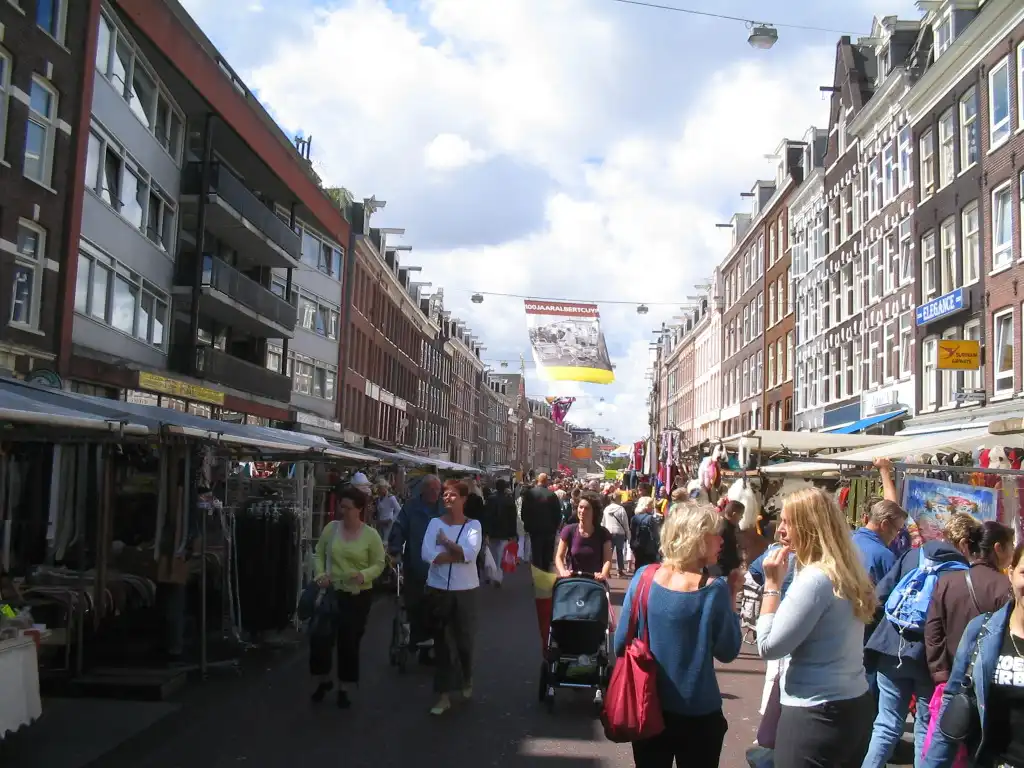
The Albert Cuyp Market is the reason most people come: about 260 stalls along the Albert Cuypstraat, open Monday to Saturday.
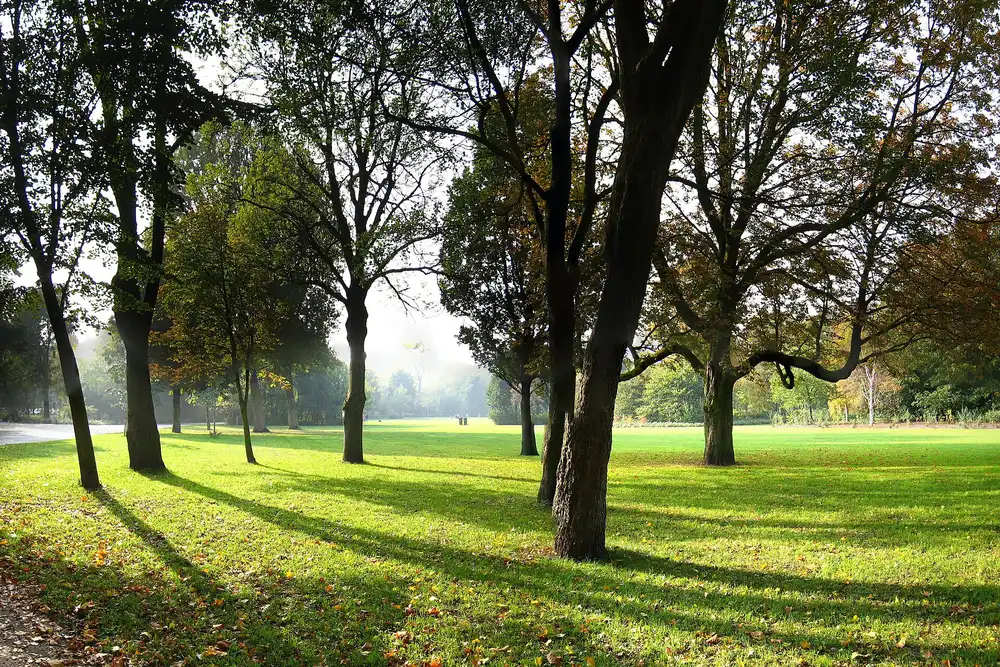
Sarphatipark, a small landscaped park named after the nineteenth-century doctor and city planner Samuel Sarphati, is the neighbourhood’s living room on a sunny day.
The Gerard Douplein and the Marie Heinekenplein are the two squares where the terraces fill up first.
The Heineken Experience on the northern edge draws the visitors; the rest of the neighbourhood carries on around it.
For concerts, exhibitions, markets and free events in and around De Pijp this week, check What’s On in Amsterdam and our list of free things to do this week.
Where to eat and drink
De Pijp has one of the highest concentrations of cafés and restaurants in the city, and the range runs from Surinamese takeaway counters to tasting menus.
Browse our directory of Amsterdam restaurants, cafés and brunch spots and bars to filter by type.
A few businesses in De Pijp keep their own listing up to date with us:
- Britton’s Bakery, a bakery on the Ferdinand Bolstraat.
- Duke of Tokyo De Pijp, a bar on the Ferdinand Bolstraat.
- de Dakduif, a café on the Eerste Sweelinckstraat.
- Hungry Hustle, a restaurant on the Ceintuurbaan.
- Fa. Pekelhaaring, a restaurant on the Van Woustraat.
- Pacomer Caterer, a deli and caterer on the Gerard Doustraat.
- LENA the fashion library, a clothing library on the Daniël Stalpertstraat.
Markets
Beyond the Albert Cuyp, the cooperative ZuiderMRKT trades on Saturdays a short walk west, at the corner of the Johannes Verhulststraat and the Jacob Obrechtstraat.
For every street market in the city, sorted by day, see Amsterdam markets by day.
Getting there
Metro 52, the North-South line, stops at De Pijp station under the Ceintuurbaan and at Europaplein on the southern edge, with direct trains from Centraal Station, Rokin and Vijzelgracht.
Tram 4 runs through the east of the neighbourhood with stops at Albert Cuypstraat and Van Woustraat/Ceintuurbaan, and tram 25 crosses it along the Ceintuurbaan.
Trams 1, 7 and 19 run along the northern edge, stopping at Vijzelgracht and Frederiksplein.
Lines and stops are taken from the GVB rail network map of 31 August 2026; check the GVB app for diversions before you travel.
Before you leave a bike out overnight, look up the local figures in our bike theft by neighbourhood tool.
Living in De Pijp: the figures
Adding up the three CBS districts, De Pijp had 35,105 residents on 1 January 2026 (CBS, Kerncijfers wijken en buurten 2026).
It is a neighbourhood of single people and young adults: 62% of households are one person, against 55% for Amsterdam as a whole, and only 14% of households include children, against 23% city-wide.
44% of residents are aged 25 to 44, compared with 37% across the city.
It is also one of the most crowded parts of Amsterdam, with between 22,000 and 24,000 residents per square kilometre in each of the three districts, against an average of about 4,950 for the whole municipality.
Housing is mostly rented: CBS counts 25% of homes as owner-occupied, and 35% are owned by housing corporations (figures for 1 January 2025, CBS Kerncijfers wijken en buurten 2025).
The average WOZ value of a home was about €519,000, very close to the Amsterdam average of €518,000 (CBS 2025 figures, valuation date 1 January 2024; our average of the three districts, weighted by number of homes).
Most homes are small flats, which suits the population above and is the main reason families tend to move on to the Rivierenbuurt, Buitenveldert or Amstelveen.
For renting, our rent points calculator shows whether a flat should fall under the regulated rent rules, and our guide to school choices explains how primary school places are allocated.
Frequently Asked Questions
Is De Pijp a good place to stay in Amsterdam?
Yes, if you want restaurants, bars and a market on the doorstep and do not mind busy streets; the museums are a short walk away and metro 52 takes you to Centraal Station directly.
What is De Pijp known for?
The Albert Cuyp Market, Sarphatipark, the Heineken Experience and a very high density of cafés and restaurants.
Which metro station serves De Pijp?
Metro 52 stops at De Pijp station on the Ceintuurbaan and at Europaplein on the southern edge.
How many people live in De Pijp?
35,105 people on 1 January 2026, adding up the Oude Pijp, Nieuwe Pijp and Zuid Pijp districts in CBS’s neighbourhood figures.
Is De Pijp good for families?
Some families live there, but only 14% of households include children, well below the city average of 23%, and most homes are small flats; families with young children often look further south.
Other Amsterdam neighbourhoods
Read our guides to the Jordaan, Amsterdam-Zuid, Amsterdam-Centrum, Amsterdam-Oost, Amsterdam-West and IJburg, or start with the Amsterdam neighbourhood guide.
Not sure which suits you?
Take the Amsterdam neighbourhood quiz.
Photo: Albert Cuypmarkt by Michiel1972 at Dutch Wikipedia, CC BY-SA 3.0, via Wikimedia Commons.
Related Guides
- Amsterdam Neighborhood Guide for Where To Stay and Explore
- Amsterdam Grocery Shopping and Markets Guide for Locals
- Amsterdam Parks Guide For Every Type Of Visit
- Amsterdam Restaurant And Café Guide For Where To Eat
- A Guide to Amsterdam’s Museums and Attractions
Free Amsterdam tools: Which Amsterdam neighbourhood suits you? · Bike theft in Amsterdam by neighbourhood