Amsterdam is small enough that every district is workable, so where you stay changes the texture of the trip rather than what you can reach.
The useful rule: stay central for a short sightseeing-heavy trip, and one ring out for better value, quieter nights and somewhere that is still a neighbourhood at eight in the morning.
What actually differs between districts is mood - the canal ring is formal and photogenic, De Pijp is dense and social, Noord is open and industrial, Oud-Zuid and Plantage are calm.
Match the district to how you travel and the rest follows.
Best Areas To Choose First
For the easiest first-time base, start with Centrum, the Grachtengordel or the Jordaan.
The canal ring puts the major sights within walking distance and delivers the version of the city most people came for.
The Jordaan is a step quieter and more residential without being any less central.
Its anchor is the Noordermarkt on the square in front of the Noorderkerk, trading on Monday and Saturday mornings and running there since 1623.
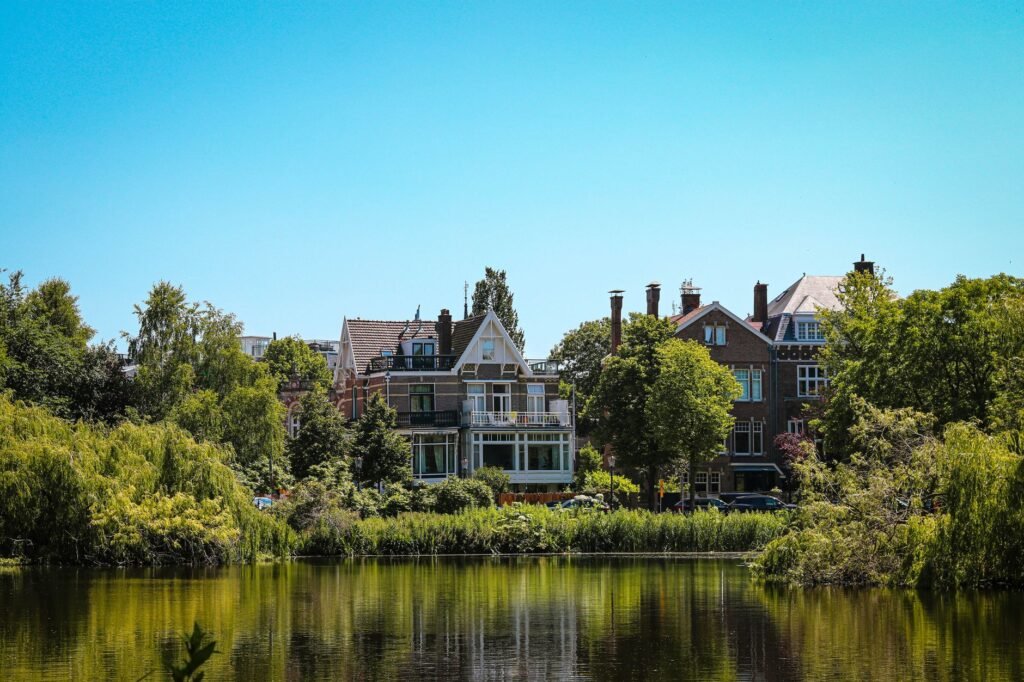
If museums are the point of the trip, stay in Oud-Zuid near the Museum Quarter, where the streets are broad, the evenings are calm and the major collections are minutes apart.
For food, bars and a younger crowd, De Pijp and Oud-West are the strongest picks.
Oud-West has the density of good places to eat with easy tram links; De Pijp is denser again and busier at night.
De Baarsjes sits one step further west and gives you a local feel without isolating you, built around Mercatorplein and the cafés along Jan Evertsenstraat.
For green space or a family trip, look at Plantage, Amsterdam-Oost or Nieuw-West.
Plantage is peaceful and still central, built around Artis, the Hortus Botanicus and the Wertheimpark.
Oost is ordinary city life in the best sense.
Nieuw-West trades proximity for space and better rates, around the Sloterplas lake and the Sloterpark that wraps it.
Noord is the choice if you want something less postcard and more experimental.
Within Centrum itself the variation is sharp: Nieuwmarkt is lively and well placed, while De Wallen is historically interesting and genuinely noisy well past midnight.
What Each District Feels Like On The Ground
The canal core is at its best early, before the bikes and the tour groups reach volume.
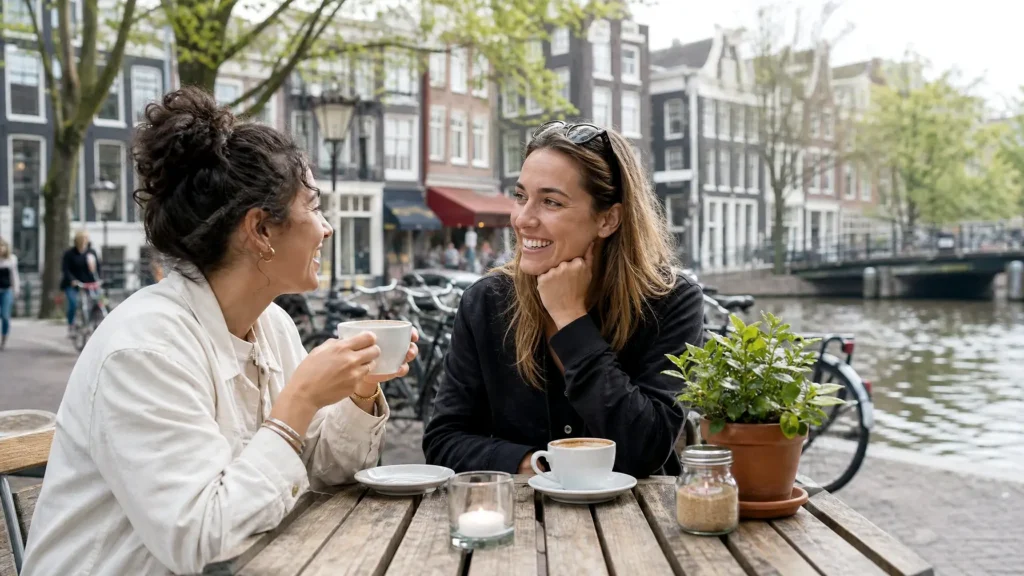
Along Prinsengracht, Herengracht, Keizersgracht and Singel you get narrow bridges, tall merchant houses and very little space to stand still.
The Nine Streets between the canals is the shopping stretch, and crowds build sharply near the Anne Frank House from mid-morning.
Centrum changes block by block.
Dam Square is grand and permanently busy, the Oude Kerk sits in the middle of the red-light district, and around the Waag at Nieuwmarkt the city feels local before noon.
Quieter corners survive: the Begijnhof courtyard, the Bloemenmarkt and the smaller side canals.
South and west open out.
Leidseplein is the loud one, the Spiegelkwartier is antiques and galleries, and in Oud-West Kinkerstraat, De Hallen with its Foodhallen, and the Ten Katemarkt make a day’s wandering without a plan.
De Pijp is food-focused from breakfast to late, built around the Albert Cuyp Market and Sarphatipark, and it stays a residential neighbourhood rather than a visitor zone.
Oud-Zuid is the polished one, with Vondelpark, Museumplein, the Rijksmuseum, the Van Gogh Museum, the Stedelijk and the Concertgebouw clustered together.
The Heineken Experience draws crowds at the De Pijp boundary without changing the streets around it much.
East runs at a different pace, around Oosterpark, the Tropenmuseum, the Dappermarkt, Artis, the Eastern Docklands, the Indische Buurt and the Transvaalbuurt.
West has its own equivalents in Westerpark, with the Westergas cultural complex on the old gasworks site, and the Westelijke Eilanden, the quiet former harbour islands just north-west of the centre.
Bos en Lommer is the less glossy version of the same thing, centred on Bos en Lommerplein with the Erasmuspark a few streets south-west.
Beyond The Center For Creative, Green, And Modern Amsterdam
North across the IJ is where the city stops looking like a postcard.
The GVB ferries from behind Centraal Station are free and run around the clock, which makes Noord far less remote than the map suggests.
Around NDSM Wharf, former shipyard buildings hold street art, events, waterside bars and a great deal of open space.
Noord also has the Eye Film Museum and the best skyline views back across the water.
If you stay there, plan around the ferry timetable rather than against it, and quieter pockets like Nieuwendam feel entirely residential.
Nieuwendammerdijk, the old dyke road running through it, still carries the low wooden houses of the fishing village Noord grew out of.
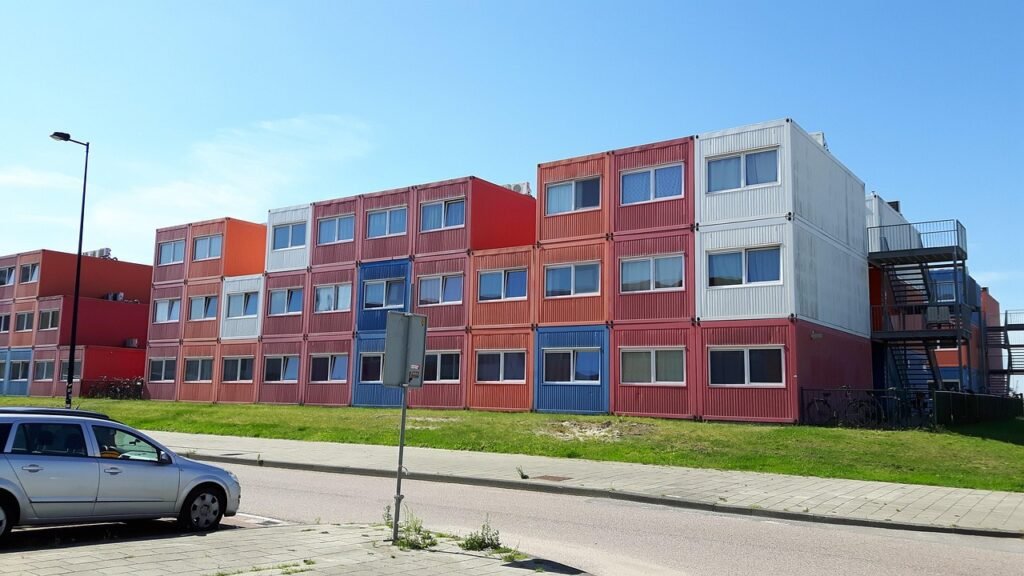
For modern and spacious, look east and south to IJburg, Watergraafsmeer, Rivierenbuurt and the Apollobuurt.
IJburg is a set of artificial islands built out into the IJmeer from the late 1990s, reached by tram 26 from Centraal Station.
Watergraafsmeer is a drained polder built around Park Frankendael, the last country estate left inside the city, with Science Park and its student housing on the eastern edge.
Rivierenbuurt is 1920s Amsterdam School brick along Maasstraat and Rijnstraat, with the Martin Luther Kingpark on the Amstel at its edge.
The Apollobuurt is the moneyed pocket around Apollolaan and the Beethovenstraat shops.
All four trade seventeenth-century charm for wider streets, parks, calm nights and apartment-style stays.
P.C. Hooftstraat is the luxury shopping street, in the polished part of the south.
For a trip mixing business and leisure, Zuidas and Buitenveldert have the fastest links to Schiphol and the centre both.
Zuidas is the office district built around Amsterdam Zuid station, which has direct trains to Schiphol.
Buitenveldert behind it is quieter, with the Gelderlandplein shopping centre and the Amsterdamse Bos on its doorstep.
For a quieter base outside the city entirely, Amstelveen and Haarlem are both closer than people assume.
Amstelveen has Museum Cobra on Sandbergplein and the southern half of the Amsterdamse Bos, with tram 25 running down from Amsterdam Zuid.
Haarlem is about fifteen minutes by train from Centraal, with its Grote Markt, the Grote Kerk and the Teylers Museum, the oldest museum in the country.
How To Match A Neighborhood To Your Trip Style
If you move fast and want the icons, stay in the Jordaan, Centrum or on the canal belt.
You can walk the canals, do two museums and get back for a late dinner without touching public transport.
If what you like about a city is its neighbourhoods rather than its landmarks, choose Oud-West, De Pijp or Oost, where the cafés and markets are used by people who live there.
If you want calm and order, Oud-Zuid is the one that clicks immediately.
If food is the reason you travel, weight your search towards De Pijp, Oost and West.
Amsterdam’s strongest eating is Indonesian and Surinamese, both a direct legacy of Dutch colonial history, alongside Turkish and Moroccan bakeries and grills concentrated in Oost and Nieuw-West.
Where you sleep decides what breakfast and what late dinner are within walking distance, which over four days matters more than proximity to any museum.
For creative spaces and waterfront, Noord.
For family-friendly streets and fewer late-night crowds, Plantage, Oud-Zuid and Watergraafsmeer.
To find events near where you stay, see what’s on in Amsterdam this week.
Frequently Asked Questions
Where should a first-time visitor stay in Amsterdam?
The Jordaan, the canal ring, or a quieter part of Centrum.
All three keep the major sights walkable, so you can get home after dinner without planning a route.
What’s the best way to use an English neighborhood map of Amsterdam?
Learn the four fixed points first: Centraal Station at the top, the canal ring below it, the museum quarter to the south, and Noord across the water.
Once that layout is in your head you can tell whether a hotel is genuinely walkable or merely described as central.
Which areas of Amsterdam are considered the safest to stay in?
Most visitor areas are safe with ordinary city awareness, and the Jordaan, Oud-Zuid, Plantage and much of Oud-West are calm at night.
The practical risk in Amsterdam is pickpocketing in crowds rather than anything else.
Are there any parts of Amsterdam visitors should avoid, especially at night?
No district needs avoiding, but some are unpleasant rather than unsafe after dark.
De Wallen, the streets around Leidseplein and the tourist strips near Dam Square get loud, crowded and worth skipping if you want a quiet evening.
Which neighborhoods are best to live in for students, families, or expats?
Students concentrate in Oost, West and Noord, where rents are lowest and the tram links are still good.
Families lean towards Plantage, Watergraafsmeer and parts of Zuid for the green space and the schools.
International arrivals cluster in Oud-Zuid, Rivierenbuurt, Buitenveldert and Amstelveen, largely because that is where the international schools are.
How reliable is neighbourhood advice from residents online?
Useful for noise, transport and what a street is like at night, and misleading for anything else.
Residents weight housing costs, rent pressure and nightlife fatigue heavily, none of which apply to a four-day stay, so read their complaints as information about living there rather than visiting.
In the news
- Amstelkwartier street balances new housing and heritage 12 September 2026