
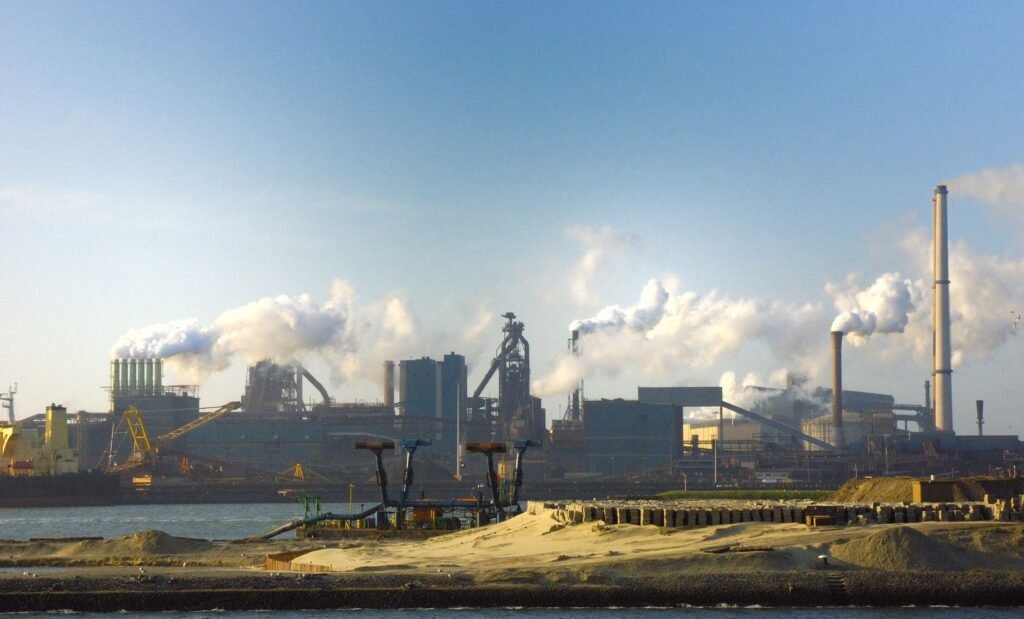
Tata Steel has applied for a new integral nature permit covering its entire IJmuiden site, a step the company says will clear the way for making green steel with wind energy instead of coal.
The application supports the Green Steel Project, the plan to cut carbon dioxide and nitrogen emissions at the largest steel producer in the Netherlands.
According to Tata, the new permit will also help bring existing installations on the grounds into use for that transition.
A 2016 permit meets 2026 rules
The current nature permit dates from 2016, and the company says it was expected even then that the terms would be revised after ten years.
Nitrogen rules have tightened since 2020, so projects started after that year must now be folded into the new permit as well.
The existing permit remains valid until the province of Noord-Holland issues its replacement.
200 million euros in cleanup hardware
A central piece is the DeNOx installation at the pellet factory, built to cut nitrogen emissions there by about 80 percent.
Together with an earlier dedusting installation, the investment comes to more than 200 million euros, which Tata calls the largest environmental outlay in its history.
Full commissioning still requires an environmental permit and a water permit.
The new nature permit could also open the door to further investment, replacing part of the coal-fired production with recycled iron and electric furnaces.
Critics and prosecutors are not waiting
Bringing every existing and new project under one legal framework would let Tata Steel move faster, and that is exactly what worries its critics.
Environmental groups MOB and Stichting Duinbehoud and the village council of Wijk aan Zee have questioned the nitrogen room the company is granted and what it means for the surrounding protected Natura 2000 areas.
The village council has called the earlier approach legally untenable, and MOB and Duinbehoud have long demanded that the permit be revoked or thoroughly revised.
The permit record is under real pressure.
In 2024 a court annulled the nature permit for an artificial dune over uncertainty about chromium-6 pollution of the groundwater.
In 2025 the company was fined 140,000 euros for breaking environmental rules and failing to report emissions of coke oven gas.
In July 2026 the public prosecutor decided to prosecute Tata Steel for intentionally releasing harmful substances into the air and for operating without a permit, a case that began with a criminal complaint filed by lawyer Bénédicte Ficq on behalf of what was then eight hundred residents.
Prosecutors are also examining whether company executives are personally liable.